In This Very Moment
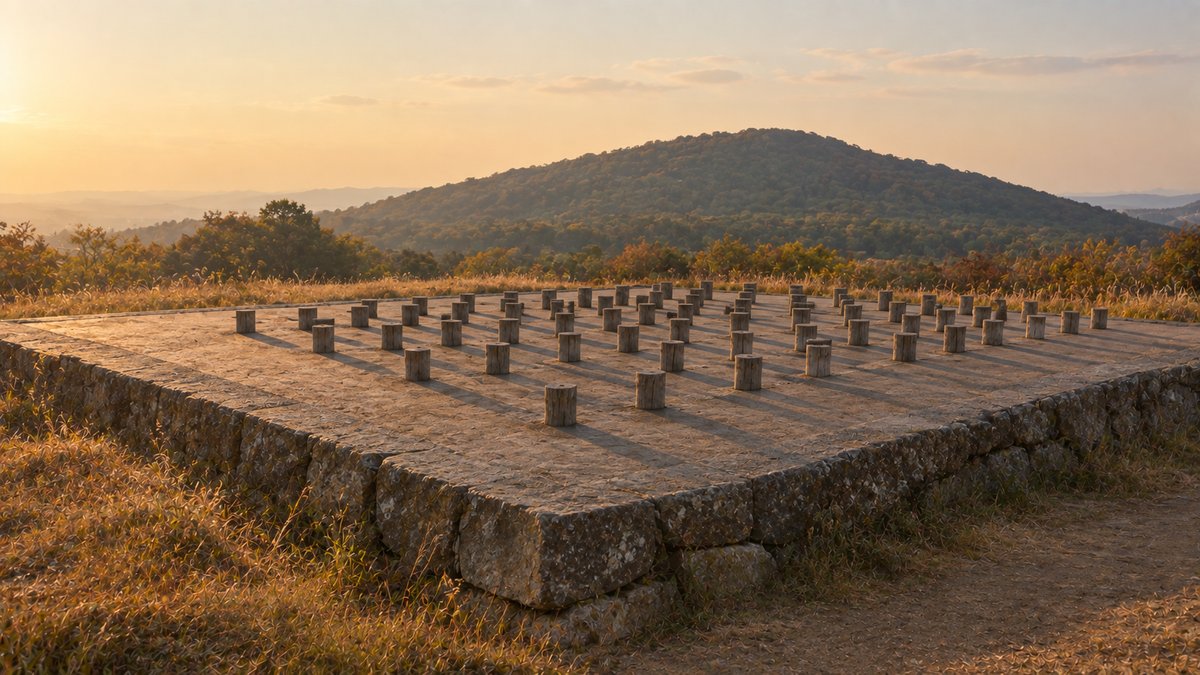
To the west of Asuka-dera Temple, beside the path toward Amakashi Hill, there is a square platform built up of stones. This is the Asuka Mizuochi Site. According to the Nihon Shoki, Japan's oldest official chronicle, in the year 660, Prince Naka no Oe, then the crown prince, made a rokoku for the first time and let the people know the time. A rokoku is a clock that measures time by the flow of water, and it was the first clock in Japan.
Water was let fall from one tank to the next, set out like a flight of steps, at a steady pace. By checking how high the water had risen in the last tank, people could tell what hour it was. Excavations uncovered traces of a wooden channel that brought in the water, copper pipes, and a lacquered wooden box, and it is thought that bells and drums were struck on the upper floor of the building to announce the hour. The officials of the court most likely set off for the palace at that sound.
Today, there is no sound of water here. The stone platform, a little over twenty-two metres on each side, has been rebuilt, and where pillars once stood, short wooden posts stand in neat lines, like a grid. Few people come by. Beside a small car park, with Mount Kagu in the distance, the site quietly takes in the September sun.
The time in which you are able to be alive is not the past, nor the future, but this very moment.
If you dwell in the past, regret raises its head; if you dwell in the future, you meet with needless worry.
This very moment, you are the youngest you will ever be, and the finest self you have ever been.
In life, there is no such thing as "too late."
The bells and drums that are said to have rung out from this building more than thirteen hundred years ago can no longer be heard by anyone. As the sun sinks lower, autumn insects begin to sing in the grass around the platform. Their voices are not meant to tell anyone the time. The insects are simply singing all they can, on this one night.