One Day, You May Be Grateful for the Loss
Walk a little north from Nara Station and you come to a small park called the Daibutsu Railway Memorial Park. In it stands a monument shaped from the driving wheel of a steam locomotive. A station once stood here, called Daibutsu Station — the station for the Great Buddha, where those going to worship at Tōdai-ji would step down from the train. The line that joined Kamo and Nara opened in 1898, and people called it the Daibutsu Railway.
But this railway ran for only nine years. Near Mount Kurokami along the way there was a steep grade, a hard climb that asked a great deal of the locomotives. In time a new, level track was laid, curving from Kamo through Kizu to Nara. It was a little longer the way around, but it had no punishing slope. The Daibutsu Railway had served its purpose. The station and the rails, in time, were quietly taken away.
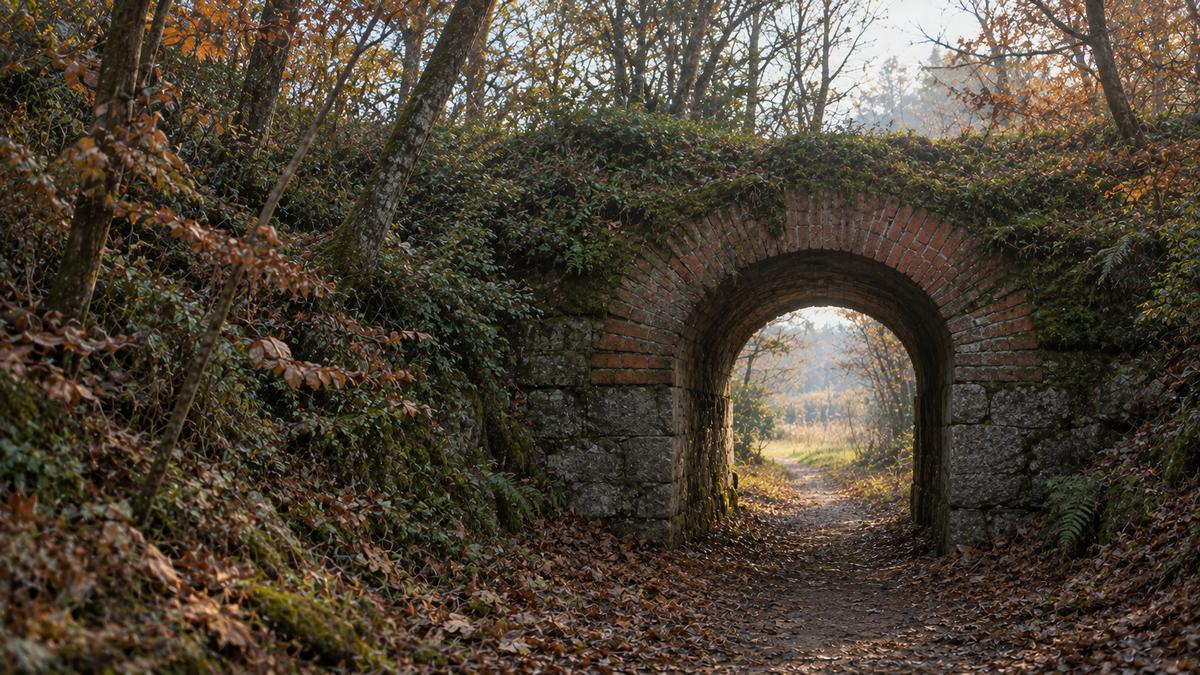
Follow its course today and you find red-brick arches and stone embankment walls standing here and there among the rice fields. The raised beds of earth have been swallowed by stands of trees; fallen leaves gather in the cuttings. From Kamo to Nara is a walk of some three or four hours, and people take it slowly — across land where no train runs any more, choosing the sunlit side of the way, listening to the birds.
One day, all at once, something that was simply there until yesterday can be gone.
And often, it is something entirely beyond anything you can do about it.
At such times, we tend to grieve, and suffer, and sink into sorrow.
But try to sort through the situation a little more calmly, with room in your heart to observe.
Surprisingly often, being without that thing which was simply there until yesterday is what opens the way to a life that goes better later on.
"I had only convinced myself that I could not do without it." Let us be grateful that the sudden loss is what made us see that truth.
Most of the people walking here do not know that a train once ran along this ground. They look up at the red-brick arch and think only that it is very old. The trace of a railway that vanished in nine years has, over more than a century, become a path. Toward Kamo, toward Nara, someone with nowhere to hurry is walking it again today, one step at a time.