Byakugoji Temple: A Hidden Hilltop Overlooking All of Nara — Highlights, King Enma, Fees & Walk from Shin-Yakushiji
📢 Disclosure: This post may contain affiliate links. If you book through them, I may earn a small commission at no extra cost to you. Thank you for supporting this blog! → Privacy Policy
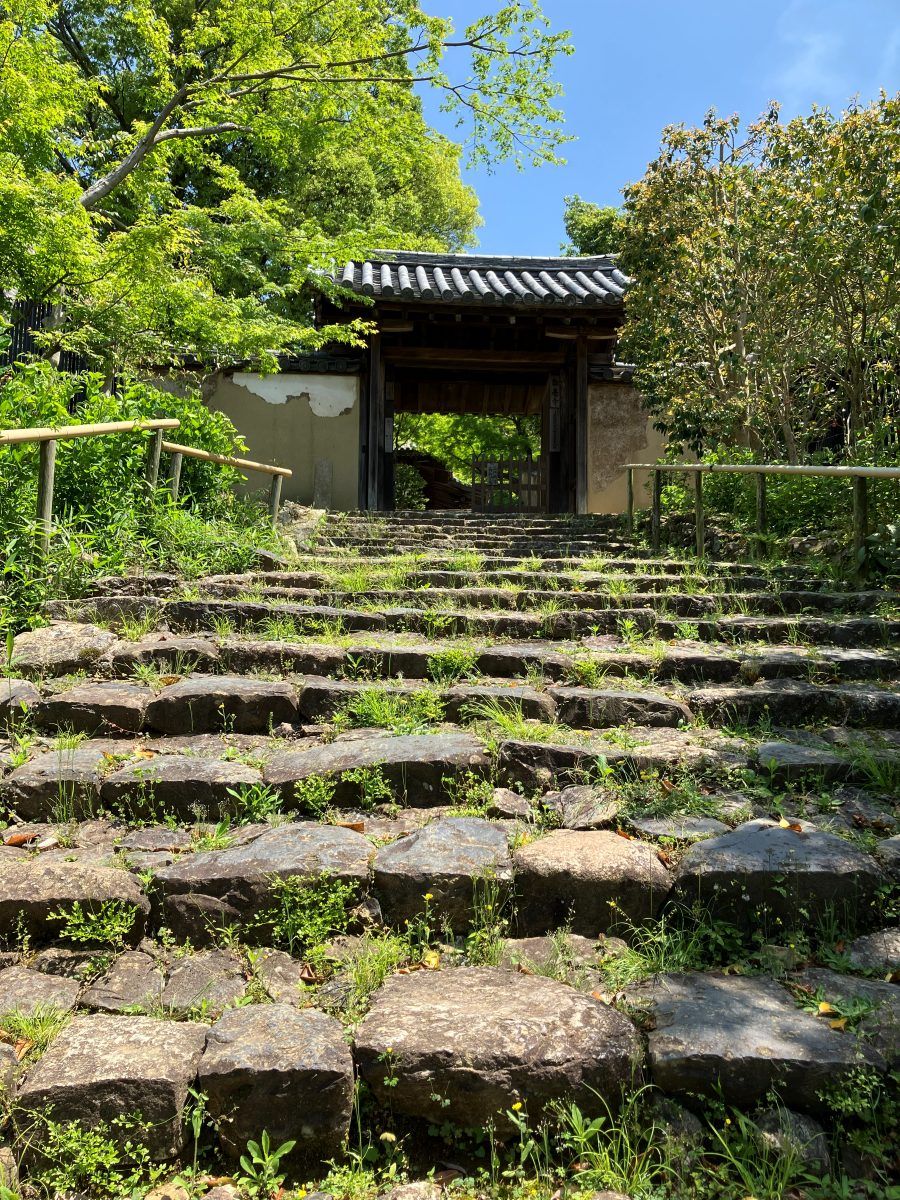
Did you enjoy our third guide to Shin-Yakushiji? I hope you had a chance to sit quietly with the Twelve Divine Generals in the darkness of the main hall. Today, we take one more step — just a short walk from where you are now.
Today's destination: Byakugoji Temple (白毫寺).
Chances are you've never heard this name before. That is exactly why I want to introduce it to you — and why I hope you'll visit it alongside Shin-Yakushiji.
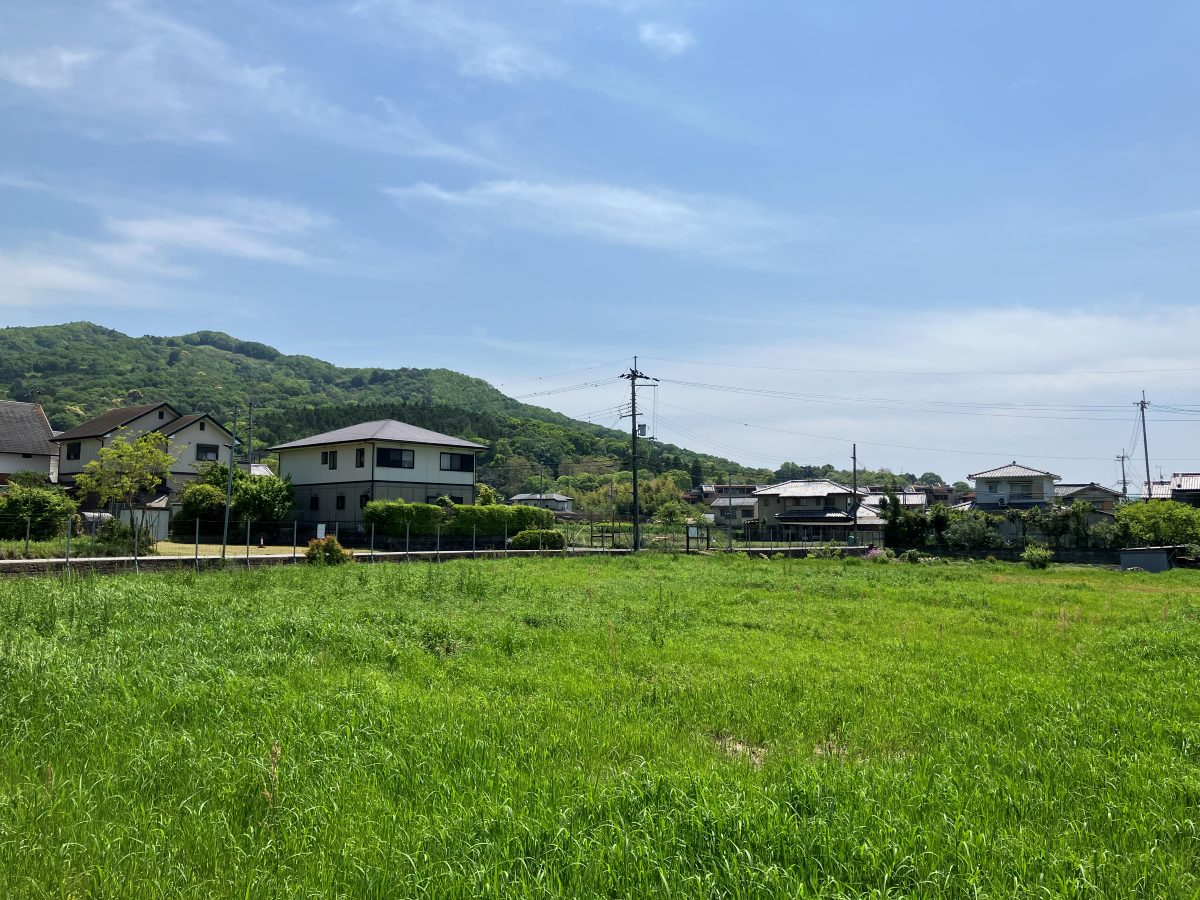
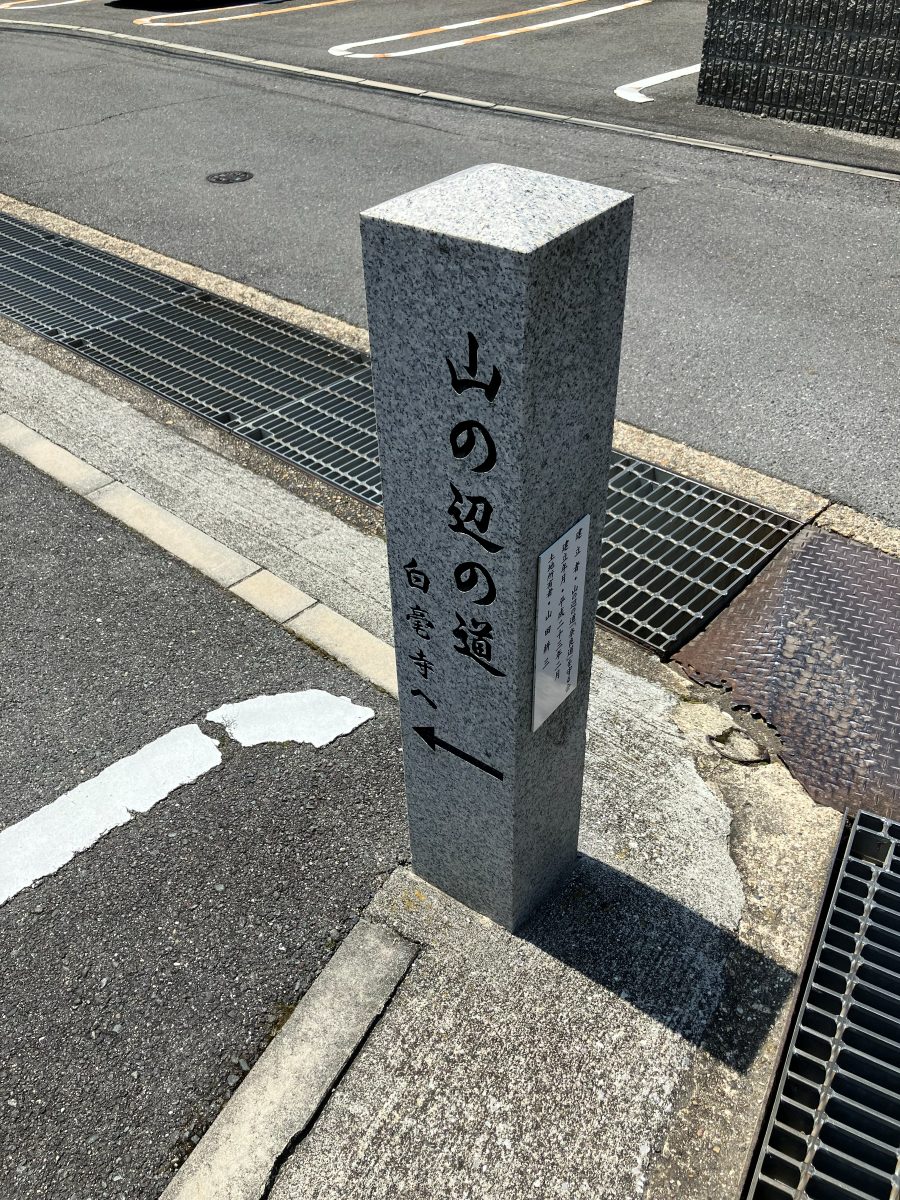
From Shin-Yakushiji to Byakugoji, you walk along the Yamanobe-no-Michi (山の辺の道), known as Japan's oldest road. On the way you'll even pass a stone marker engraved "Yamanobe-no-Michi — to Byakugoji." This is what we call "THE Nara" in this blog — something like the original landscape of Japan. Enjoy every moment of it.
The walk takes about 20 minutes at a leisurely pace, and along the way you climb about 70 metres. The road is paved, but involves slopes and steps — comfortable walking shoes are recommended.
As you climb, I'd like you to imagine that you are walking up the staircase of your own life, one step at a time. And just as in life, when you grow tired, stop for a moment and look back at how high you've come and the road you've walked. I think you'll feel the certainty of your own footsteps.
Byakugoji is not simply a temple with a nice view. Including the walk there, I hope you'll savour the atmosphere of "THE Nara" with all five senses — that is the spirit in which I'll guide you today.
About Byakugoji — A Hilltop Temple Linked to Prince Shiki and Eison
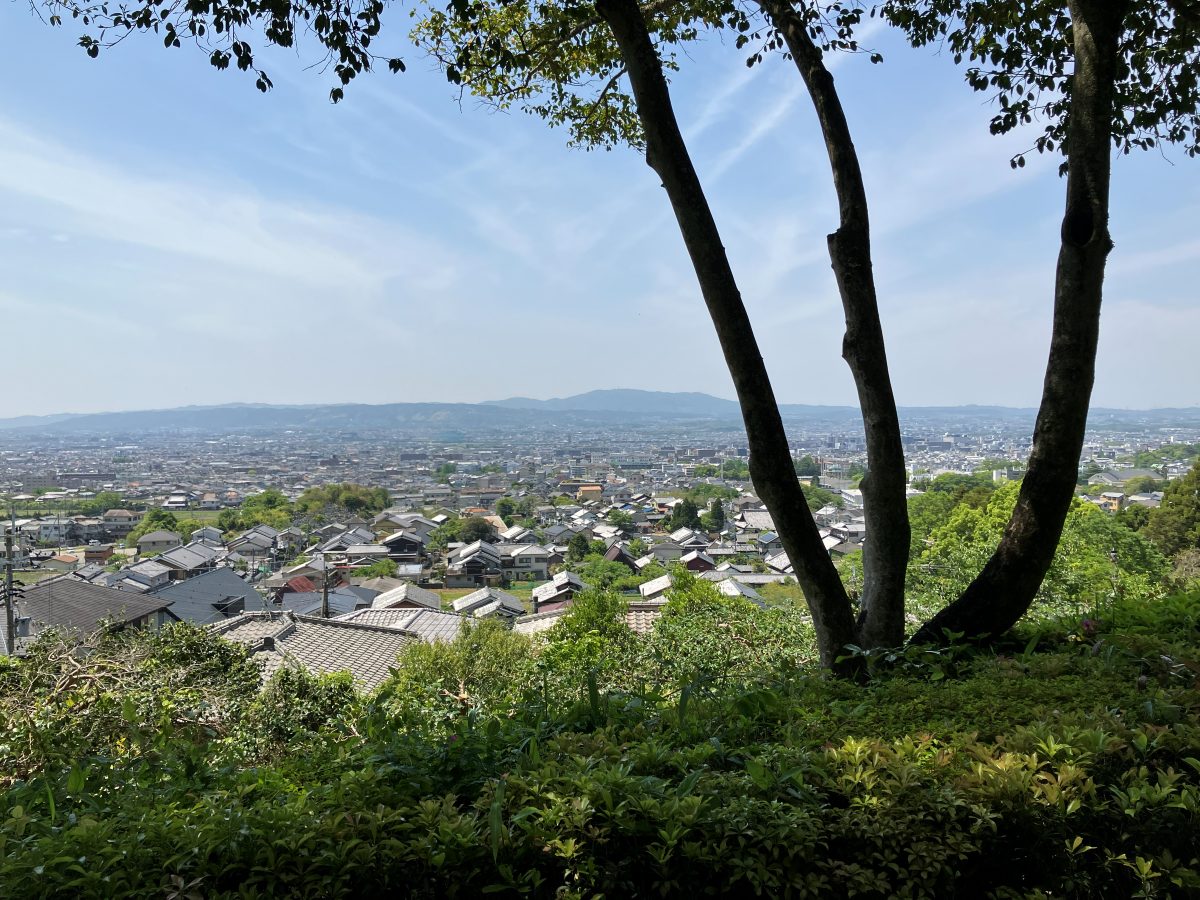
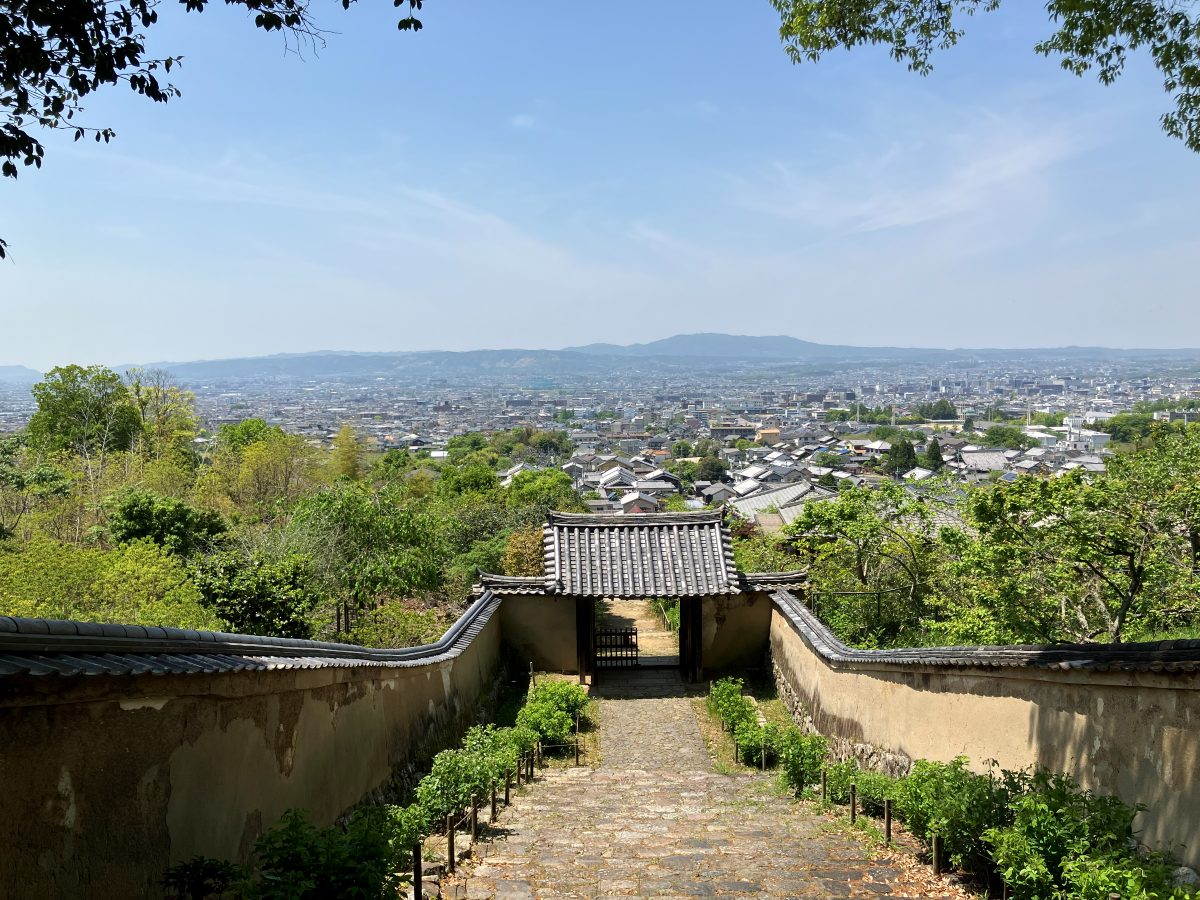
Byakugoji stands on a hilltop at the western foot of Mt. Takamado, about 200 metres above sea level, from which you can look down over the city of Nara. It is a temple rich with greenery and flowers — and in the fresh green season, if you are lucky, a bush warbler (uguisu) may greet you with its song.
Tradition says this was once the site of a mountain villa belonging to Prince Shiki (志貴皇子), a son of Emperor Tenji.
In the Kamakura period, the temple was restored by Eison (叡尊) — the monk who founded the Shingon Ritsu sect at Saidaiji Temple, our second guide. After Eison's disciples brought a complete set of Buddhist scriptures back from China, it also came to be known as "Issaikyo-ji," the Temple of the Scriptures. A quiet thread of connection running through our journey.
The temple was later damaged by war in the Warring States period, and rebuilt in the early Edo period. The present main hall dates from that time.
Beyond the scenery and the plants, this temple offers something rather unusual: a chance to come face-to-face with Enma (閻魔様) — the King of Hell in Japanese Buddhist tradition. I'll show you how to enjoy him, in my recommended order, under "Highlights".
Although Byakugoji stands just moments from Shin-Yakushiji, the two temples feel like entirely different worlds. Here, let the breeze rising from the city below restore you, drink in the panoramic view spread at your feet, and take your time with the ancient treasures around you.
Access — Basic Information
Shin-Yakushiji → Byakugoji Temple (on foot)
· Shortest distance: approx. 900 m
· Walking time: approx. 20 minutes at a leisurely sightseeing pace
· Route notes: Through the quiet residential streets of Takabatake, heading south along the northern edge of the Yamanobe-no-Michi trail.
Getting to Byakugoji Temple from Shin-Yakushiji
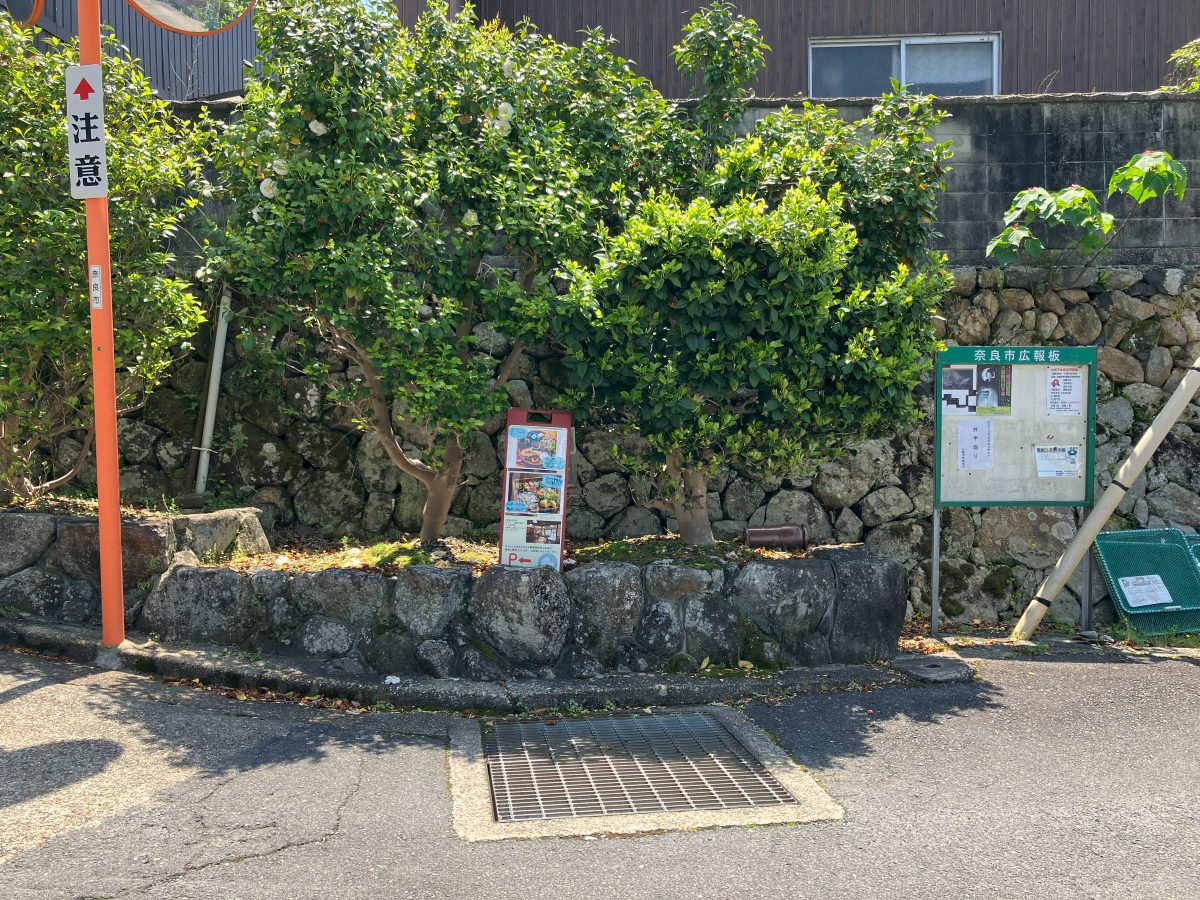
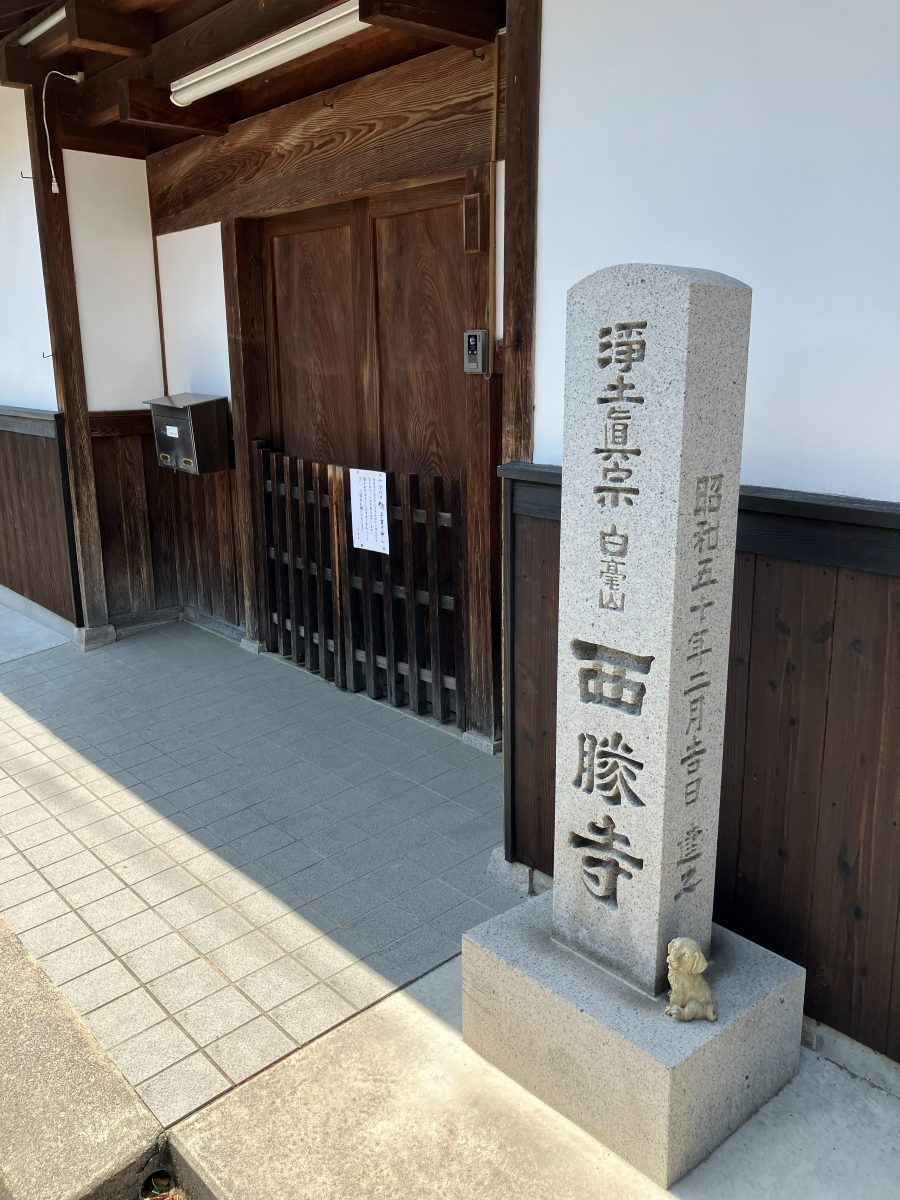
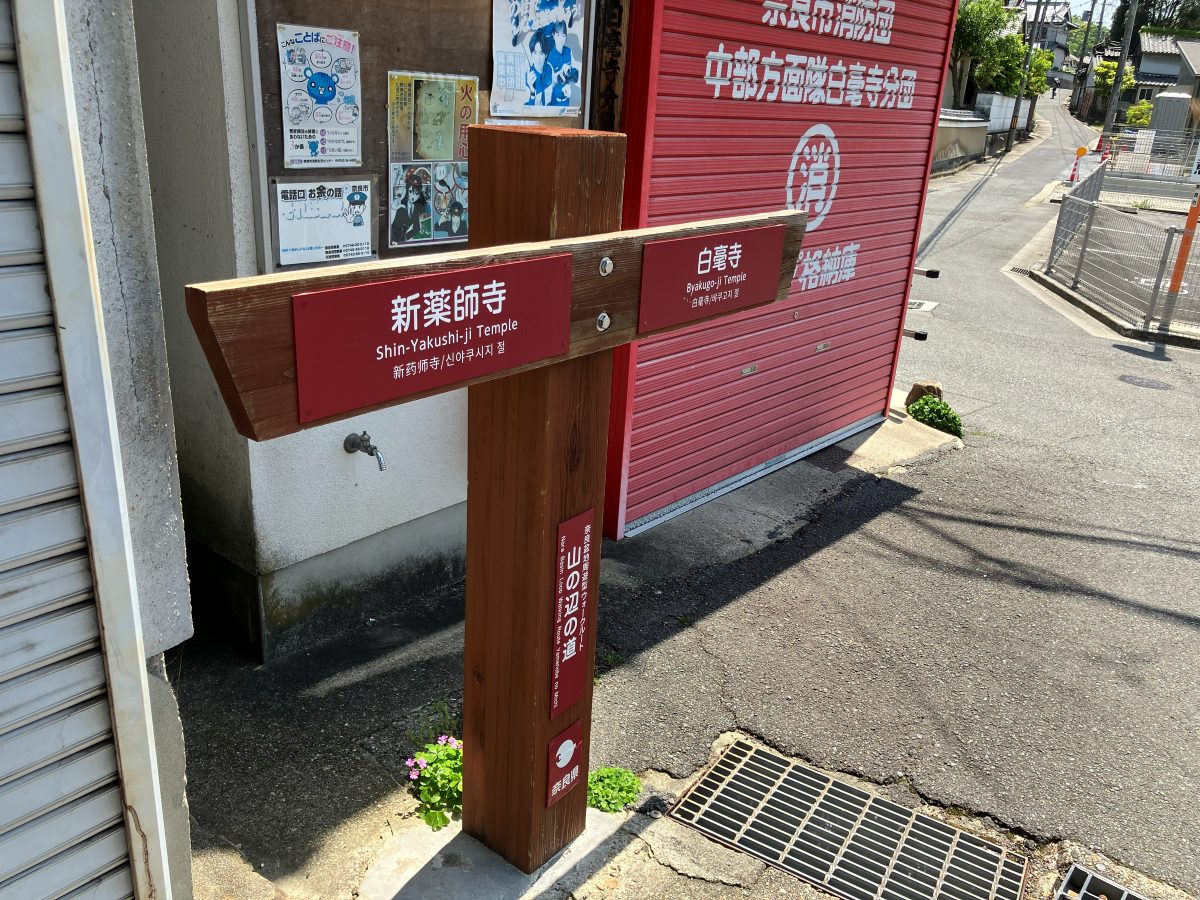
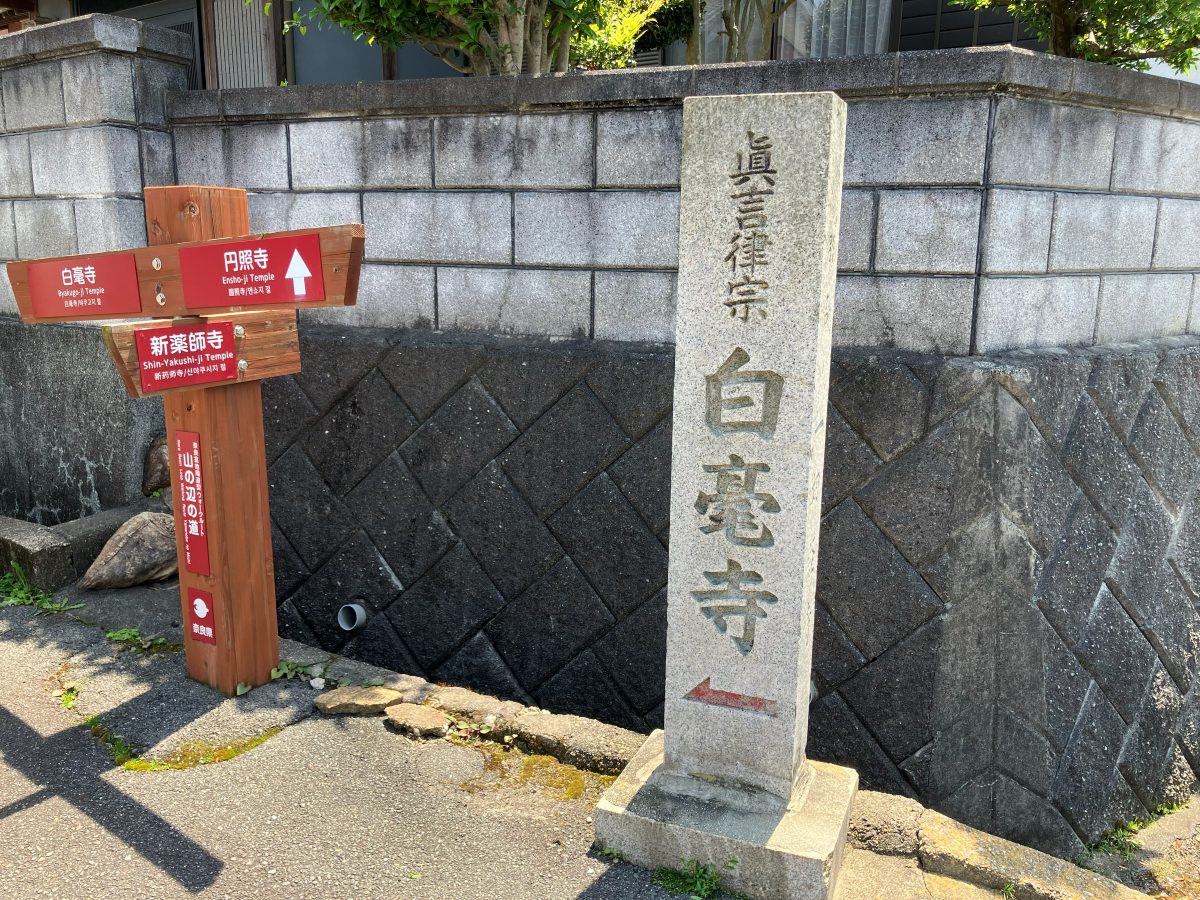
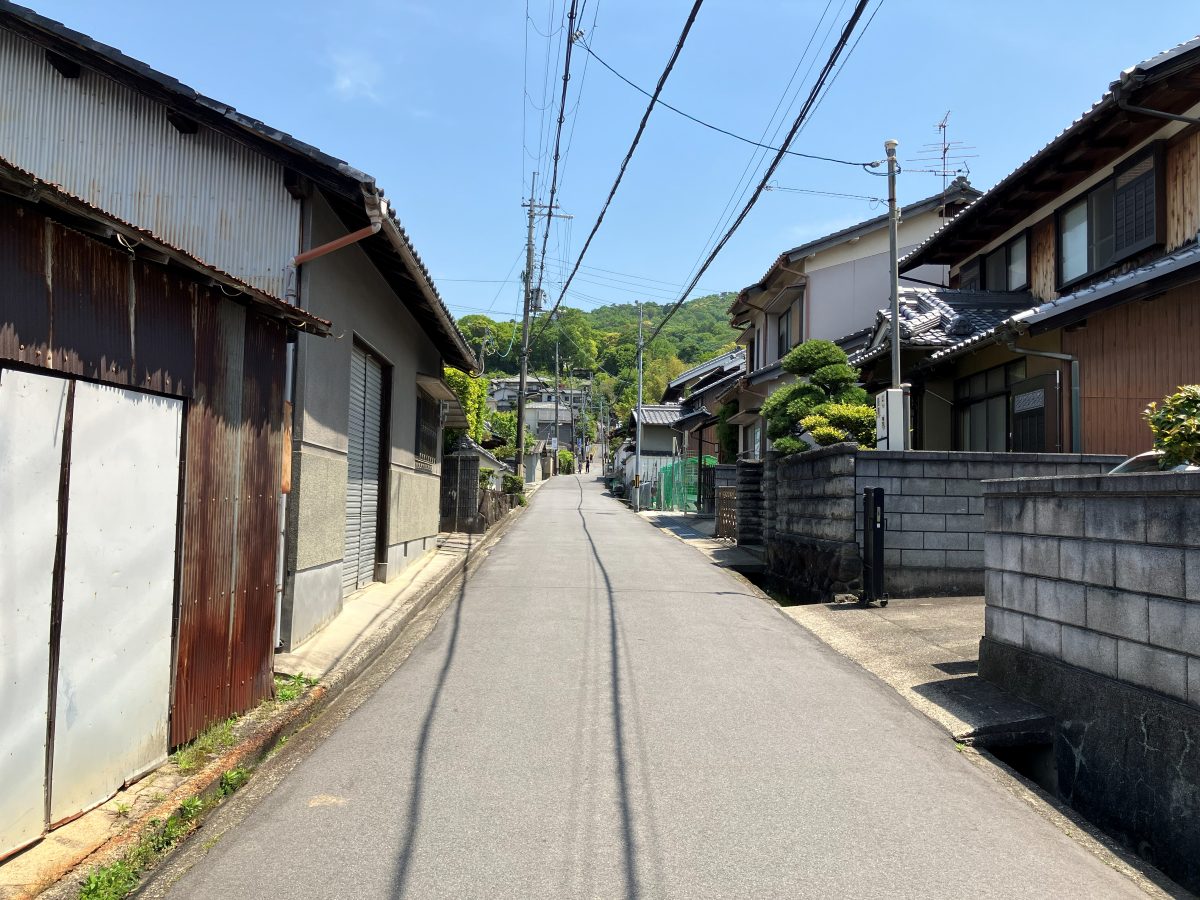
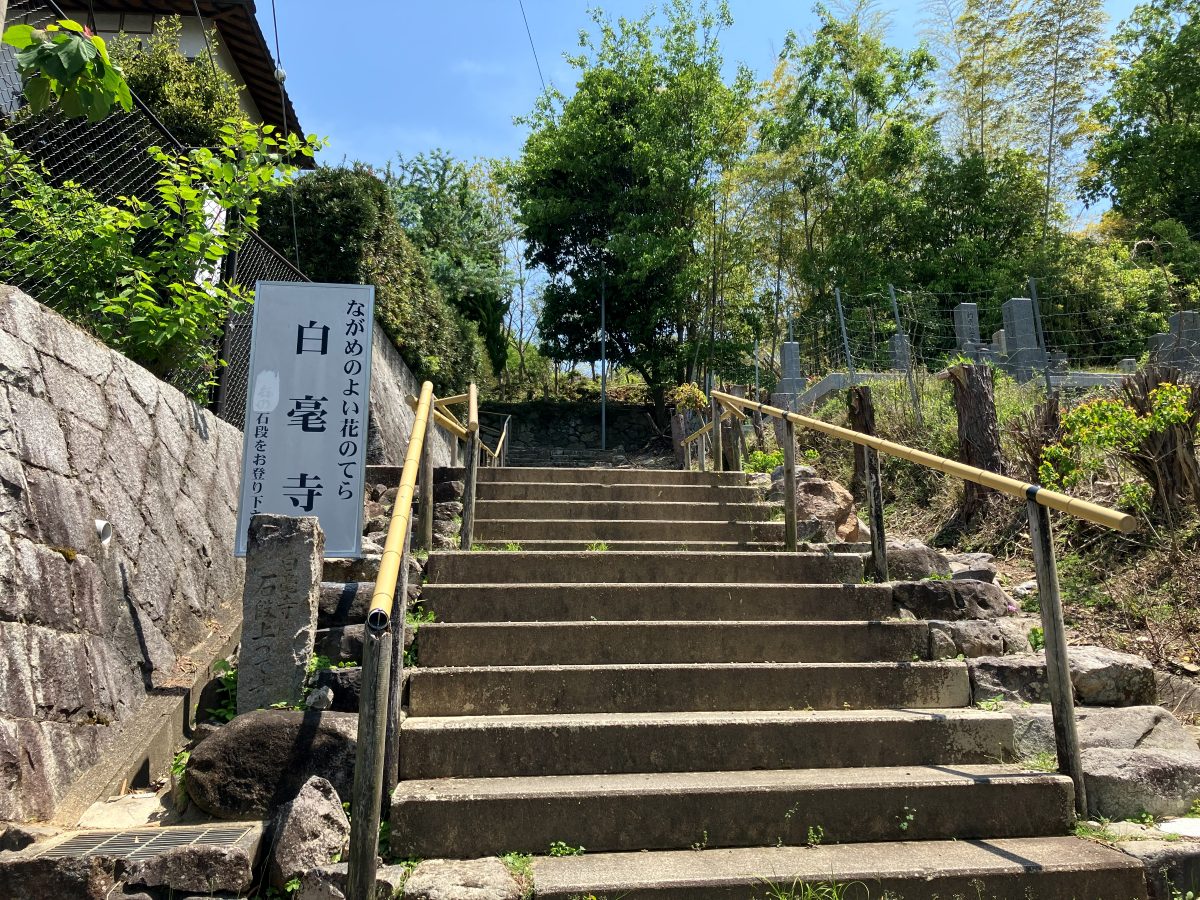
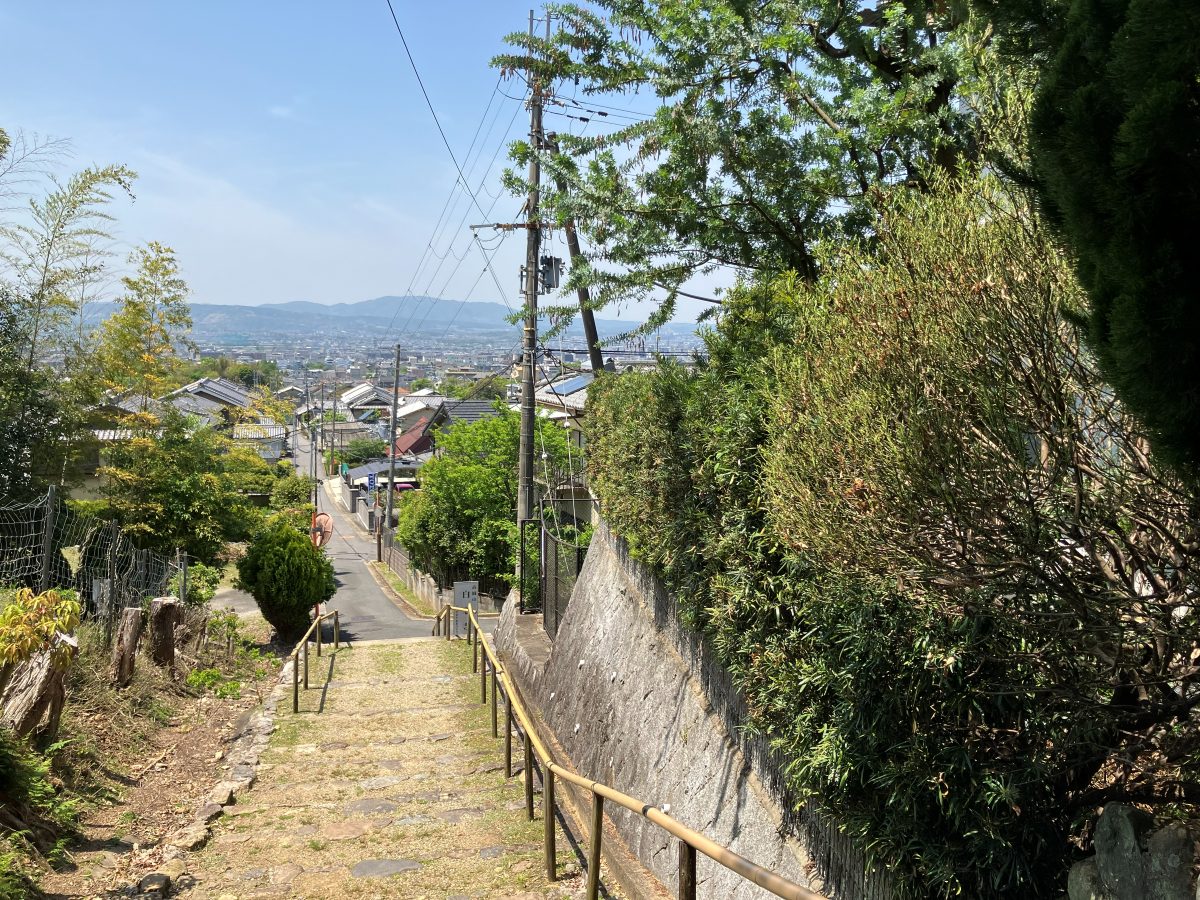
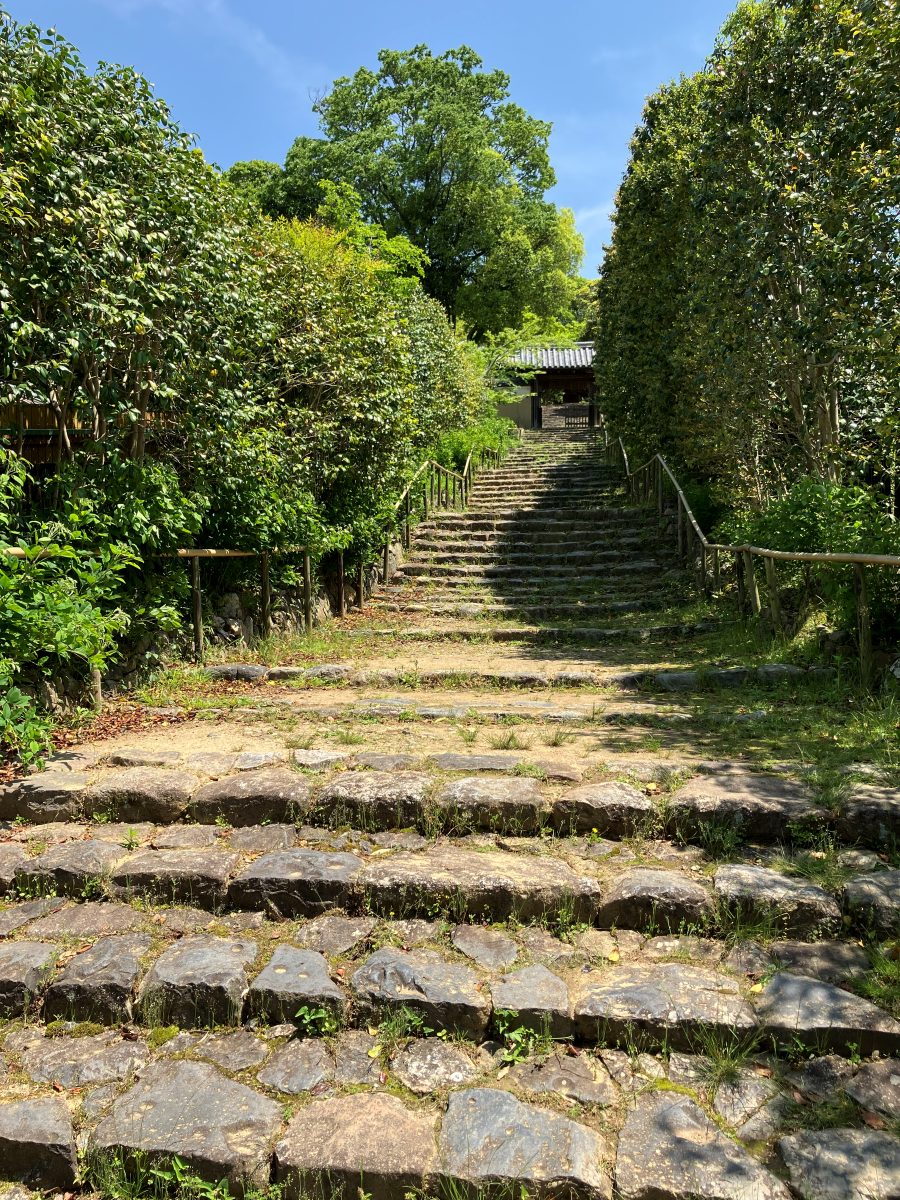
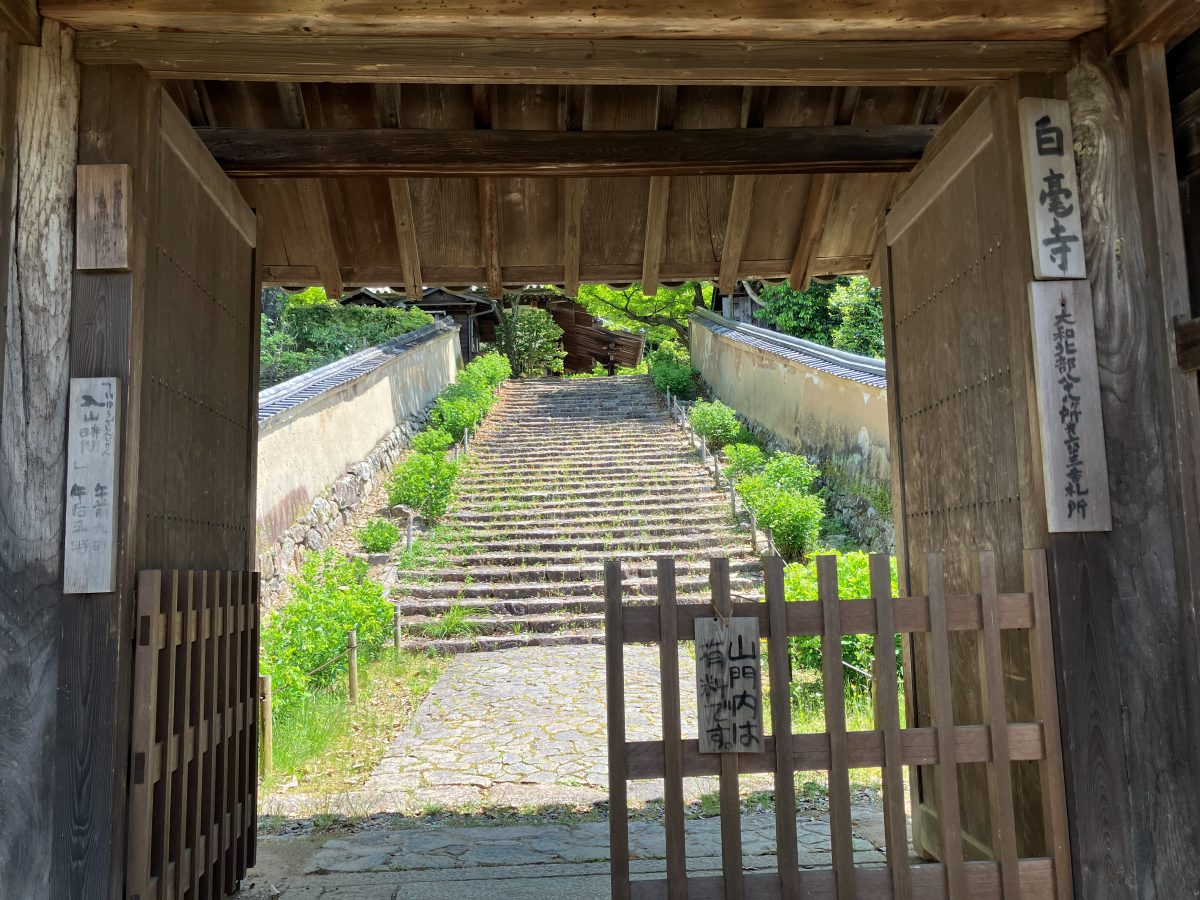
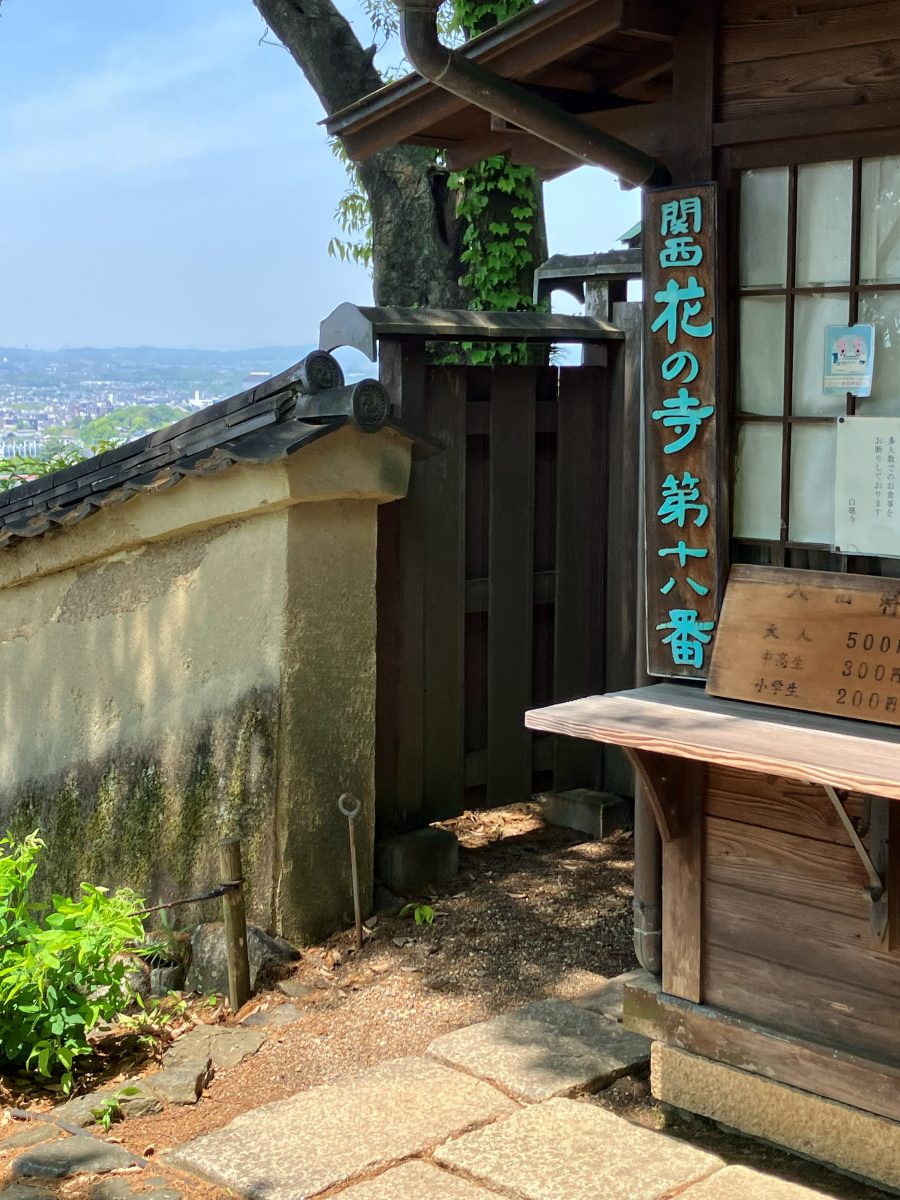
Beyond the gate is the paid area. Admission: ¥500 per person. The reception desk is up the steps inside the gate, on your left.
Highlights — In Order from the Reception
From here, I'll guide you around the grounds in the order I always walk them. The key is to save the view over the city of Nara until the very end. If you do your best not to look down at the view until then, the moment you finally take it all in will be all the more moving. 😄
I gave you a small peek in Step 12 of the directions — but the real show comes last.
Reception — Then Head to the Back Right of the Grounds
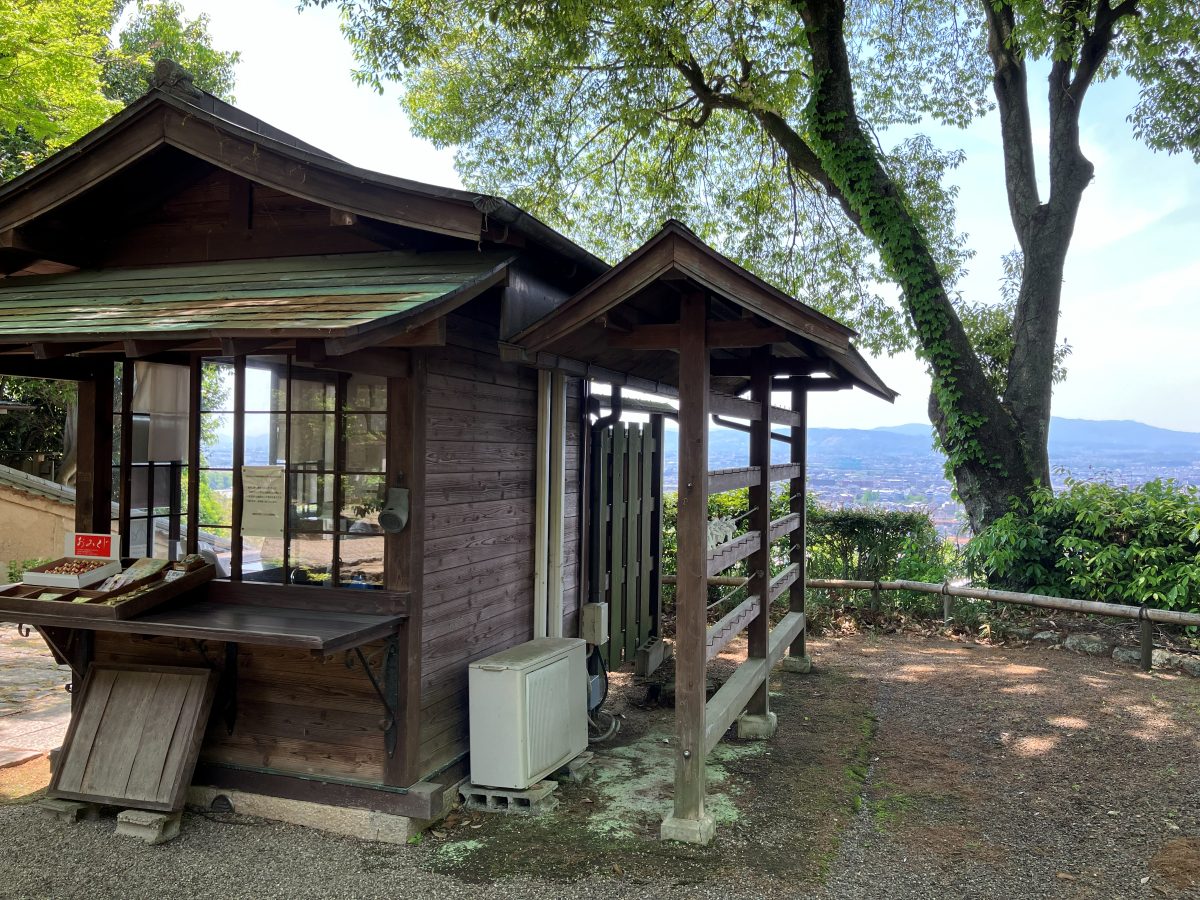
At the top of the stone steps, pay the admission (500 yen for adults) at the reception. Then begin your walk from the back right of the grounds.
The Five-Colored Camellia and the Man'yoshu Poem Stone
First, the Goshiki Tsubaki (Five-Colored Camellia). A Nara Prefecture Natural Monument and one of the "Three Famous Camellias of Nara," this old tree is said to be about 400 years old. On a base of red, white and pink, it bears richly varied, variegated blossoms. It blooms from late March to mid-April.
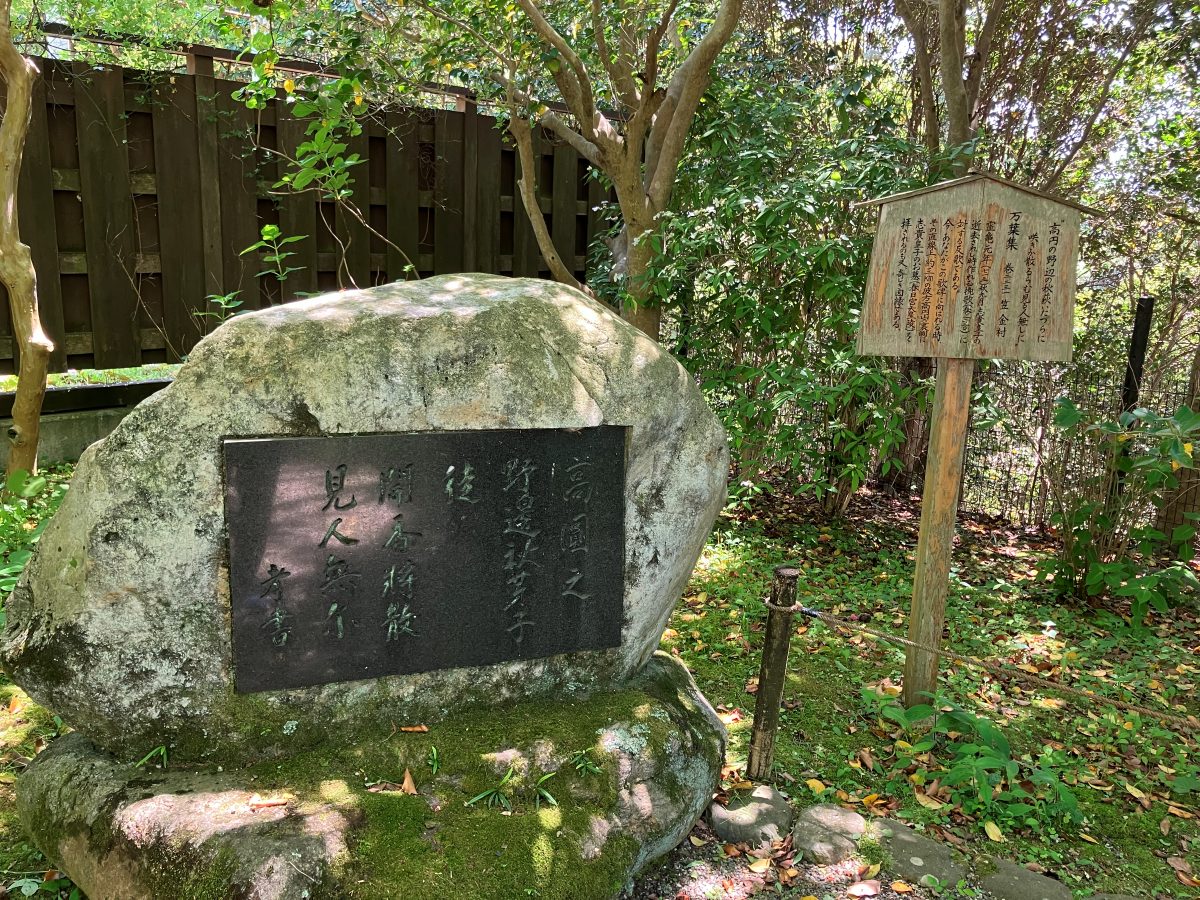
Close by stands a Man'yoshu poem stone. The poem engraved on it was composed by Kasa no Kanamura, mourning the death of Prince Shiki:
Takamado no / nobe no akihagi / itazura ni / saki ka chiruramu / miru hito nashi ni (Man'yoshu, Book 2)
"On the fields of Takamado, do the autumn bush clovers bloom and scatter in vain, with no one there to see them?" — the loss of the prince, entrusted to the bush clover flowers. Today, each autumn, Byakugoji's stone steps are covered in bush clover blossoms.
The Main Hall — A Simple Edo-Period Hall
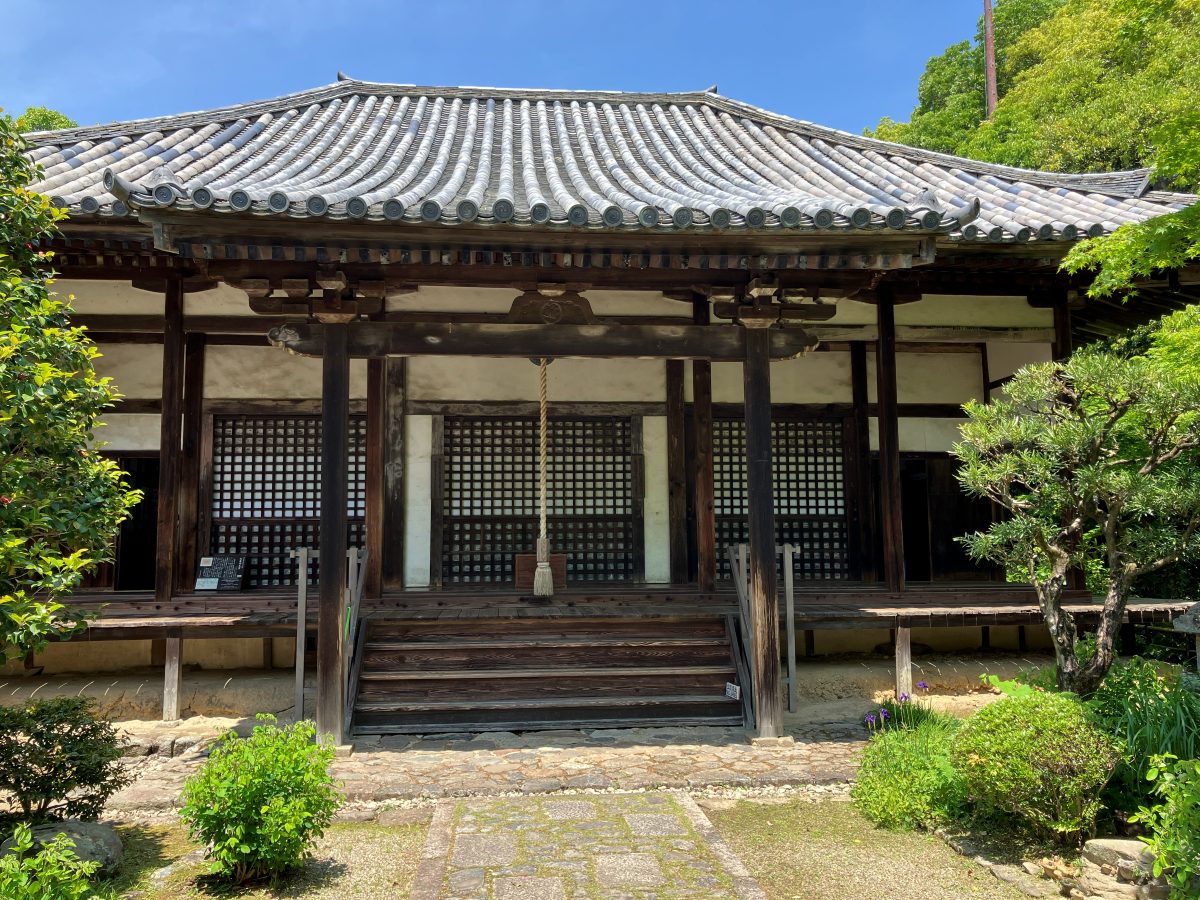
Next, the Main Hall. Built in the early Edo period when the temple was restored after the wars, it is a Nara City Designated Cultural Property.
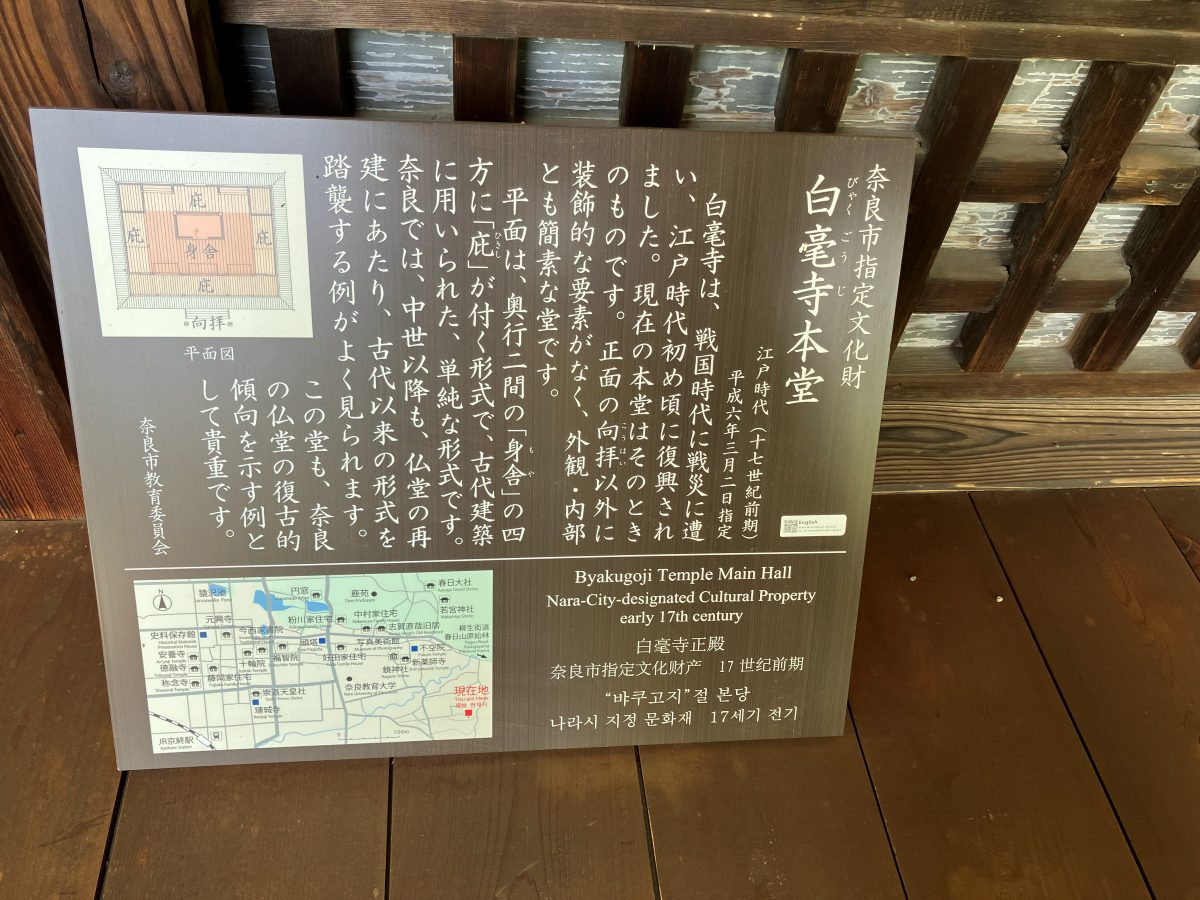
According to the signboard in front of the hall, apart from the entrance porch (kohai) it has no decorative elements, and is simple both inside and out. Its floor plan follows a plain style used in ancient architecture — in Nara, even after the medieval period, halls were often rebuilt following these ancient forms, and this hall is valued as an example of that tradition.
The temple is also home to a well-known statue of Prince Shotoku as a two-year-old child.
Following the Signs Around the Grounds
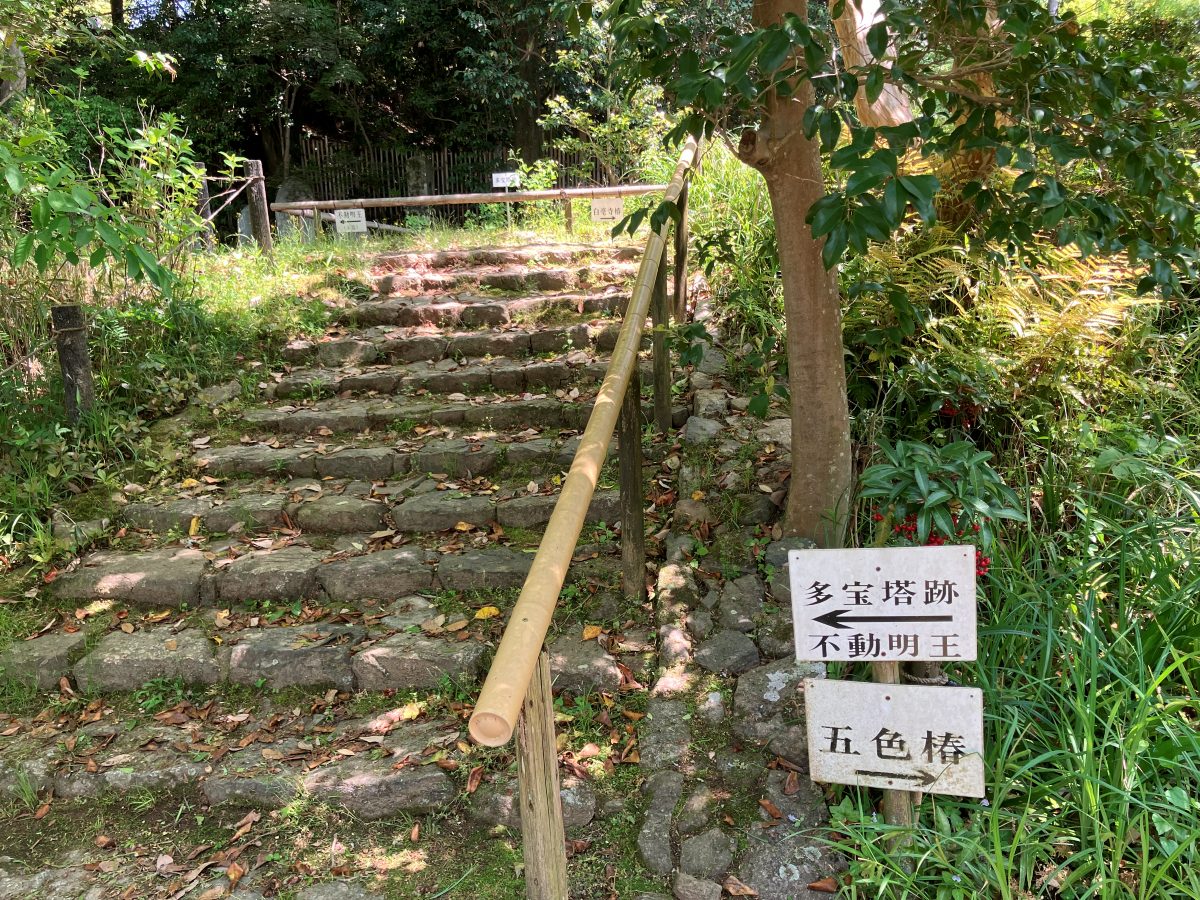
After paying your respects at the main hall, follow the signs around the grounds. Small signboards such as "Site of the Tahoto Pagoda / Fudo Myoo" and "Five-Colored Camellia" stand beside the steps, so you won't get lost.
The Treasure Hall — Face-to-Face with King Enma
And at last, in the Treasure Hall (宝蔵), you come face-to-face with Enma.
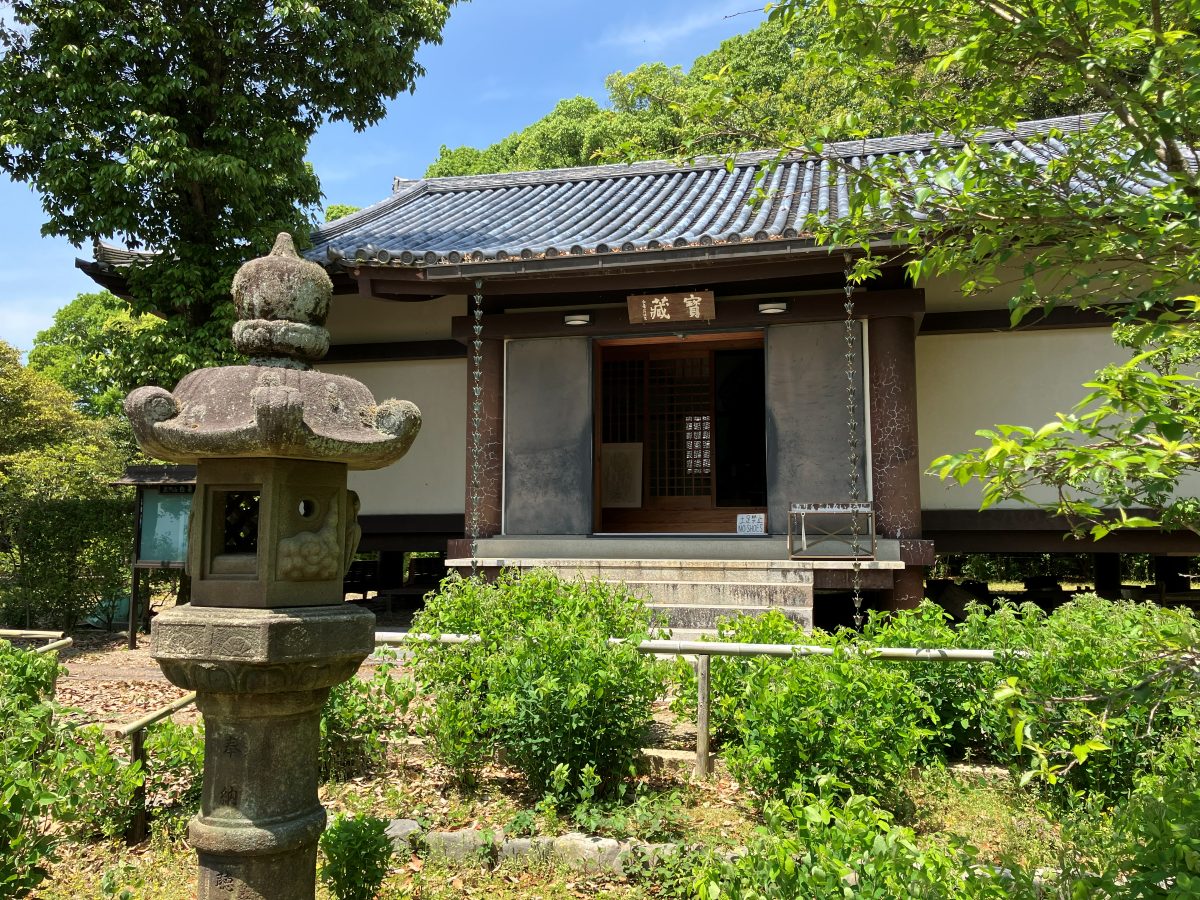
The treasure hall houses eight Buddhist statues designated as Important Cultural Properties of Japan: the principal image, a seated Amida Nyorai; a seated King Enma with his two attendants, Shimei and Shiroku; and Taizan-o, one of the Ten Kings of the underworld. In other words, the full bench of the "court of hell" is gathered here.
When you step inside, you are first overwhelmed by their sheer presence. Flanked by his two attendants, Enma seems to see right through every misdeed you've ever committed. 😄 You can almost feel him demanding, "Have you been doing wrong?"
Of course, everyone will feel something different. But I think many people will sense, first of all, that power — and something like a question being put to them.
And then, what thoughts rise up within you? I hope you'll take it as a chance to look into your own heart. …Though if you're carrying something on your conscience, the treasure hall may feel a little uncomfortable! 😄
The treasure hall also holds a standing Jizo Bosatsu and a seated statue of Eison (Kosho Bosatsu) — the thread from Saidaiji, once again.
Photography is not permitted inside the treasure hall — so I cannot show you here. You'll have to see him for yourself!
Flowers, Plants and Living Things
After the treasure hall, take your time with the flowers and plants of the grounds, and the creatures that come to visit them. They show a different face in every season.
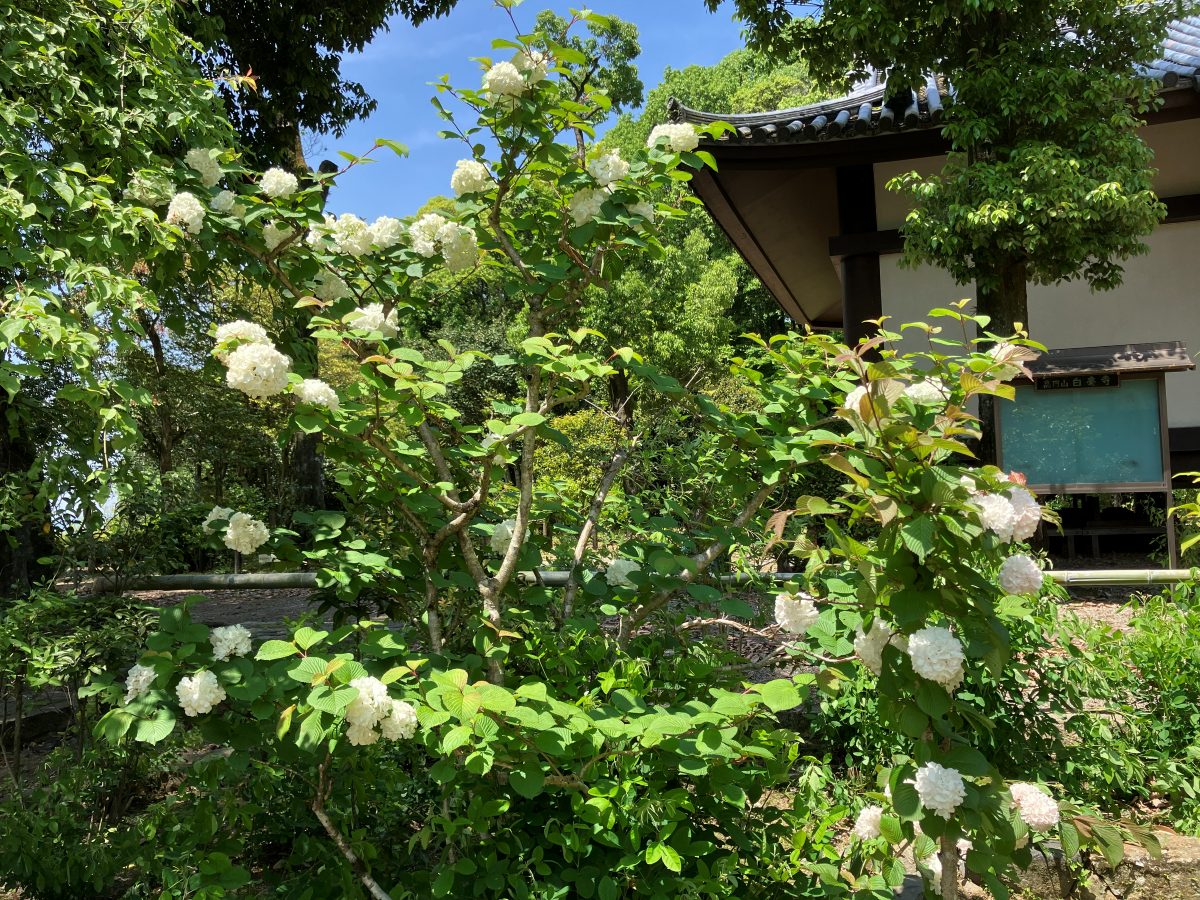
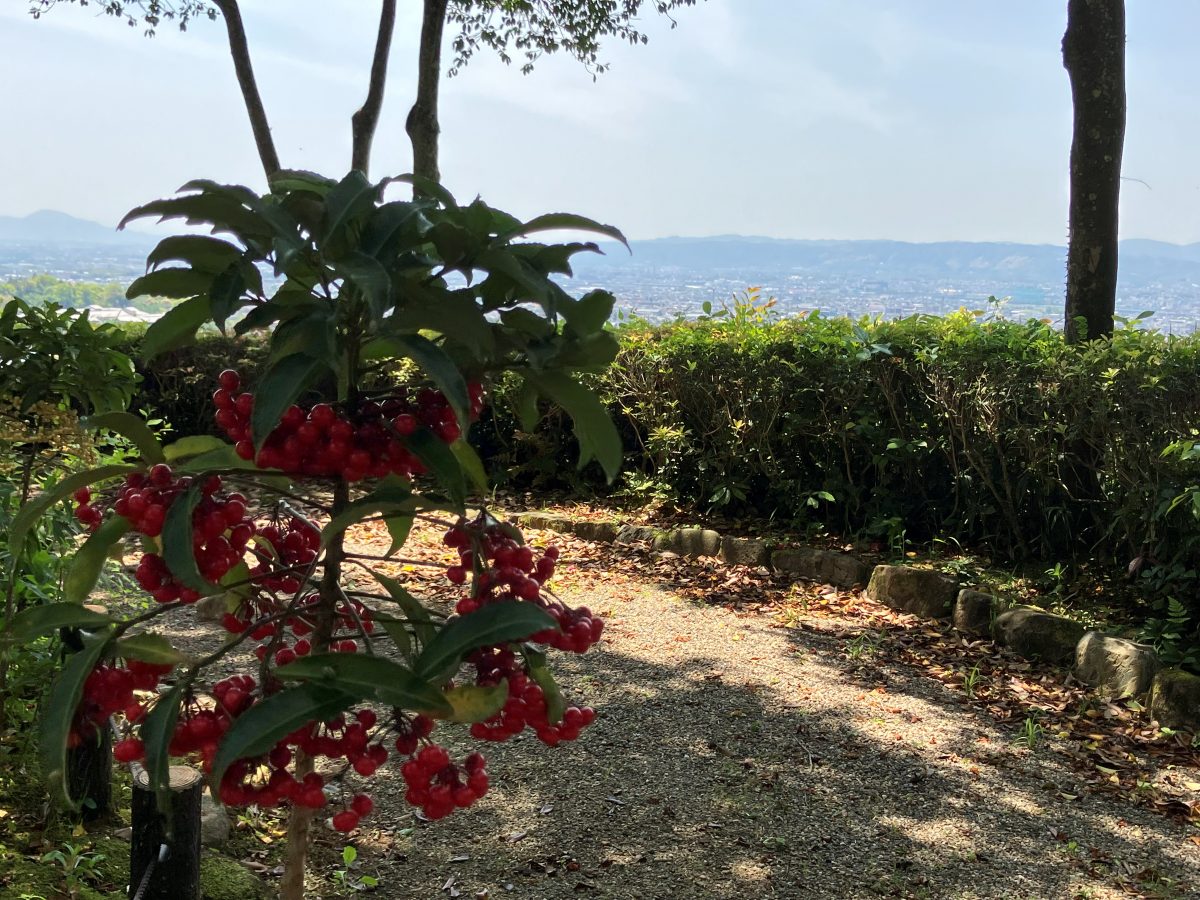
Finally, the View over Nara
Once you've seen the grounds, it's finally time to take in the city of Nara spread out below — slowly.
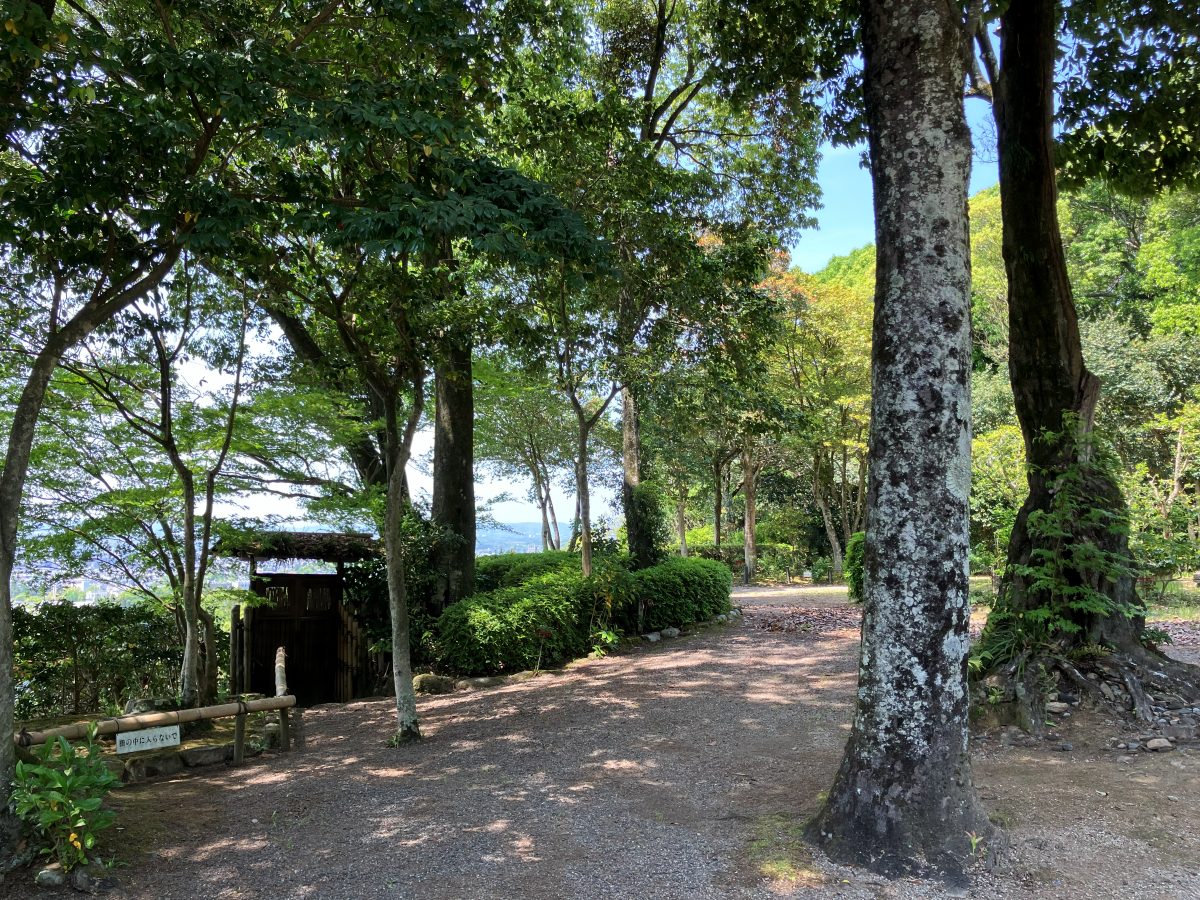
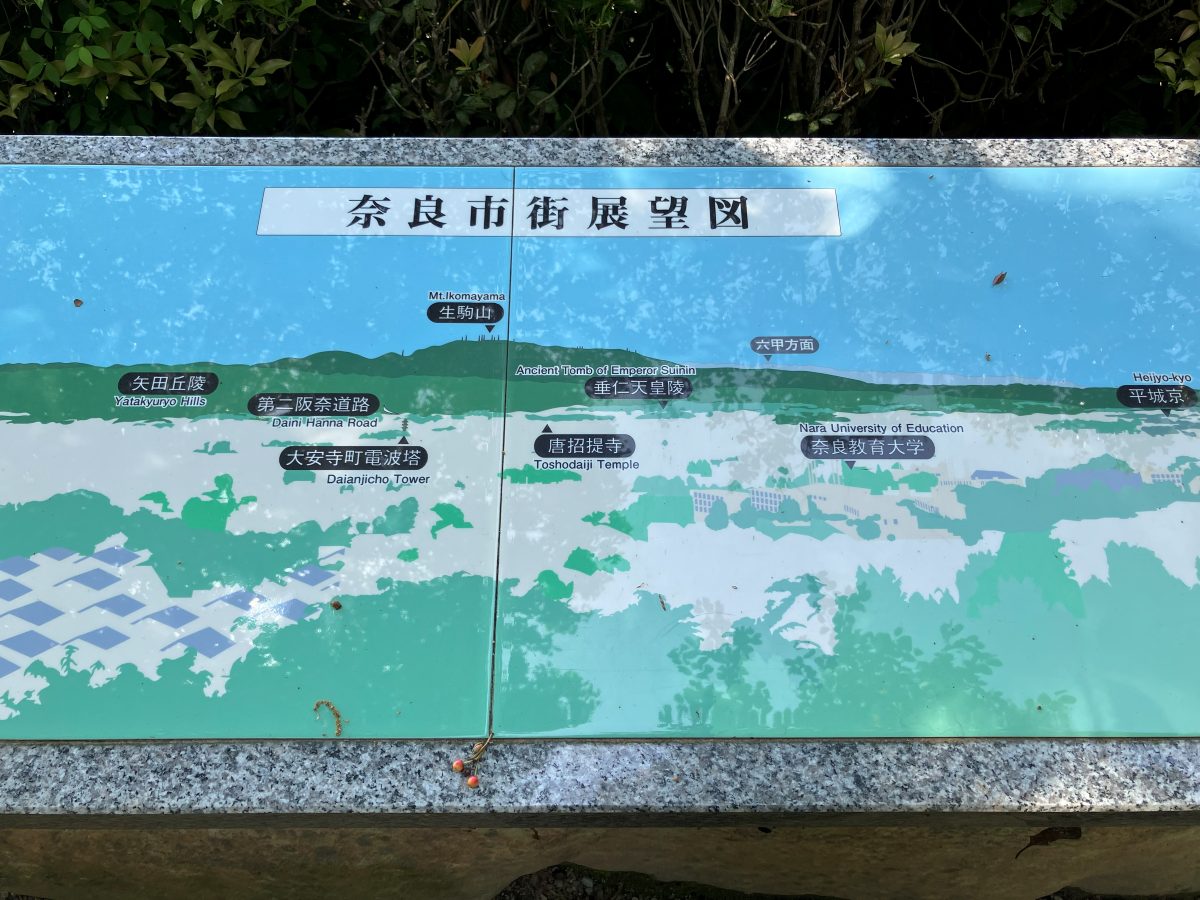
The panorama map in the grounds shows Mt. Ikoma in the centre, along with the Yata Hills, Toshodai-ji Temple, the Tomb of Emperor Suinin, Heijo-kyo, and even the direction of the distant Rokko mountains. Byakugoji is laid out with the mountain to the east and the city to the west — the Nara Basin opens wide toward the west.
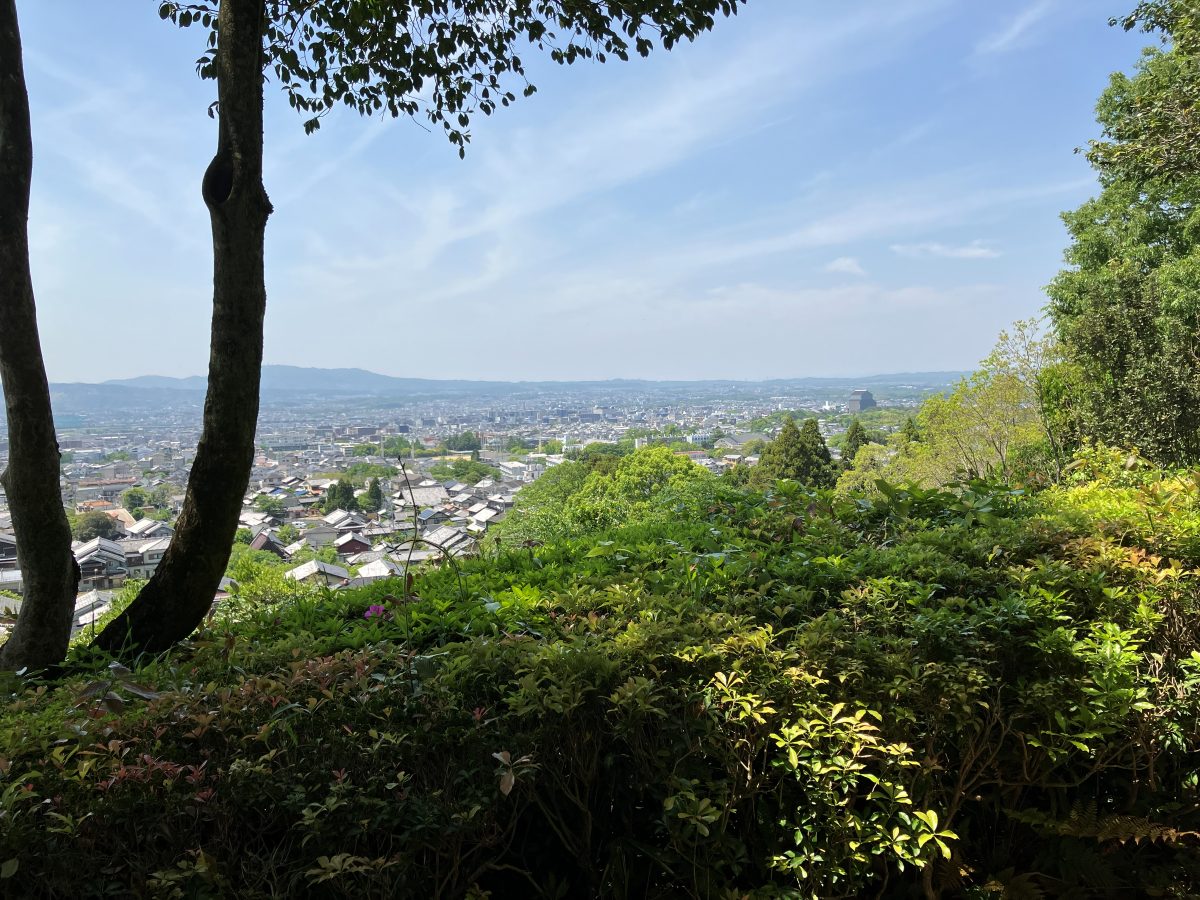
You have climbed, step by step, from Kintetsu-Nara Station to Shin-Yakushiji, and on to Byakugoji. As you take in this view, I hope you'll feel an indescribable sense of achievement.
There are a few benches in the grounds, so rest your tired body and enjoy the view at your own pace.
Visitor Information — Hours, Fees & Bus
| Hours | 9:00–17:00 |
|---|---|
| Closed | Open every day |
| Admission | Adults & university students 500 yen / Junior high & high school students 300 yen / Elementary school students 200 yen (Groups of 30 or more: 450 / 250 / 150 yen) |
| Reception | Through the gate, up the stone steps, on your left |
| Photography | Not permitted inside the treasure hall |
| Time needed | 1 to 1.5 hours (taking your time in the treasure hall and at the view; allow more if you rest on the benches) |
| On foot | About 20 minutes from Shin-Yakushiji (photo directions) |
| Bus | From JR Nara or Kintetsu-Nara Station: · City Loop Bus to “Takabatake-cho,” then about 20 min on foot · Bus bound for Yamamura-cho / Fujiwaradai to “Takabatake Jutaku,” then about 15 min · Bus bound for Kitano / Shimomizuma to “Byakugoji,” then about 10 min (infrequent) |
| Parking | None |
| Address & phone | 392 Byakugoji-cho, Nara / +81-742-26-3392 |
Confirmed on the Nara City Tourism Association website and the official Nara Prefecture tourism website in September 2026. The time estimate is my own, as a Nara local. Please check the latest information before you go.
When to Visit — From Noon into the Afternoon
If you're visiting Byakugoji, my recommendation is from noon into the afternoon.
First of all, it simply works out that way. From the Nara Station area, visit Shin-Yakushiji — best in the morning — and then walk about 20 minutes, enjoying the path at an easy pace. You'll naturally arrive at Byakugoji around noon or in the afternoon.
But the biggest reason is that noon through the afternoon is the ideal time to gaze down over the city of Nara.
If you come from the Nara Station area via Shin-Yakushiji in any season other than winter, you'll have walked quite a distance — tired, and warmed up. For you, Byakugoji, about 200 metres above sea level, offers a pleasant breeze rising from the city below. And once the sun passes its peak and begins to lean toward the west, Byakugoji's nature gives visitors cool shade and a sense of healing.
That's because the grounds have the mountain on the east side and look down over the city on the west side — and because they are covered in so much greenery. It feels as if the whole temple is wrapped in cool shade.
How long you stay depends on how much time you spend in conversation with King Enma and at the final view, but please allow 1 to 1.5 hours. There are a few benches in the grounds — the perfect place to rest your tired body. If you'd like to take a break on one, allow even more time.
Shin-Yakushiji in the morning, Byakugoji in the afternoon. If you visit both temples in one day, aim to spend the morning at Shin-Yakushiji (No.003), and visit Byakugoji from noon onward.
Seasonal Highlights — Bush Clover in Autumn, Camellia in Spring
Byakugoji is also a temple of flowers, counted as No. 18 of the "25 Flower Temples of the Kansai Region." According to the Nara City Tourism Association and others, the main seasons are:
- Bush clover (hagi): late September to early October. Red-purple and white blossoms spill over both sides of the stone steps leading up from the gate.
- Five-colored camellia: late March to mid-April
- Autumn leaves: late November to early December
Every year on January 16, the "Enma-mode" memorial service (a visit to pay respects to King Enma) is held from 10:00 a.m.
The Area Around Byakugoji
Surrounded by quiet residential streets and elevated on a hilltop, the area around Byakugoji offers numerous vantage points overlooking the city of Nara below. Take your time wandering and enjoying the views.
The Yamanobe-no-Michi you walked from Shin-Yakushiji is known as Japan's oldest recorded road. From here it continues further south, winding along the foot of the mountains on the eastern edge of the Nara Basin, all the way to the foot of Mt. Miwa.
Frequently Asked Questions
How much is admission?
500 yen for adults and university students, 300 yen for junior high and high school students, and 200 yen for elementary school students. Pay at the reception on your left, up the stone steps past the gate.
How much time do I need?
Allow 1 to 1.5 hours if you take your time in the treasure hall and at the final view. Allow more if you'd like to rest on the benches.
Can I take photos inside the treasure hall?
No, photography is not permitted inside the treasure hall. Please see King Enma with your own eyes.
Can I walk from Shin-Yakushiji?
Yes — about 20 minutes along the Yamanobe-no-Michi. There are slopes and steps, so wear comfortable shoes. See the photo directions.
Can I get there by bus or car?
By bus, take the City Loop Bus from JR Nara or Kintetsu-Nara Station to “Takabatake-cho” and walk about 20 minutes. For other routes, see Visitor Information. There is no parking.
The Charm of Byakugoji
After walking all the way from Kintetsu-Nara Station to Shin-Yakushiji, then climbing uphill to Byakugoji, your body is genuinely tired. And then — a cool, soft breeze rises from the city below, and everything feels right again.
Standing there, with the whole of Nara spread beneath you, if you gently close your eyes — it feels almost as though you are floating through the air.
This quiet, hidden temple changes its face with every season. And the creatures that come to meet each new season — the birds, the insects, the blooms — bring their own quiet joy to those who find their way here.
Byakugoji is not simply a temple with a nice view. Including the climb, step by step, it is a place where you can savour the atmosphere of "THE Nara" with all five senses.
Please Come and See Byakugoji for Yourself 🌄
We hope you'll savour not just the temple, but the whole journey — the "This is Nara" atmosphere of the path, and the feeling of having discovered something truly your own.