Shin-Yakushiji Temple Guide: The Twelve Divine Generals, Fees & Access — Not the Famous Yakushiji
📢 Disclosure: This post may contain affiliate links. If you book through them, I may earn a small commission at no extra cost to you. Thank you for supporting this blog! → Privacy Policy
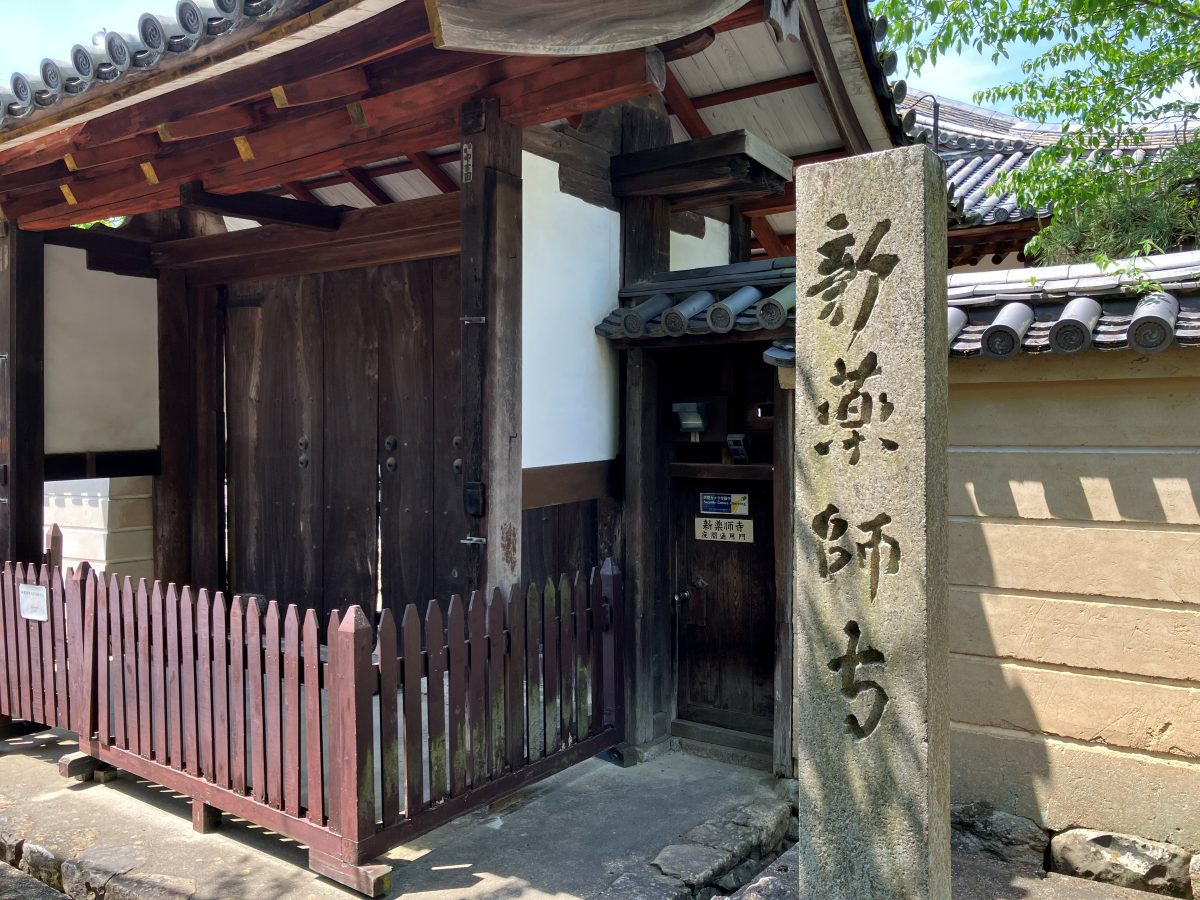
Did you enjoy our second guide to Saidaiji Temple? Today, we move the stage to the area most familiar to visitors of Nara — the neighbourhood around Kintetsu-Nara Station.
But don't expect the usual tourist highlights. This blog is built on a simple idea: finding the places that most people walk right past. And today's destination is a perfect example.
Today's stage: Shin-Yakushiji Temple (新薬師寺).
Wait — isn't that Yakushiji, the famous temple in the west of Nara? With the word "Shin" (新) in front of it? Where is it exactly? — If that's your reaction, this guide is made for you.
About Shin-Yakushiji — Not the Same Temple as Yakushiji
Compared to the world-famous Yakushiji Temple, Shin-Yakushiji is remarkably, blissfully quiet. Its compact grounds offer the perfect retreat for anyone exhausted by the tourist crowds — a place to sit, breathe, and simply be.
The names are almost identical, but Yakushiji and Shin-Yakushiji are completely different temples. Yakushiji, a UNESCO World Heritage Site, stands in Nishinokyo in western Nara and is the head temple of the Hosso school of Buddhism. Shin-Yakushiji belongs to the Kegon school and sits quietly in Takabatake, a residential neighbourhood just south of Nara Park.
And despite the name, it is not a "new" version of Yakushiji. The character shin (新) is often explained not as "new," but as in reigen arata — a Buddha whose blessings are keenly felt. (The temple's official website does not explain the name, and some English guides do translate it as "New Yakushi Temple.")
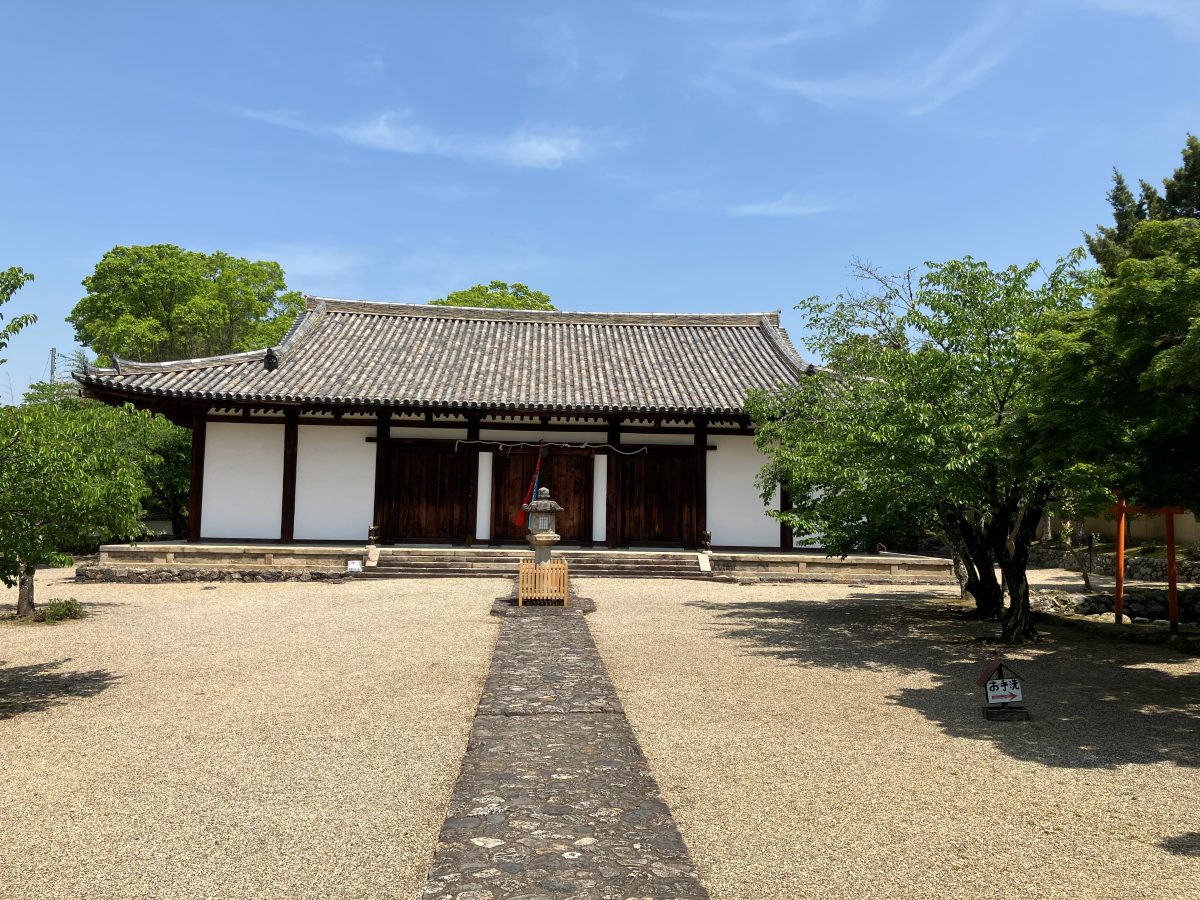
Shin-Yakushiji is said to have been founded in 747 by Empress Kōmyō, who prayed for the recovery of her ailing husband, Emperor Shōmu. In its early days it was a great temple complex, with a huge main hall (kondō) enshrining seven statues of the Healing Buddha, and pagodas to the east and west. The site of that hall has been found about 150 metres west of today's main hall, on the campus of Nara University of Education.
That great hall was toppled by a storm in the Heian period and no longer survives. But the present main hall is itself a rare building from the Nara period — a National Treasure.
But do not be fooled by its modest size. Inside, something extraordinary awaits: a secret Buddhist treasure (National Treasure) found nowhere else.
That treasure is the Twelve Divine Generals (十二神将立像), standing in the main hall — the oldest and largest set of Twelve Divine Generals in Japan. I'll show you how to enjoy them, in my recommended order, in Highlights.
Access — Basic Information
Kintetsu-Nara Station → Shin-Yakushiji Temple (on foot)
· Shortest distance: approx. 2.3 km
· Walking time: approx. 1 hour at a leisurely sightseeing pace
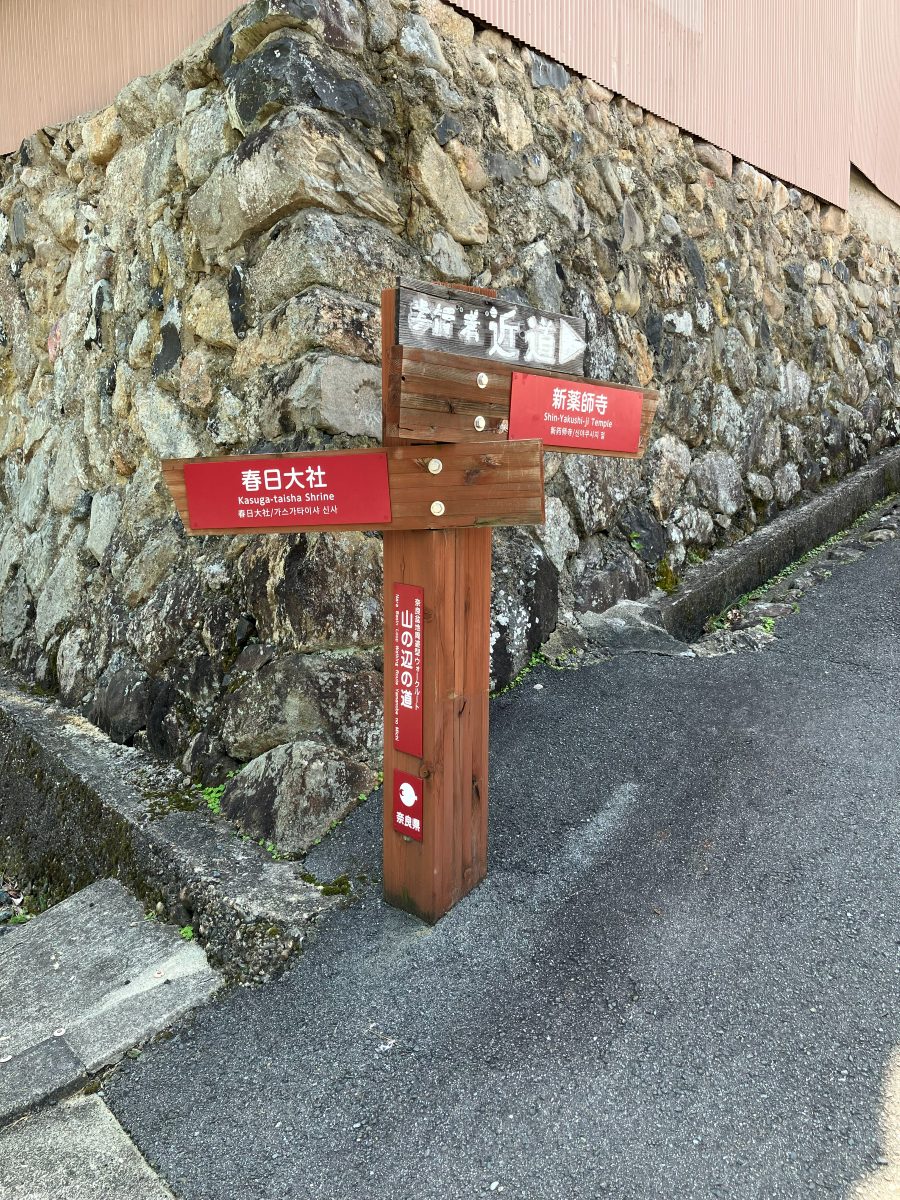
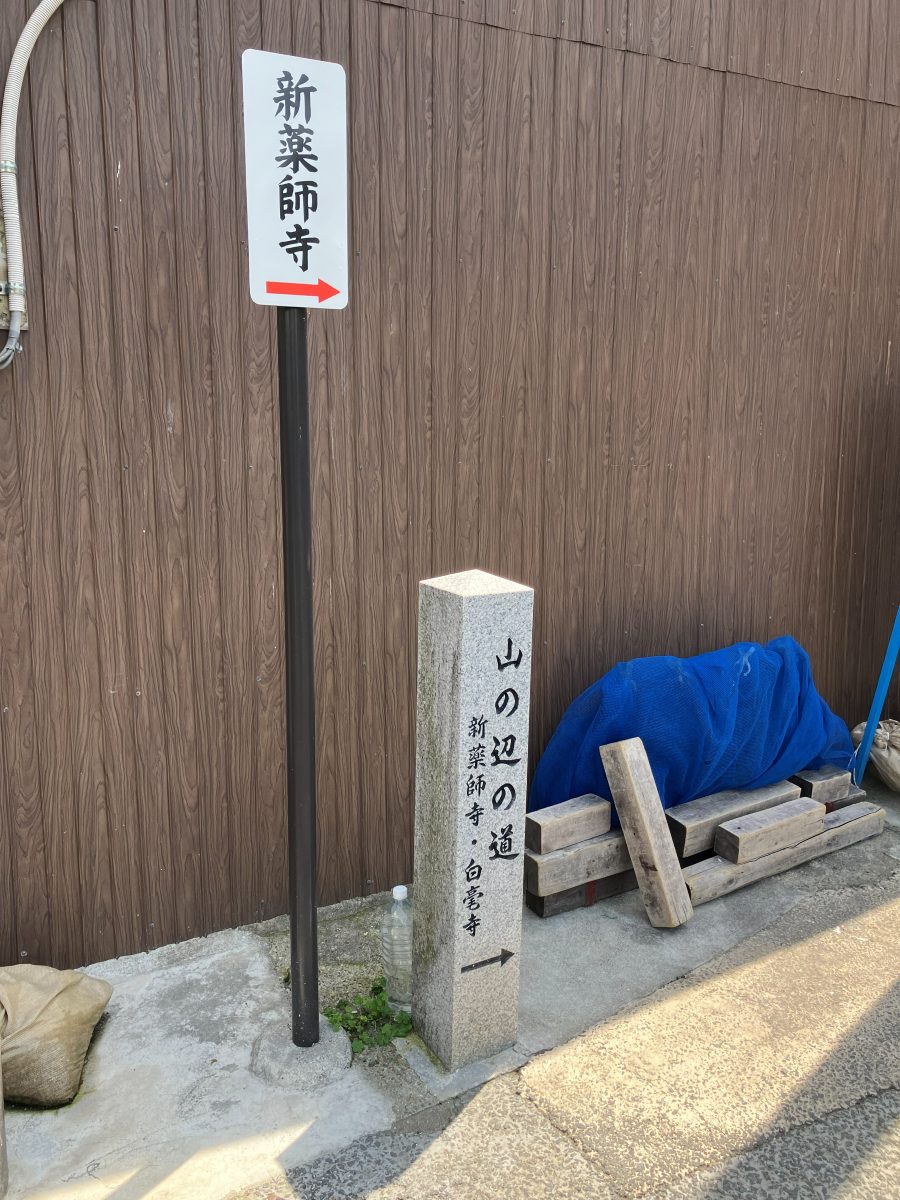
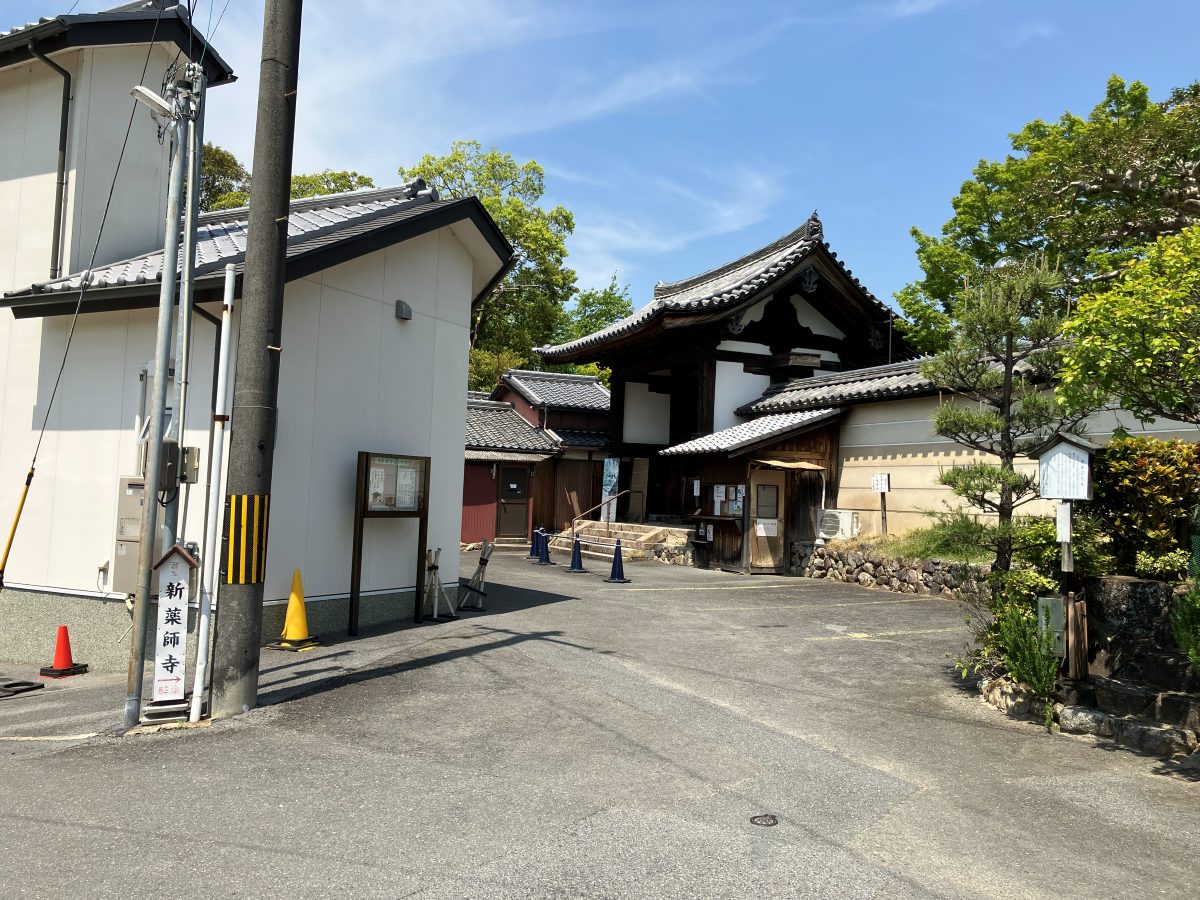
Getting to Shin-Yakushiji from Kintetsu-Nara Station
* Head toward Exit 2.
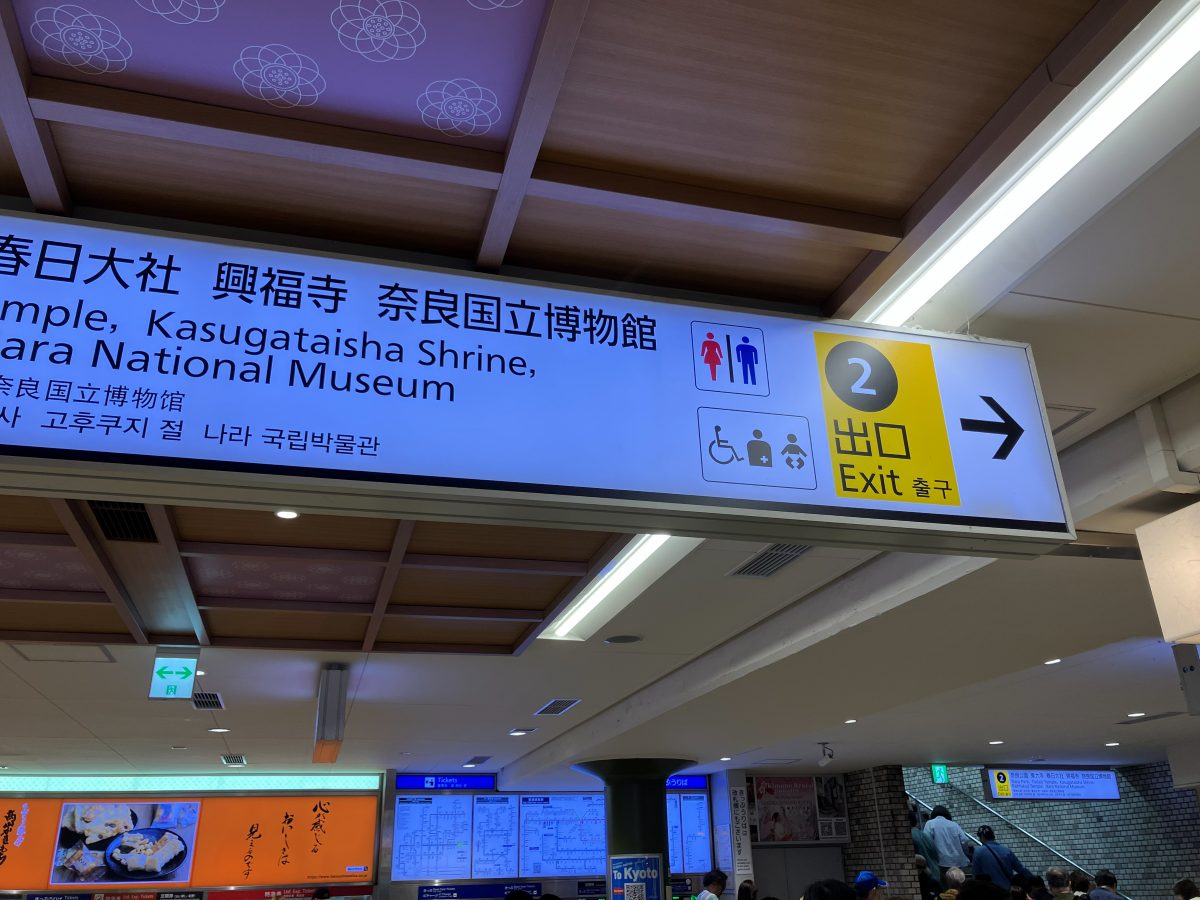
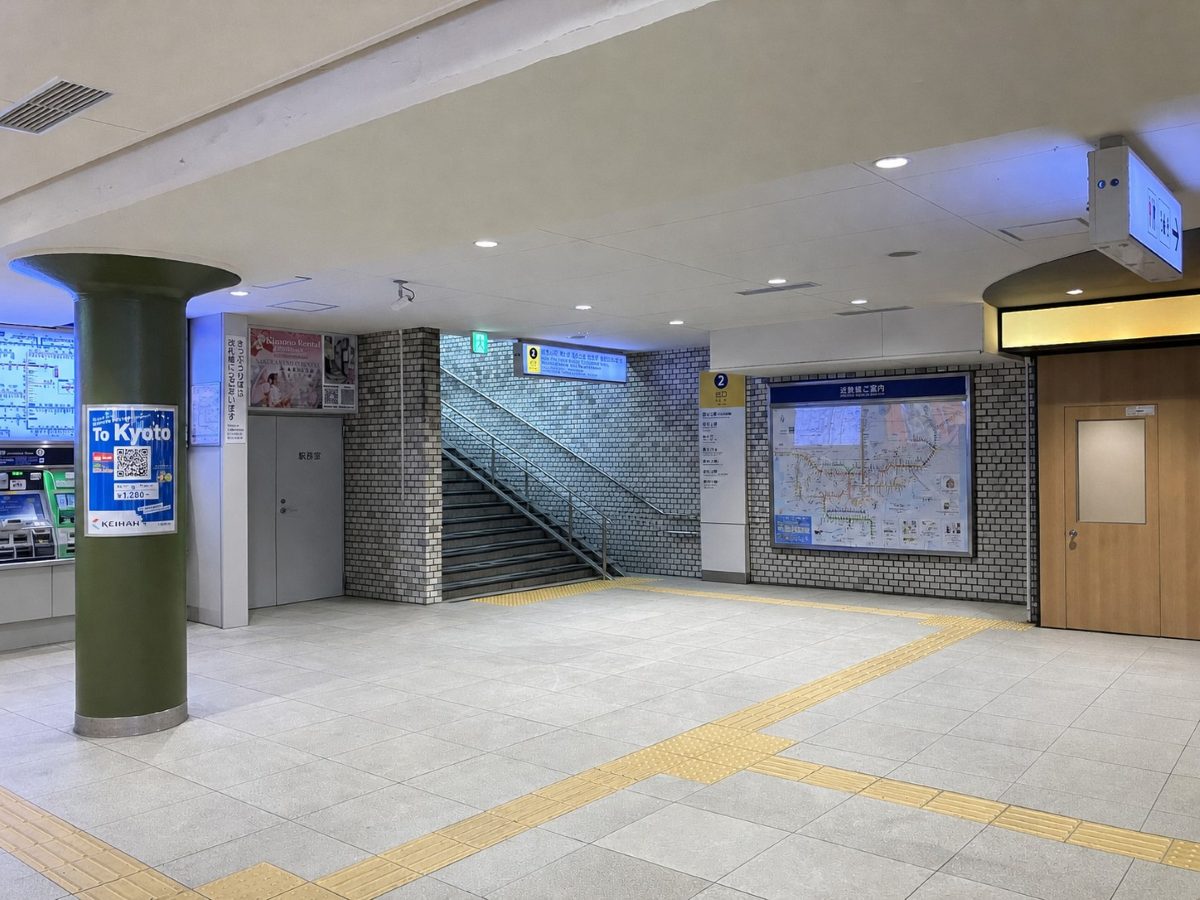
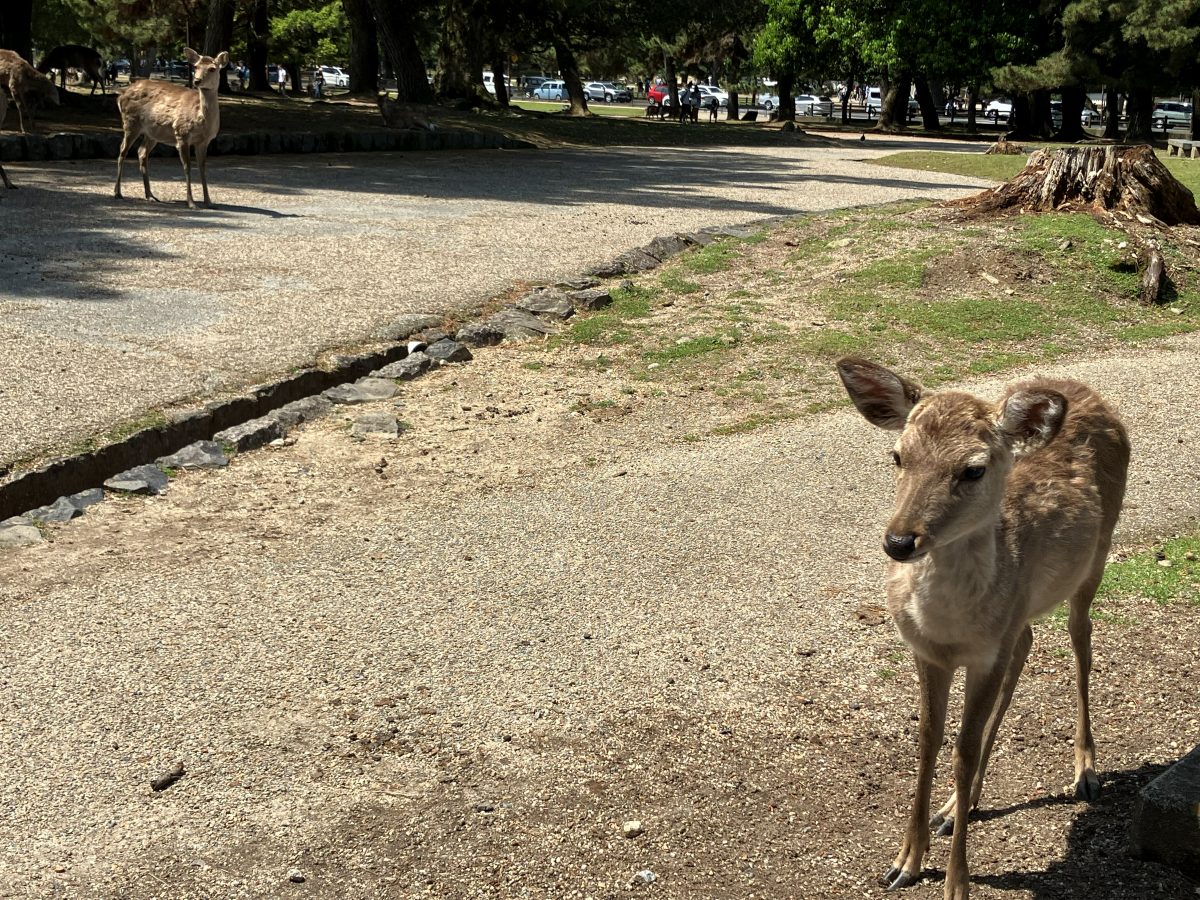
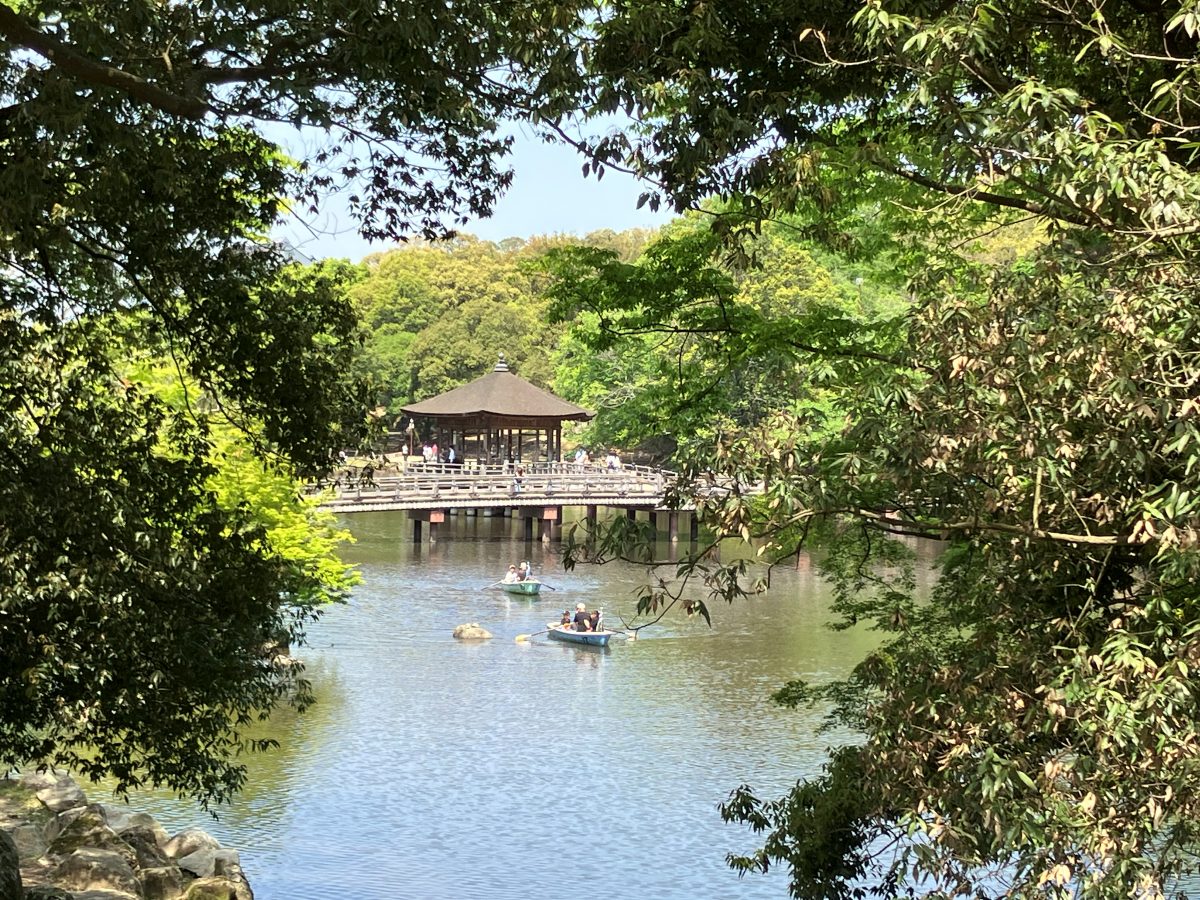
To fully appreciate the contrast that awaits you later, enjoy walking through the tourist zone first — the crowds, the deer, and yes, watching your step on the pavement. 😄
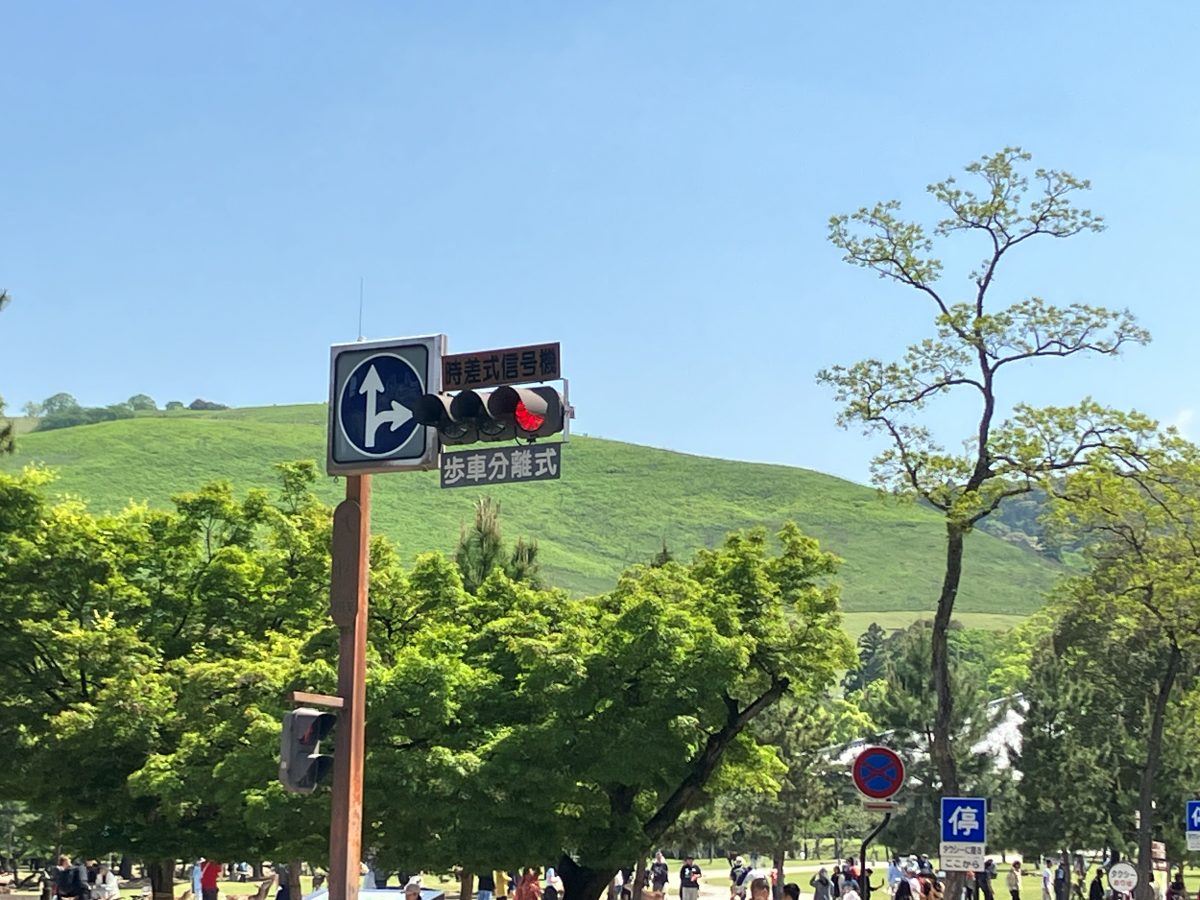
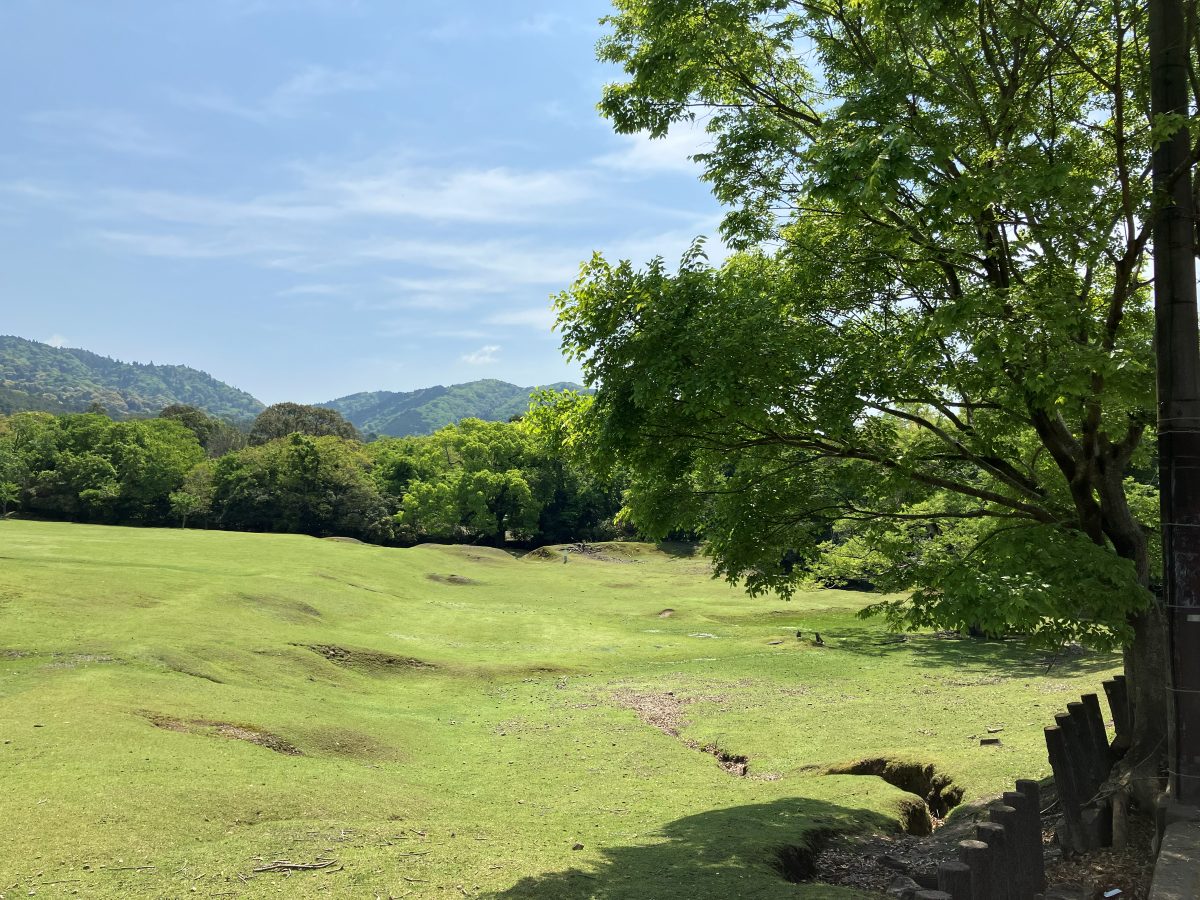
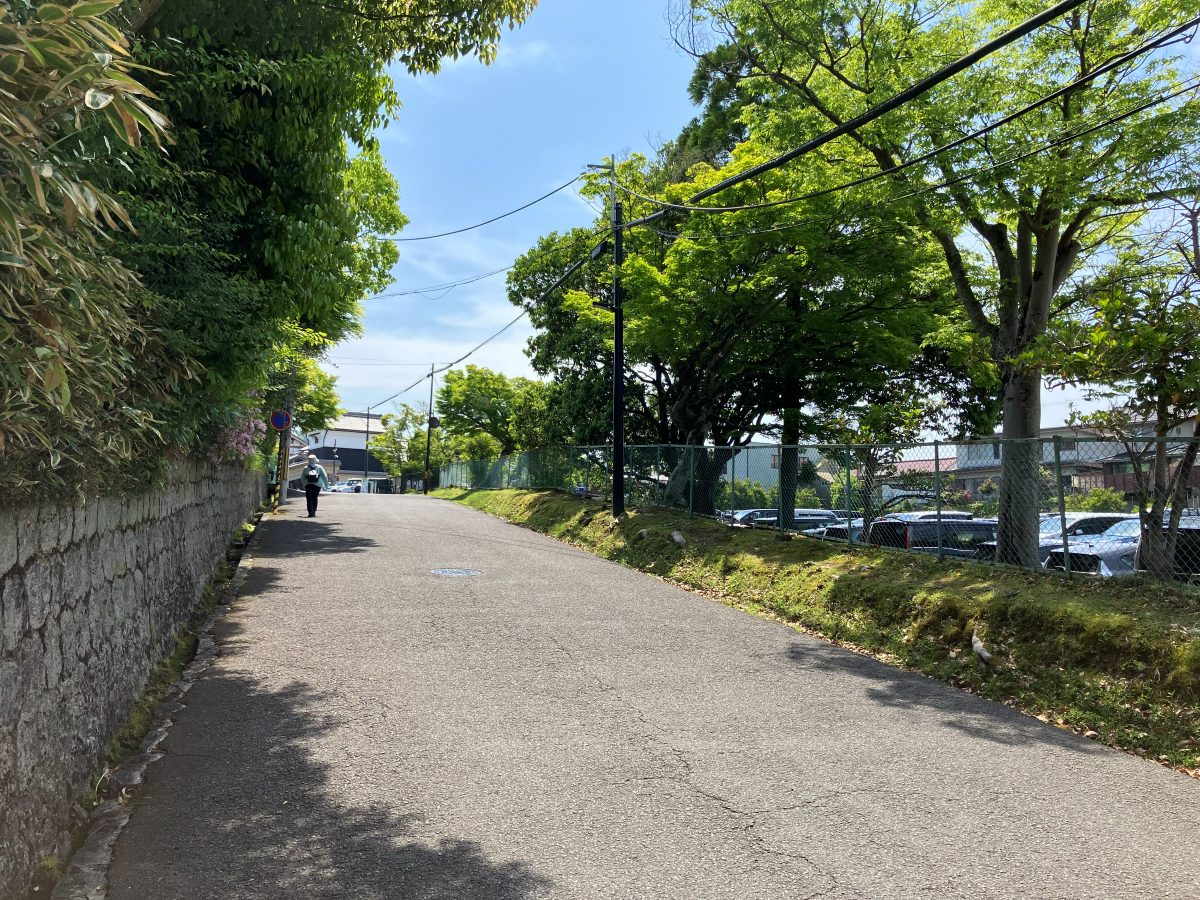
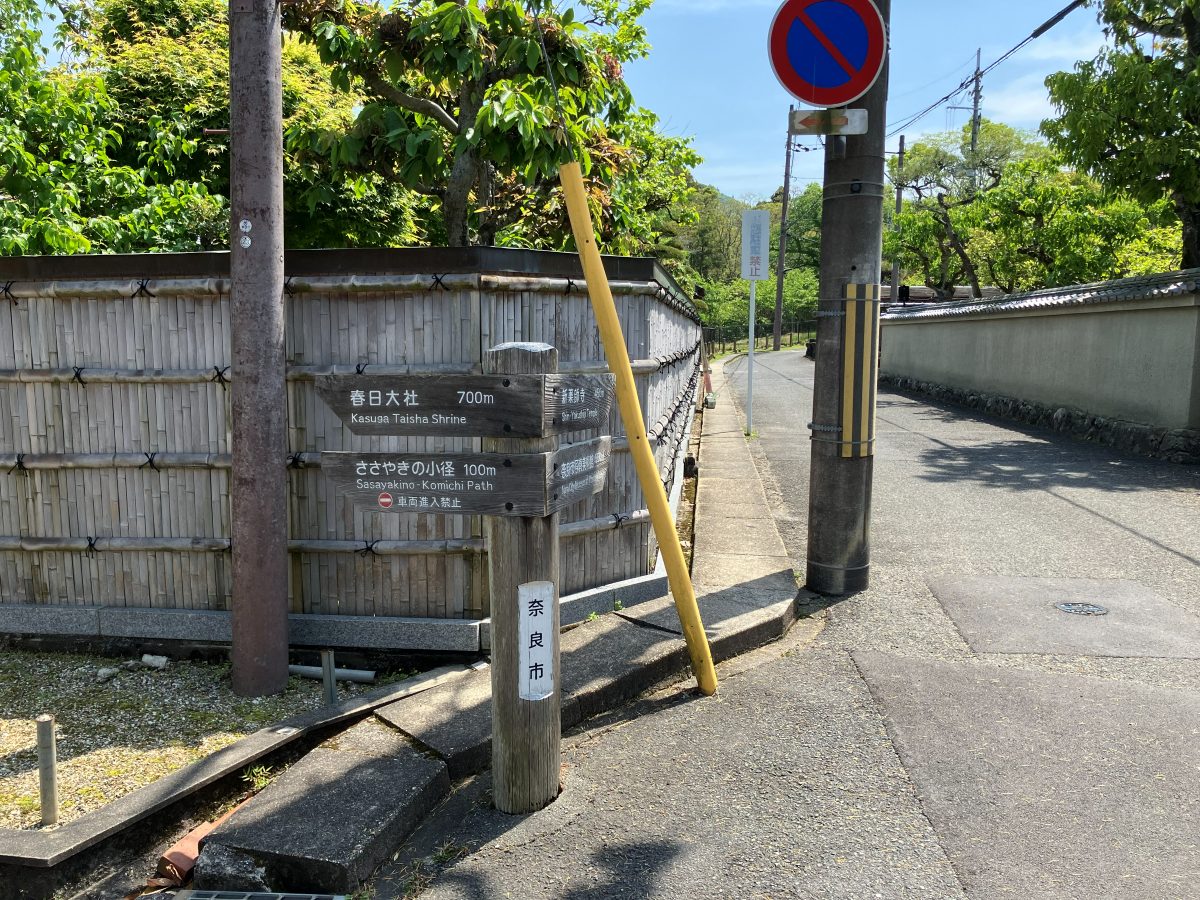
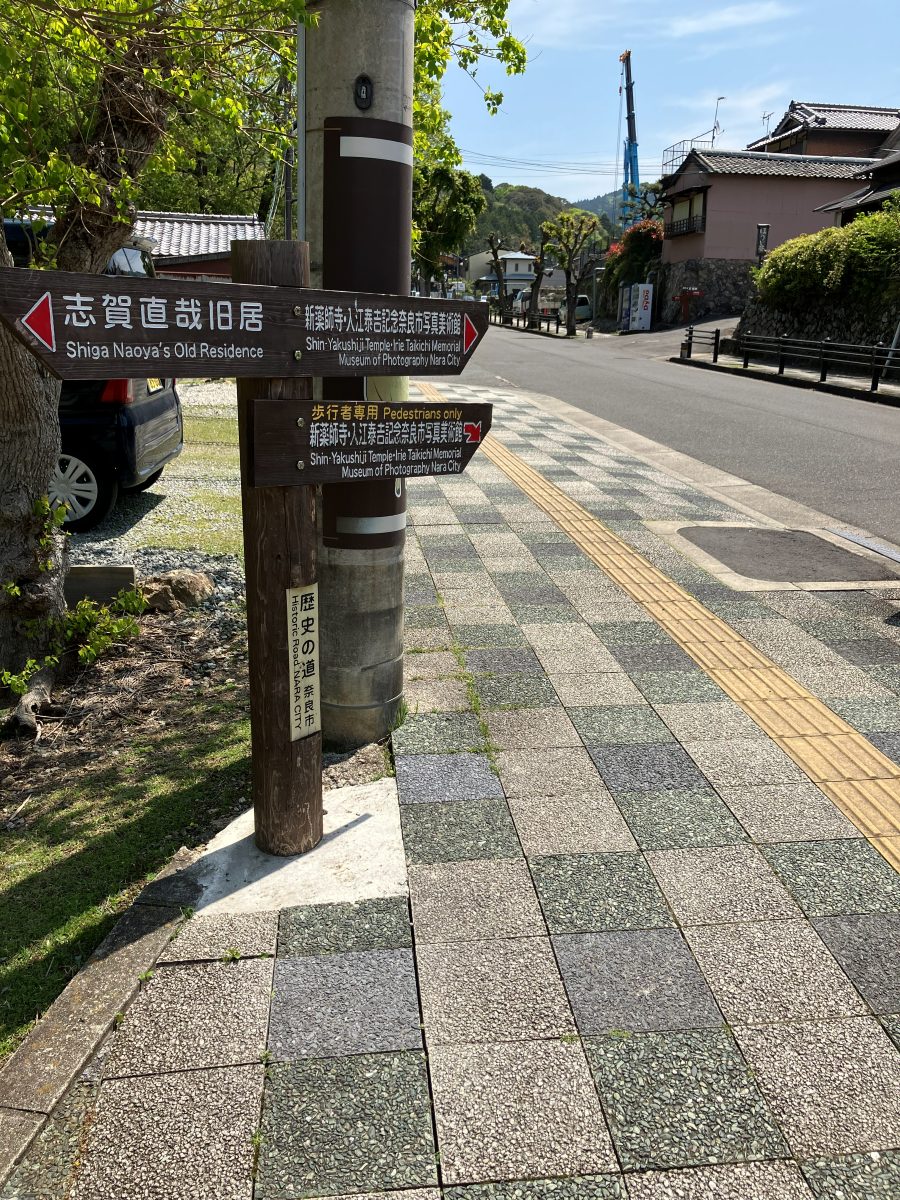
From this point, the crowds vanish completely. It feels as though you have stepped into an entirely different dimension — a quiet residential Nara that tourists rarely ever see.
Highlights — In Order from the South Gate
From here, I'll guide you around the temple in the order I always walk it. The key is this: enter the main hall last. You can of course visit the main hall first — but if you learn a little from the video and the exhibits beforehand, you'll enjoy the Twelve Generals twice as much!
South Gate (南門) — The Entrance
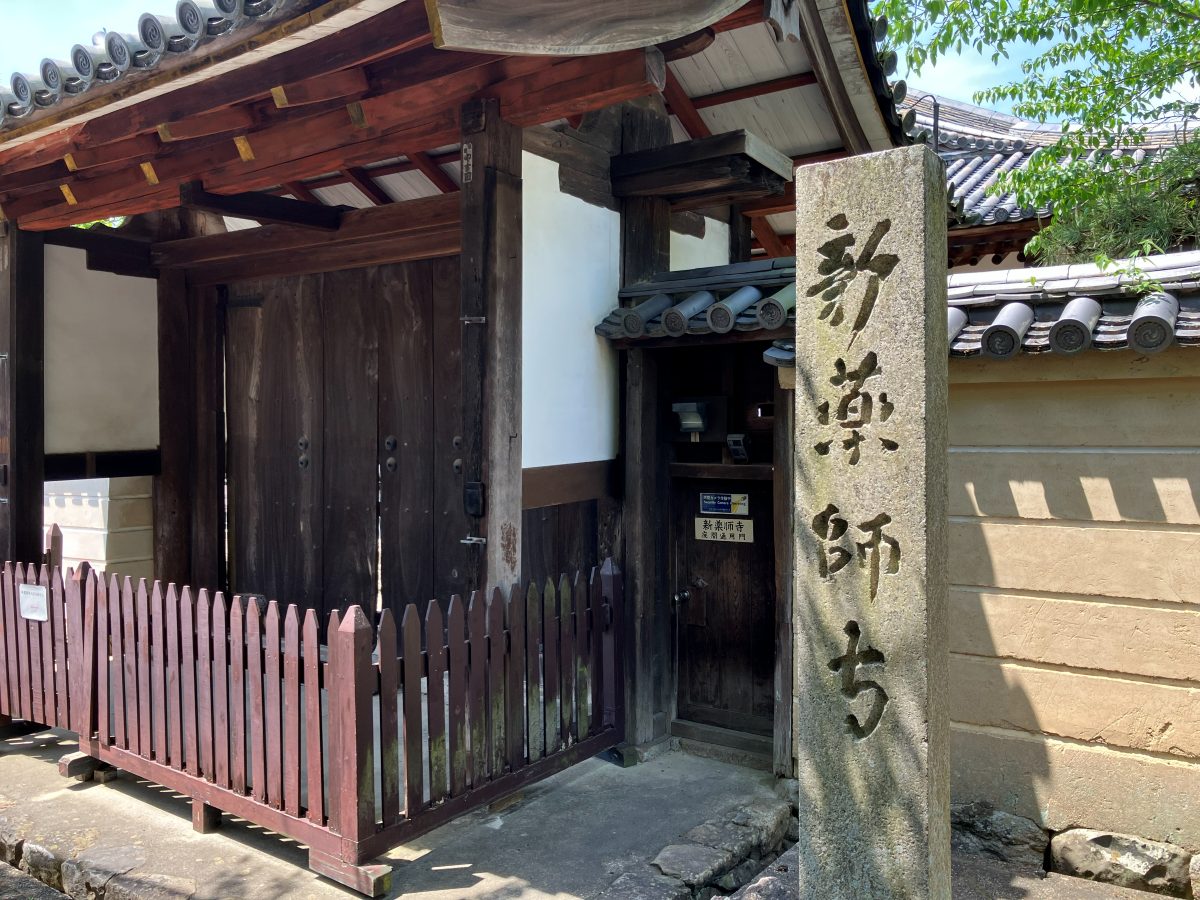
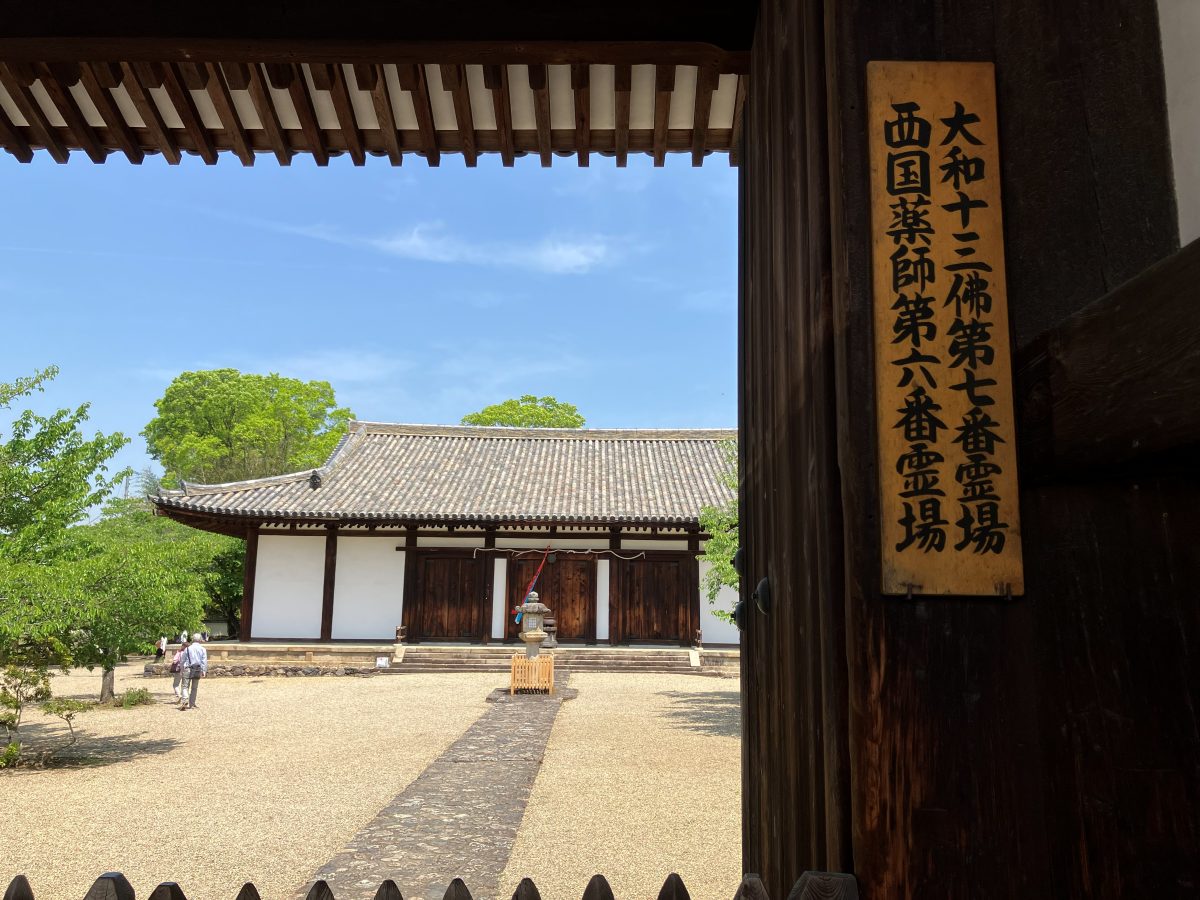
Enter the grounds through the South Gate, the temple's main gate (Important Cultural Property), thought to date from the Kamakura period. Plaques on its pillar mark Shin-Yakushiji as No. 6 of the Saigoku Yakushi pilgrimage and No. 7 of the Yamato Thirteen Buddhas pilgrimage.
The Main Hall — First, from the Outside
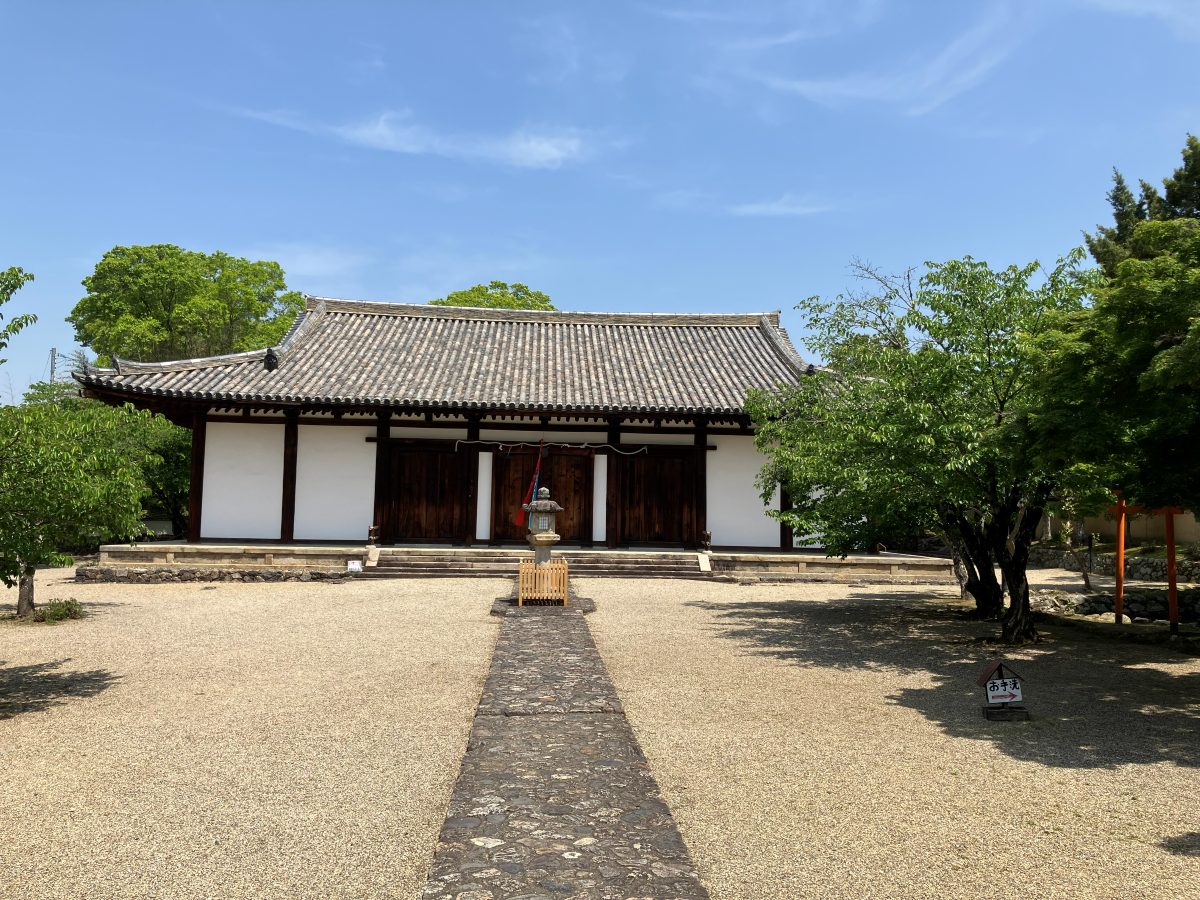
Beyond the gate, a stone path leads straight to the main hall. Its gently curving roof and broad white walls mark it as a dignified building of the Tenpyō era, standing since the temple's early days in the Nara period.
Facing the hall, the Jizō-dō hall stands on your left and the bell tower on your right (both Kamakura period, Important Cultural Properties). The bell itself dates from the Tenpyō era and is known for a legend about a demon.
Into the Garden First — The Video and the Exhibits
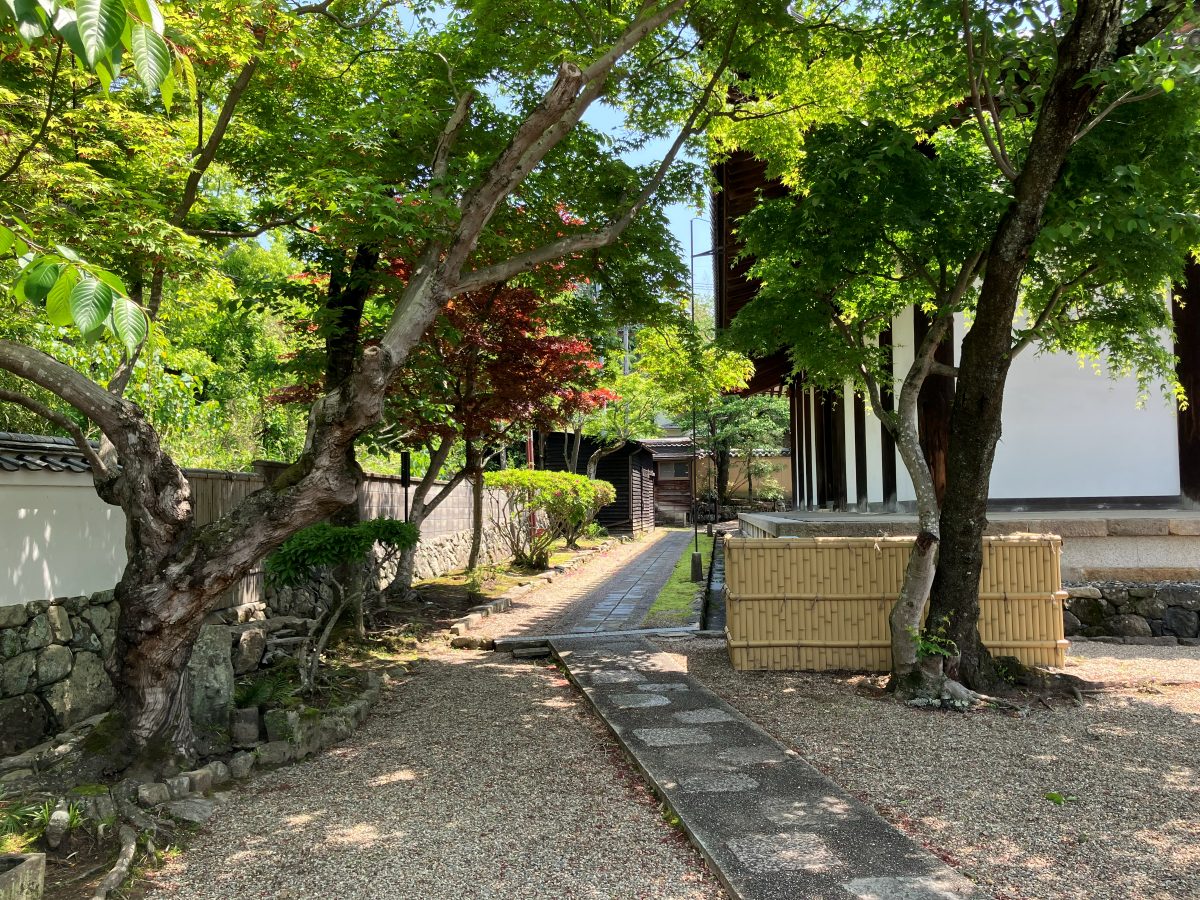
After admiring the hall from outside, don't go in yet — head toward the garden instead. There are two entrances to the garden, and either will do.
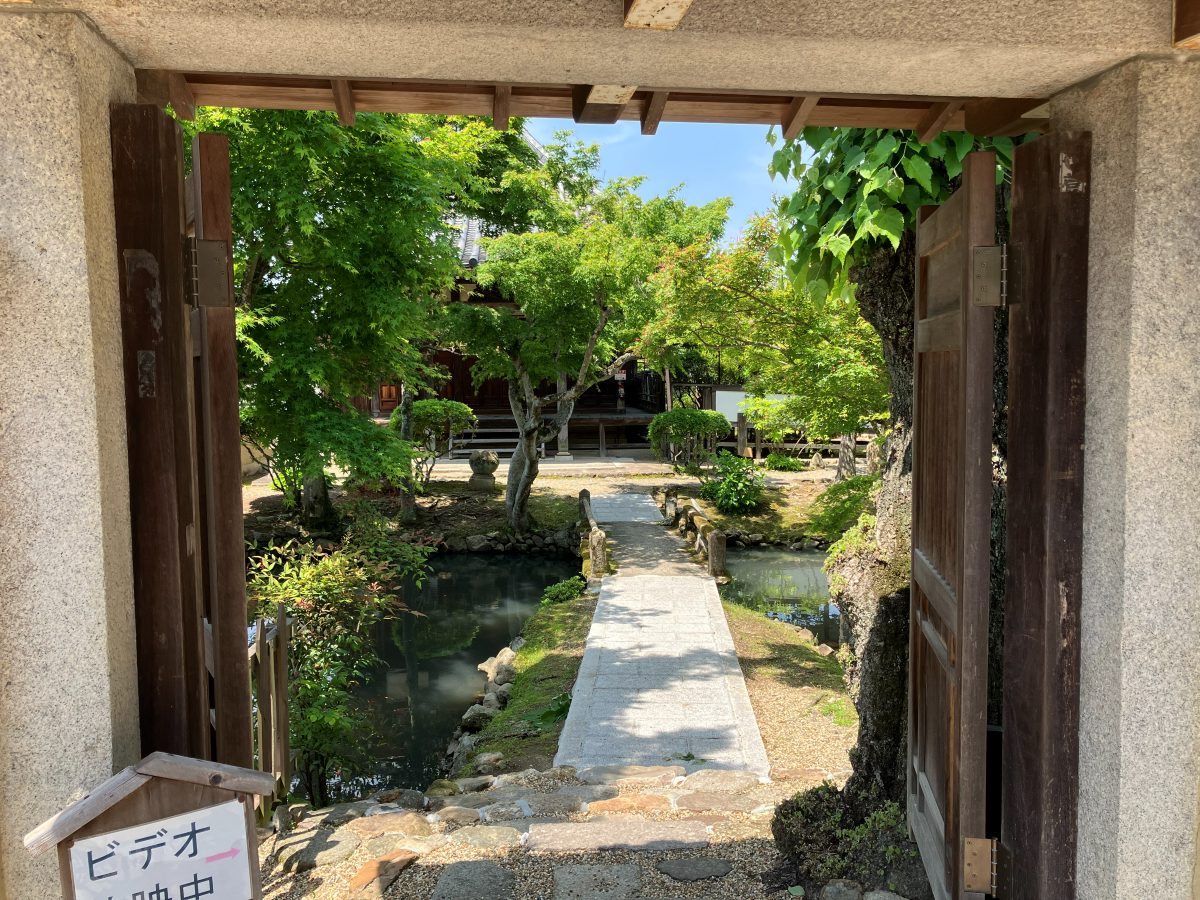
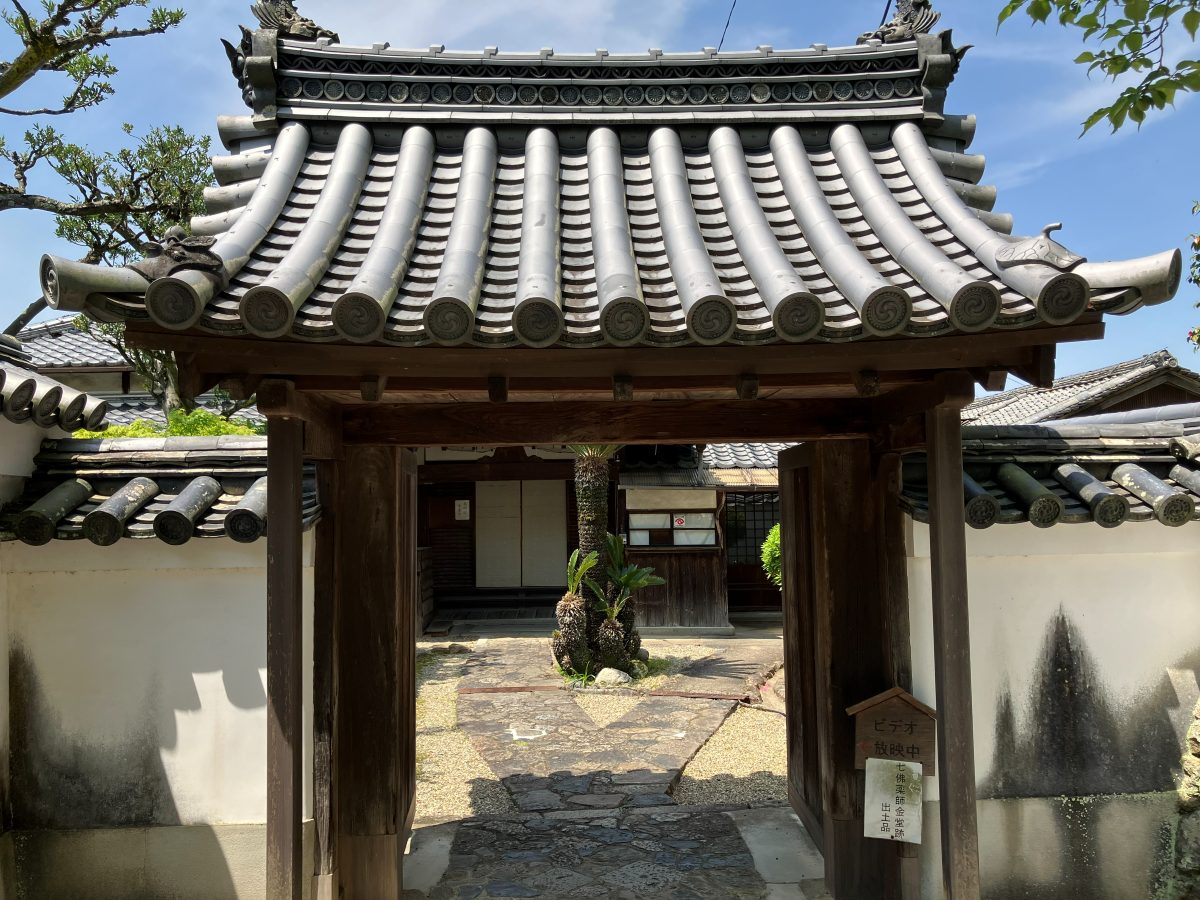
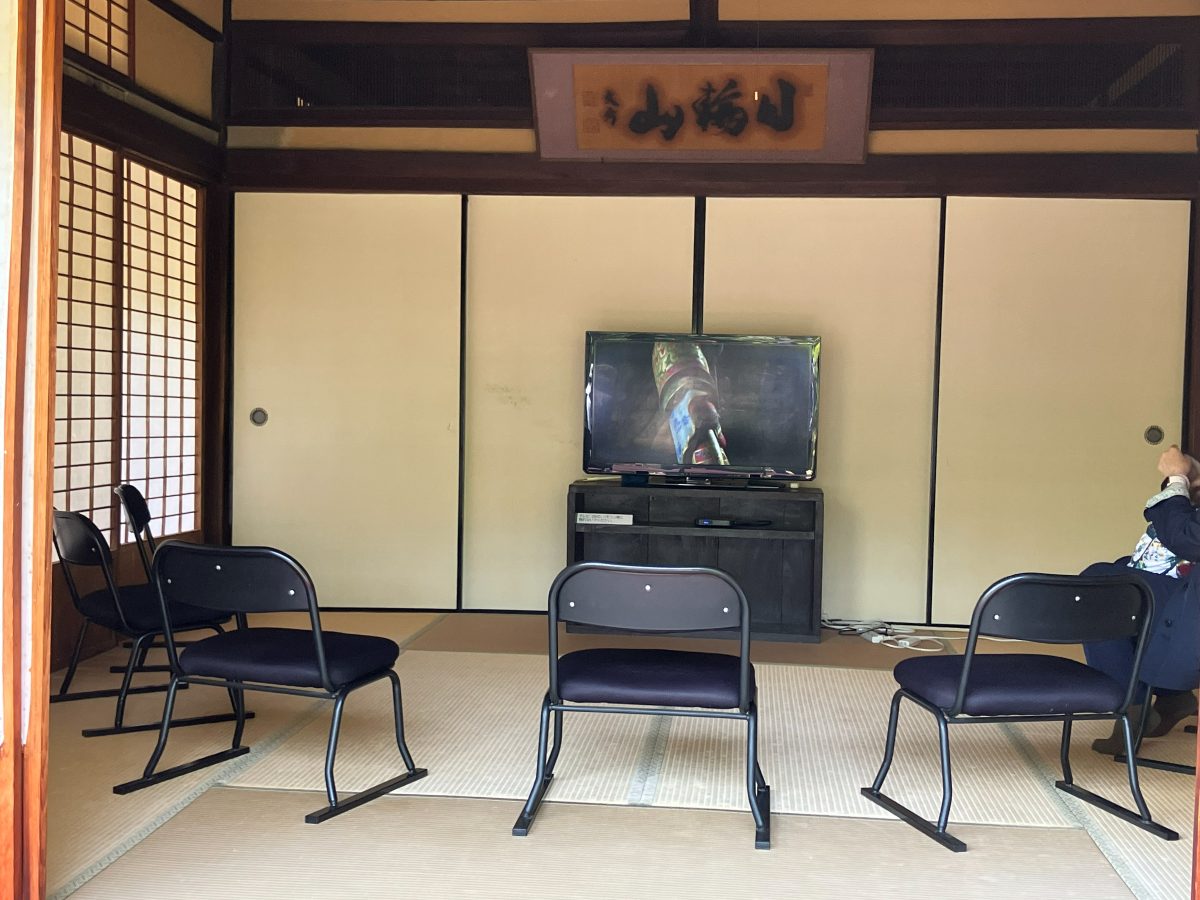
Beyond here, a video introducing Shin-Yakushiji in detail is shown. Take this chance to learn about the temple's history and its Buddhist statues.
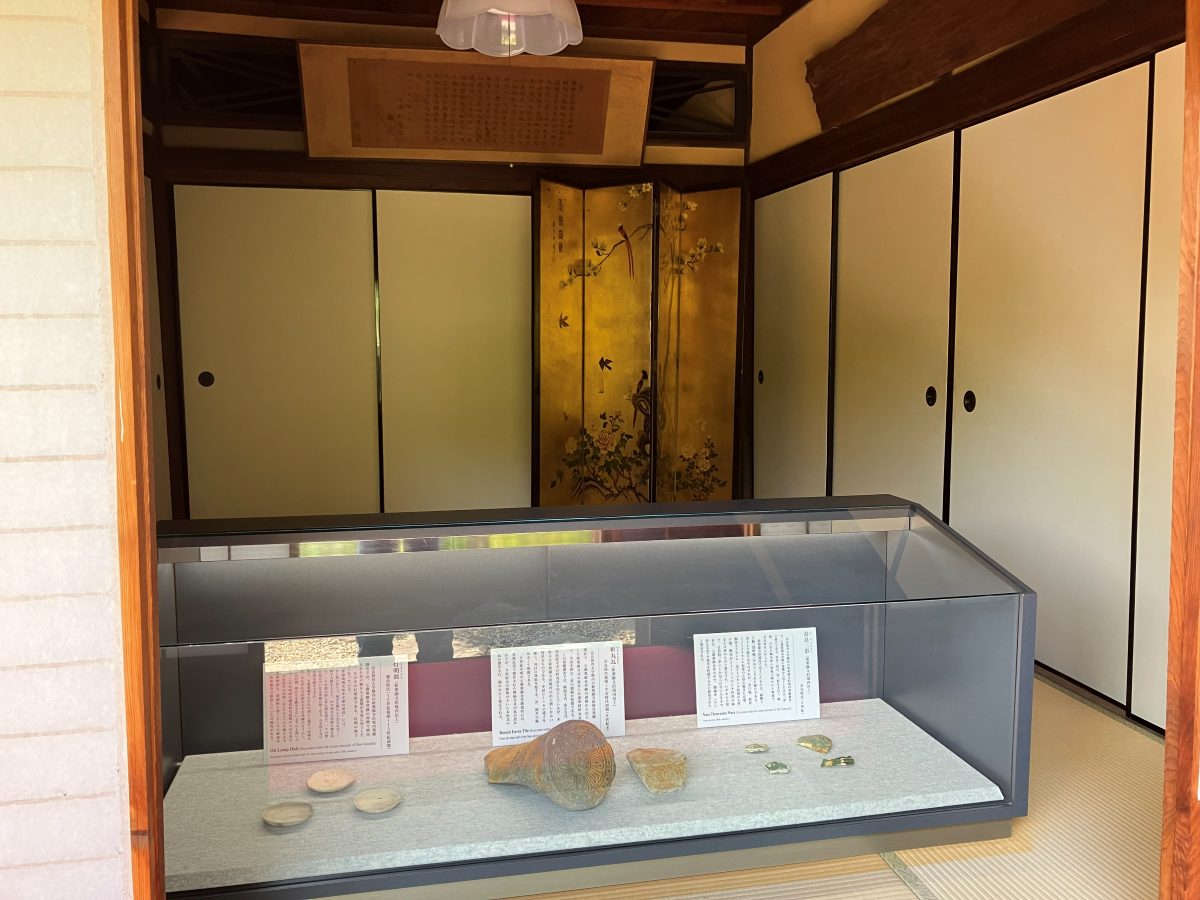
There is also a small exhibit of objects excavated from the temple's original grounds — including the site of the great hall of the Seven Healing Buddhas: oil-lamp dishes, round eaves tiles, and fragments of Nara three-colour ware. Quiet reminders of the great temple that once stood here.
The Main Hall — Meeting the Twelve Generals in the Dark
With a little background knowledge, it's finally time to enter the main hall. Buy a ticket (¥600 for adults) from the vending machine at the entrance and hand it to the attendant.
Photography is not permitted inside the main hall — so I cannot show you what lies within. That is a joy I leave for you to discover with your own eyes.
When you step inside, a darkness cut off from the world outside envelops you. Don't be afraid — just wait a little. As your eyes naturally adjust, the Twelve Divine Generals slowly begin to reveal their magnificent forms. This darkness works as a reset from the world outside.
At the centre of a round earthen platform sits the principal image, the seated Healing Buddha (Yakushi Nyorai, National Treasure). Encircling and guarding it stand the nearly life-size Twelve Divine Generals.
Once your eyes adjust, you will be struck by how different each general is in character. Please, try to find your own favourite.
The Twelve Divine Generals and Their Zodiac Signs
Because the twelve generals guard the twelve directions, they are also worshipped as guardians of the twelve zodiac signs. Looking for a favourite? Why not start with the general of your own zodiac sign?
| Zodiac sign | General (name used at Shin-Yakushiji) | National Treasure |
|---|---|---|
| Rat | Bikara (毘羯羅) | Yes |
| Ox | Shōtora (招杜羅) | Yes |
| Tiger | Shindara (真達羅) | Yes |
| Rabbit | Makora (摩虎羅) | Yes |
| Dragon | Haira (波夷羅) | No — replaced in 1931 |
| Snake | Indara (因達羅) | Yes |
| Horse | Santera (珊底羅) | Yes |
| Sheep | Anira (頞儞羅) | Yes |
| Monkey | Antera (安底羅) | Yes |
| Rooster | Mekira (迷企羅) | Yes |
| Dog | Basara (伐折羅) | Yes |
| Boar | Kubira (宮毘羅) | Yes |
The names are those used by Shin-Yakushiji; some differ from the names in the National Treasure designation. Confirmed on the temple's official website in September 2026.
Here is a fascinating detail: of the twelve statues, only Haira, the general of the Dragon, was destroyed in an earthquake at the end of the Edo period and remade in 1931 — making it the only one not designated a National Treasure (the other eleven are Nara-period clay statues, all National Treasures).
Because the Dragon is the only one to have suffered this fate and lost its National Treasure status — and because my wife and I were both born in the Year of the Dragon — I find myself drawn to Haira.
By the way, Basara, the general of the Dog, is the most famous of the twelve — he once appeared on Japan's ¥500 postage stamp.
Once you have looked at all twelve and found your favourite, please sit for a while on the chairs at the back of the hall. Gaze slowly at the secret Buddha, faintly visible in the darkness, and — with the help of the stillness and the dark — look into your own heart. Strangely enough, your worries may simply melt away.
Even if you usually prefer lively, bustling places — coming here just to encounter this treasure is worth it. Please, take the extra steps. See it with your own eyes.
Visitor Information — Hours, Fees & Bus
| Hours | 9:00–17:00 |
|---|---|
| Closed | No regular closing days (visits are occasionally suspended for temple events — check the notices on the official website) |
| Admission | Adults & university students ¥600 / Junior & senior high school students ¥350 / Elementary school students ¥150 (Groups of 30 or more: adults ¥550, junior & senior high ¥300, elementary ¥120) |
| Tickets | Buy from the vending machine at the main hall entrance and hand it to the attendant |
| Photography | Not permitted inside the main hall |
| Time needed | 1 to 1.5 hours (video, exhibits and main hall at a relaxed pace) |
| Bus | City Loop Bus from JR Nara Station or Kintetsu-Nara Station to the Wariishicho (破石町) stop, then about 10–15 minutes on foot |
| Parking | Free (15 cars) |
| Address / Tel | 1352 Takabatake-cho, Nara / +81-742-22-3736 |
Confirmed on Shin-Yakushiji's official website and the Nara City Tourism Association website in September 2026. The time estimate is my own, as a Nara local. Please check the latest information before you go.
When to Visit — On a Bright Morning
My recommendation: visit on a bright morning, in a season when the contrast between light and dark is clear — like the season of fresh green leaves.
The brighter it is outside, the more striking the contrast with the darkness of the main hall becomes — and the deeper your experience inside will be.
To walk my recommended route (South Gate → main hall from outside → garden → video → exhibits → main hall) without rushing, allow 1 to 1.5 hours. Of course, if you would like to spend hours facing yourself in the main hall, please allow that time and come with plenty to spare.
Shin-Yakushiji in the morning, Byakugoji in the afternoon. I also hope you'll visit nearby Byakugoji Temple (No. 004). Plan to spend the morning at Shin-Yakushiji, and visit Byakugoji from around noon into the afternoon.
Once a Year: the Otaimatsu Torch Ceremony — April 8
Every year on April 8, the Otaimatsu torch ceremony is held as part of the Shuni-e service. According to the temple's official website, a service is held in the main hall from 5 p.m.; then from 7 p.m., ten great torches over seven metres long, and one basket torch, lead the monks around the main hall. The blazing torches turn the hall's white walls crimson, while the cherry trees in full bloom glow white in the dark.
If you are travelling in Nara in early April, it may be worth checking the date.
The Area Around Shin-Yakushiji — Byakugoji and the Yamanobe-no-Michi
Just a stone's throw from Shin-Yakushiji is Byakugoji Temple, introduced in my fourth guide. If you have come this far, please do continue on and visit it as well.
On the way to Byakugoji stands a stone marker engraved "Yamanobe-no-Michi — to Byakugoji." The Yamanobe-no-Michi is known as Japan's oldest recorded road, winding along the foot of the mountains on the eastern edge of the Nara Basin, from the foot of Mt. Miwa to the foot of Mt. Kasuga. A true road of history, full of Nara's quiet charm. I'll show you the way in the Byakugoji guide.
Frequently Asked Questions
Are Shin-Yakushiji and Yakushiji the same temple?
No, they are different temples. Yakushiji is the head temple of the Hosso school in Nishinokyo, western Nara; Shin-Yakushiji is a Kegon-school temple in Takabatake, just south of Nara Park. The shin in its name is often explained as meaning "miraculously efficacious," rather than "new."
How much is admission?
¥600 for adults, ¥350 for junior and senior high school students, and ¥150 for elementary school students. Buy your ticket from the vending machine at the main hall entrance.
How much time do I need?
About 1 to 1.5 hours if you take your time with the video, the exhibits and the main hall.
Can I take photos inside the main hall?
No, photography is not permitted inside the main hall. Please see the Twelve Divine Generals with your own eyes.
Can I get there by bus?
Yes. Take the City Loop Bus from JR Nara Station or Kintetsu-Nara Station to the Wariishicho stop, then walk about 10–15 minutes. If you'd like to walk the whole way, see my step-by-step directions with photos.
The Charm of Shin-Yakushiji
How was this journey? You began on one of Nara's most famous routes — and then, almost without noticing, you slipped off it entirely and arrived somewhere quite different.
Those who know the famous Yakushiji Temple may expect something similar in scale. They will be surprised. Just as modern-day Saidaiji stands in quiet contrast to Todaiji, Shin-Yakushiji and Yakushiji share only a name — they are entirely different in character.
And that, for those of us who love this deeper, unhurried Nara, is precisely what makes it so wonderful. There is a quiet dignity to this place — an unpretentious beauty that I find utterly compelling.
Please Come and See Shin-Yakushiji for Yourself 🌿
We hope you'll enjoy not just the temple itself, but the whole journey — the quiet residential streets, the shifting light, and the particular stillness of this hidden corner of Nara.