Don't Just Change Trains at Yamato-Saidaiji — Saidaiji Temple Guide: Highlights, Fees & Stopover Tips
📢 Disclosure: This post may contain affiliate links. If you book through them, I may earn a small commission at no extra cost to you. Thank you for supporting this blog! → Privacy Policy
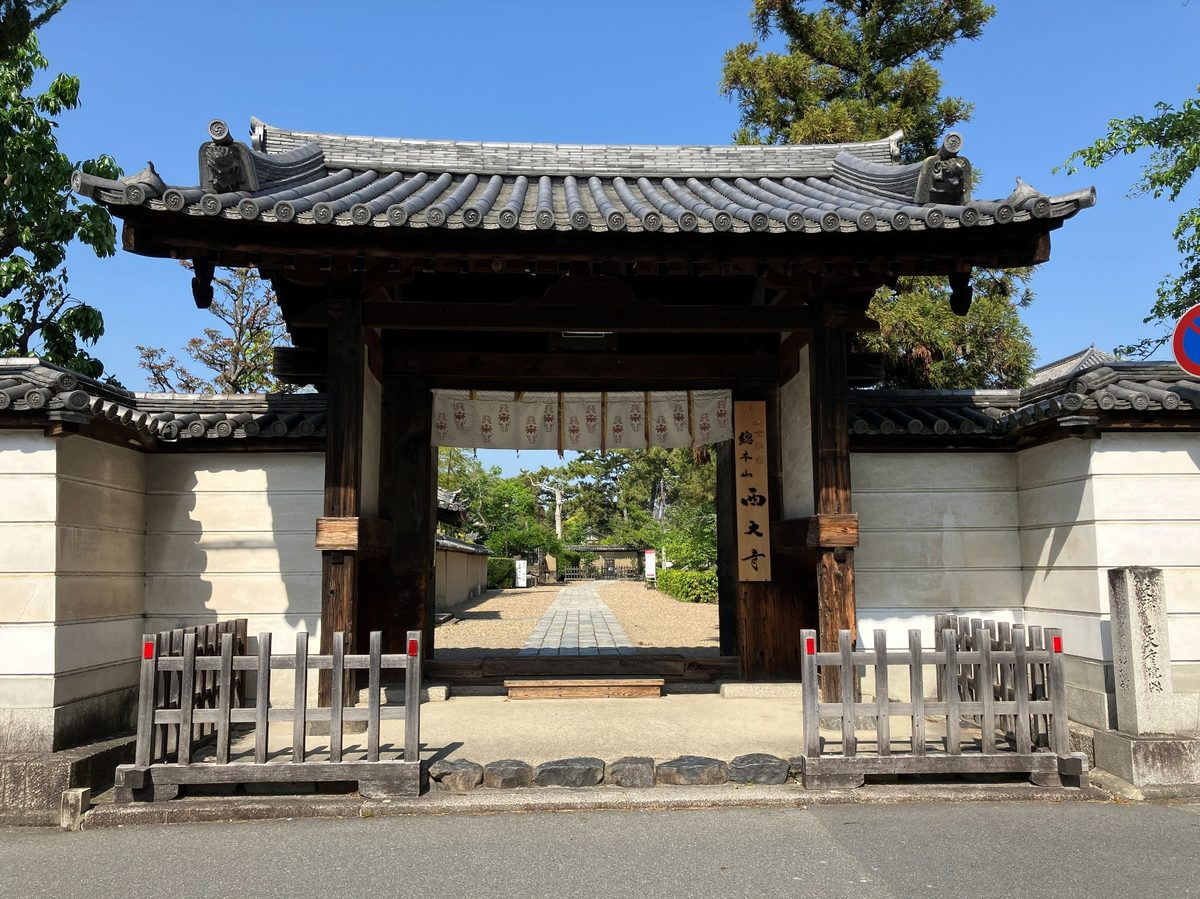
Did you follow our first guide and make it safely to Kintetsu Nara? Wonderful! Today, we're turning the spotlight on Yamato-Saidaiji Station — that important transfer point you passed through on your journey — and the remarkable hidden treasure that lies just steps outside its gates.
Never heard of this station? Don't say that! There's a deeper, quieter side of Nara hiding here — one that most tourists rush right past without ever knowing what they're missing.
About Yamato-Saidaiji Station
Yamato-Saidaiji is one of Nara's great railway hubs, where three major Kintetsu lines converge: the Kintetsu Kyoto Line, the Kintetsu Nara Line, and the Kintetsu Kashihara Line. From this one station, you can reach Kyoto, Osaka, Nara, Tenri, and Kashiharajingu-mae — and with a connection, even far-off destinations like Ise-Shima and Nagoya. It truly is a mega-station that represents all of Nara.
In fact, train enthusiasts travel from across Japan just to experience this rare junction. 😄
And yet — despite the enormous number of passengers passing through every day — you'll barely spot a tourist outside the station. Plenty of people inside; almost no one stepping out onto the street. It's a strange and somewhat sad reality. But that's exactly why we're here: to change that.
What's Around the Station
What most visitors don't realize is that the area around Yamato-Saidaiji is filled with places of quiet, unpolished charm — the kind of wabi-sabi atmosphere that is deeply, authentically Japanese.
Just a short distance from the station, you'll find:
🏛️ Saidaiji Temple
The historic temple that gives the station its name — once the equal of Todaiji in size and grandeur. More on this below!
🌿 Akishinodera Temple
A serene, moss-covered temple famous for its rare and beautiful statue of Gigeiten, the patron deity of the arts.
🏮 Kiko-ji Temple
A lesser-known gem said to have been founded by the monk Gyoki, with a lovely lotus pond that blooms beautifully in summer.
⛩ Sugawara Tenmangu Shrine
Said to be the birthplace of Sugawara no Michizane, the revered scholar deified as the god of learning.
🏯 Heijo Palace Site
The vast, open site of Japan's ancient capital — a UNESCO World Heritage Site where you can walk freely across the grounds of the 8th-century imperial palace.
None of these are difficult to visit — a short walk or a brief bus/taxi ride is all it takes. And yet the streets remain remarkably quiet, free from tour groups and souvenir shops. That's the appeal.
For more on the Heijo Palace Site, see Guide No. 009. The train from Yamato-Saidaiji to Kintetsu Nara actually runs right through the middle of it!
About Saidaiji Temple — Nara's Forgotten Giant
Todaiji Temple needs no introduction. Its Great Buddha is one of the most iconic images in all of Japan, drawing millions of visitors every year. But Saidaiji Temple? It barely gets a mention — which is all the more remarkable when you learn what it once was.
Back in the Nara Period through the early Heian Period, Saidaiji was a truly immense temple complex, said to rival Todaiji itself in scale and grandeur. It was known as "Todaiji in the East, Daiji in the West" — two great temples standing as equals, bookending the ancient capital of Nara.
And the two temples were linked by far more than reputation. Todaiji was built by Emperor Shomu — and Saidaiji by his daughter, Empress Shotoku. The father raised his great temple on the eastern edge of the capital; the daughter raised hers to the west of the palace. In a very real sense, they are a parent-and-child pair of temples.
Saidaiji's story began in 764. Praying for the suppression of a rebellion, the retired Empress Koken (who later returned to the throne as Empress Shotoku) vowed to create statues of the Four Heavenly Kings — and fulfilled that vow the following year. At its height, the temple covered some 48 hectares, with more than 110 buildings, including two golden halls and a pair of pagodas.
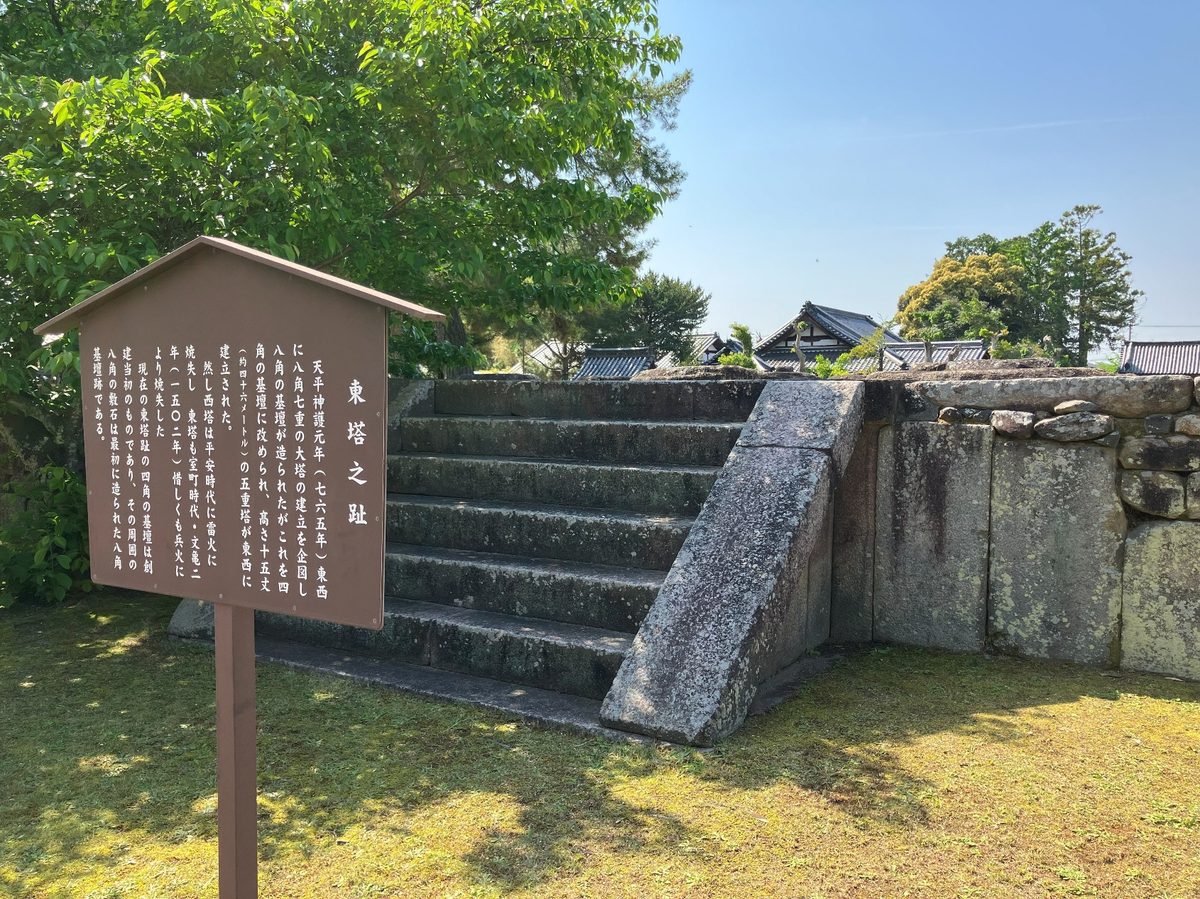
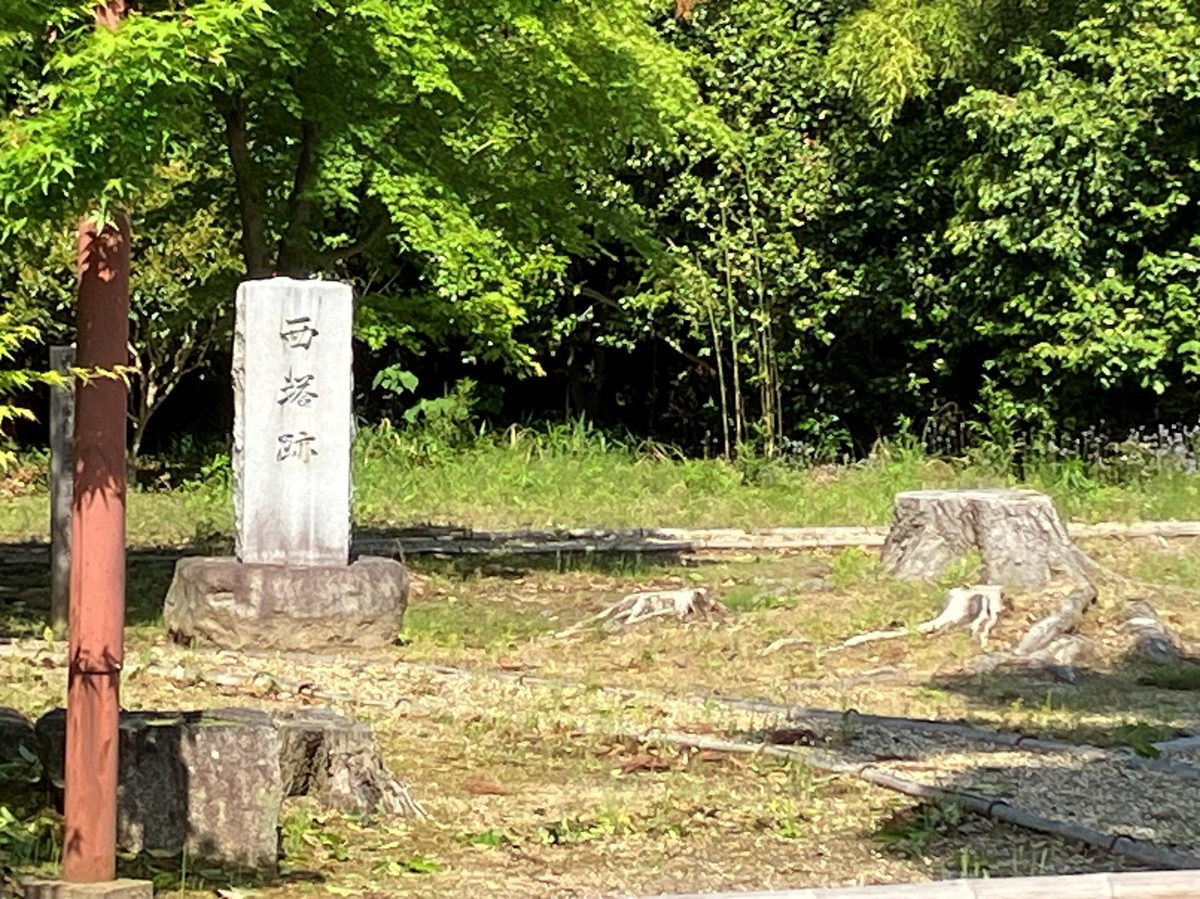
A note on names: "Todaiji" (東大寺) means "Great Eastern Temple" — it stands to the east of the ancient Heijo Palace. "Saidaiji" (西大寺) means "Great Western Temple" — it stands to the west. Together, they once stood as the twin pillars of the Nara Period's greatest religious capital.
And here's a fascinating detail: the western boundary of Heijo-kyo — the ancient capital of Japan — is believed to have been right around the Yamato-Saidaiji area. You are, in a very real sense, standing at the edge of ancient Japan.
Two Temples, Two Destinies
But the fates of the two temples would diverge sharply. After the capital moved to Kyoto, Saidaiji — now a temple of the old capital — was gradually neglected by the imperial court and struck by repeated disasters. By the middle of the Heian period, it had fallen into decline.
In the Kamakura period, the monk Eison (叡尊) revived Saidaiji as an entirely new kind of temple (the Ōchamori tea ceremony you'll read about below also traces back to him). But in 1502, fire from warfare destroyed many of its buildings once again. The East Pagoda burned then, and was never rebuilt. Every hall you see today was rebuilt from the mid-Edo period onward.
Standing before the site of the East Pagoda, I feel the fragility of life — the harshness of nature, in which the strong survive and the weak fade away. And yet, at the same time, I feel that the world is relative: it is precisely because some things are weak and fade away that others can endure and flourish. Seen this way, Todaiji and Saidaiji — two temples whose destinies seem to have split so dramatically — are, I believe, deeply connected.
That is why, at Saidaiji, I hope you'll take time to see the traces of its former glory, beginning with the sites of the East and West Pagodas. They show Saidaiji exactly as it is — a temple that walked a different path through history from Todaiji.
Today, Saidaiji sits quietly in a corner of this small, unhurried town. That peacefulness — so different from the crowds at Todaiji — is exactly what draws those of us who love deep history and quiet discovery.
But three times a year, all of Japan turns its gaze toward Saidaiji. The occasion? The legendary Ōchamori Ceremony (大茶盛式).
The Ōchamori Ceremony (大茶盛式)
The Ōchamori is a centuries-old tea ceremony unique to Saidaiji Temple, held three times a year — on January 16 (New Year), the second Sunday of April and the Saturday before it (spring), and the first Sunday of November (autumn). What makes it extraordinary is the scale: participants take turns drinking from an enormous tea bowl measuring over 30 cm (about 12 inches) across. Watching people lift and share this giant bowl is both mesmerizing and deeply moving — for Japanese and international visitors alike. Scenes from the ceremony are broadcast on national TV news every year.
It dates back to 1239, when Eison offered tea at the Hachiman Shrine in thanks for Saidaiji's revival and shared what remained with the people gathered there. Because his monastic precepts forbade alcohol, he called it a "tea feast" (chamori) instead of a "sake feast" (sakamori).
Note: from 2026, the autumn ceremony moved from October to the first Sunday of November (November 1 in 2026). The spring and autumn ceremonies cost ¥4,000 per person (¥5,000 from spring 2027). Places are limited, so booking in advance through Saidaiji's official website (in Japanese) is recommended; same-day tickets are also available.
For travelers coming from abroad, timing a visit to coincide with the Ōchamori is certainly a challenge. But the true magic of this place — this temple, this town — reveals itself most fully in the quiet moments between the festivals. The stillness here has its own kind of power.
Please do stop here, even just for a short while. Experience its charm with your own eyes.
Getting to Saidaiji Temple from Yamato-Saidaiji Station
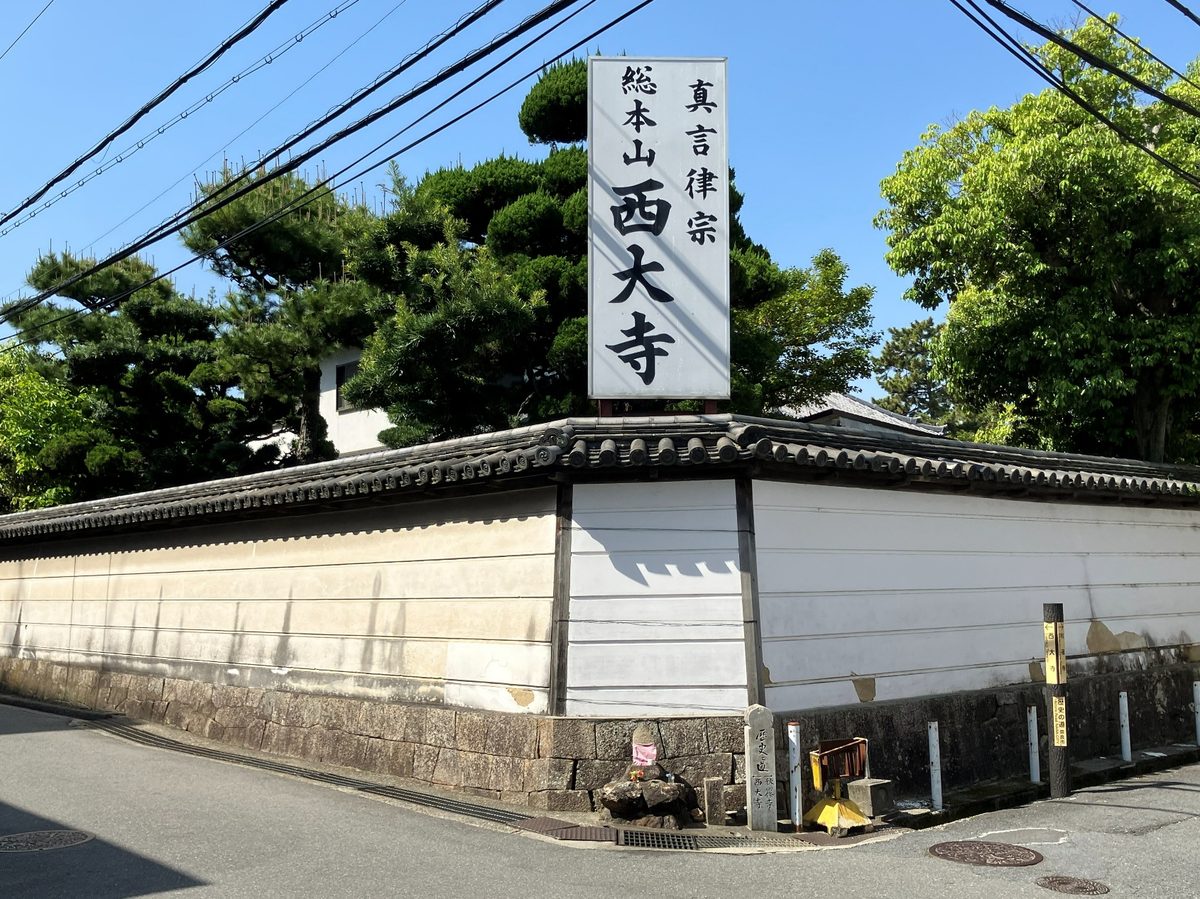
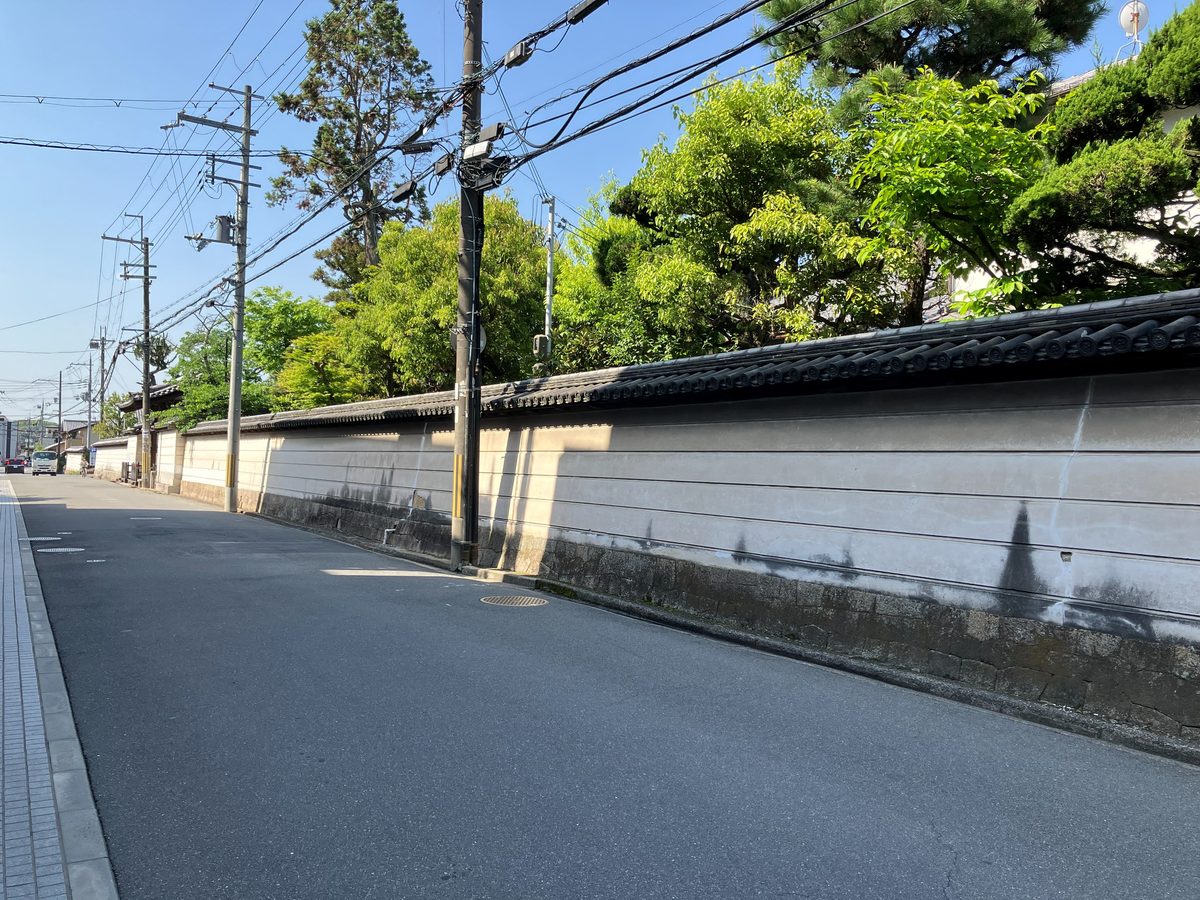
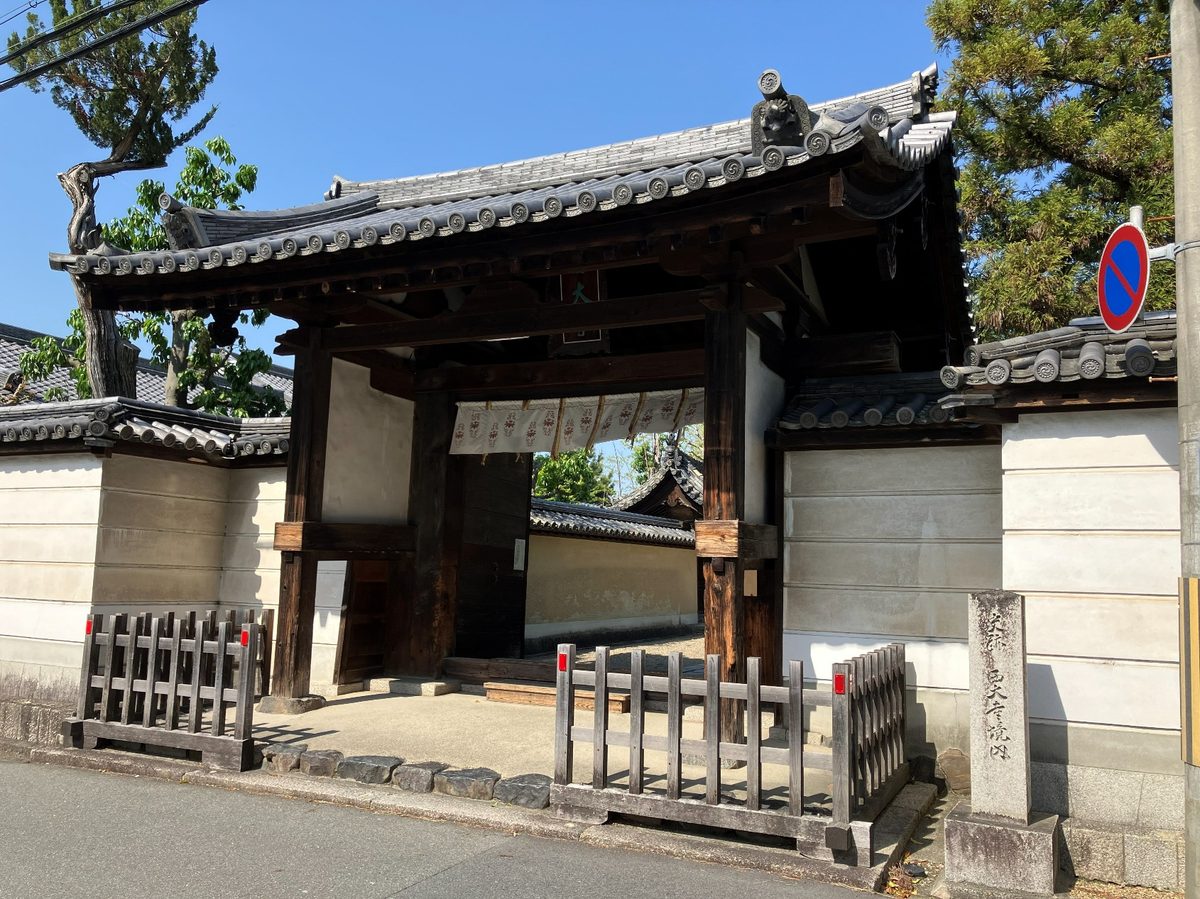
There are two main exits at Yamato-Saidaiji Station. Both lead to Saidaiji Temple — it's remarkably close!
Via the South Exit — Approx. 1–2 Minutes on Foot
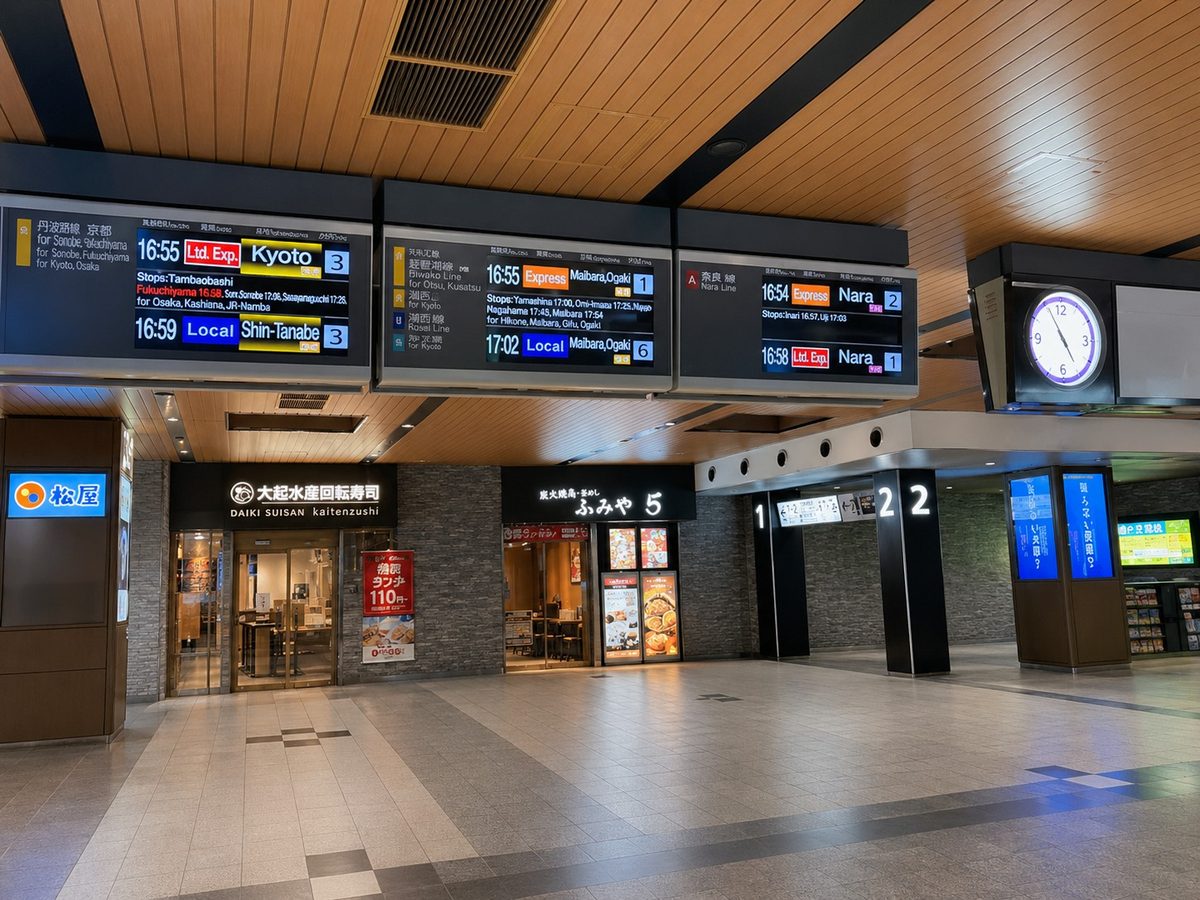
The South Gate is the closest exit to Saidaiji Temple, but it's smaller than the Central Gate and can be a little tricky to spot. Look carefully for the signs!
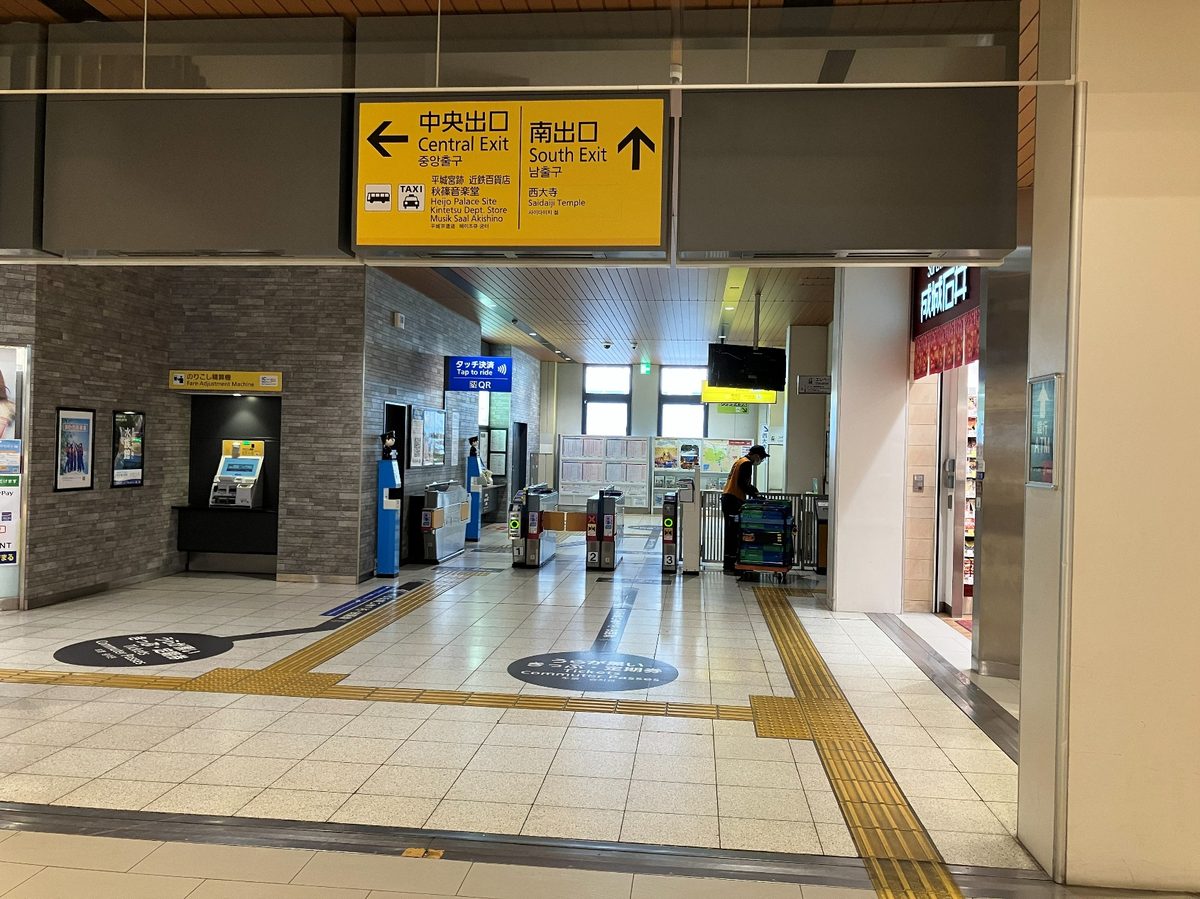
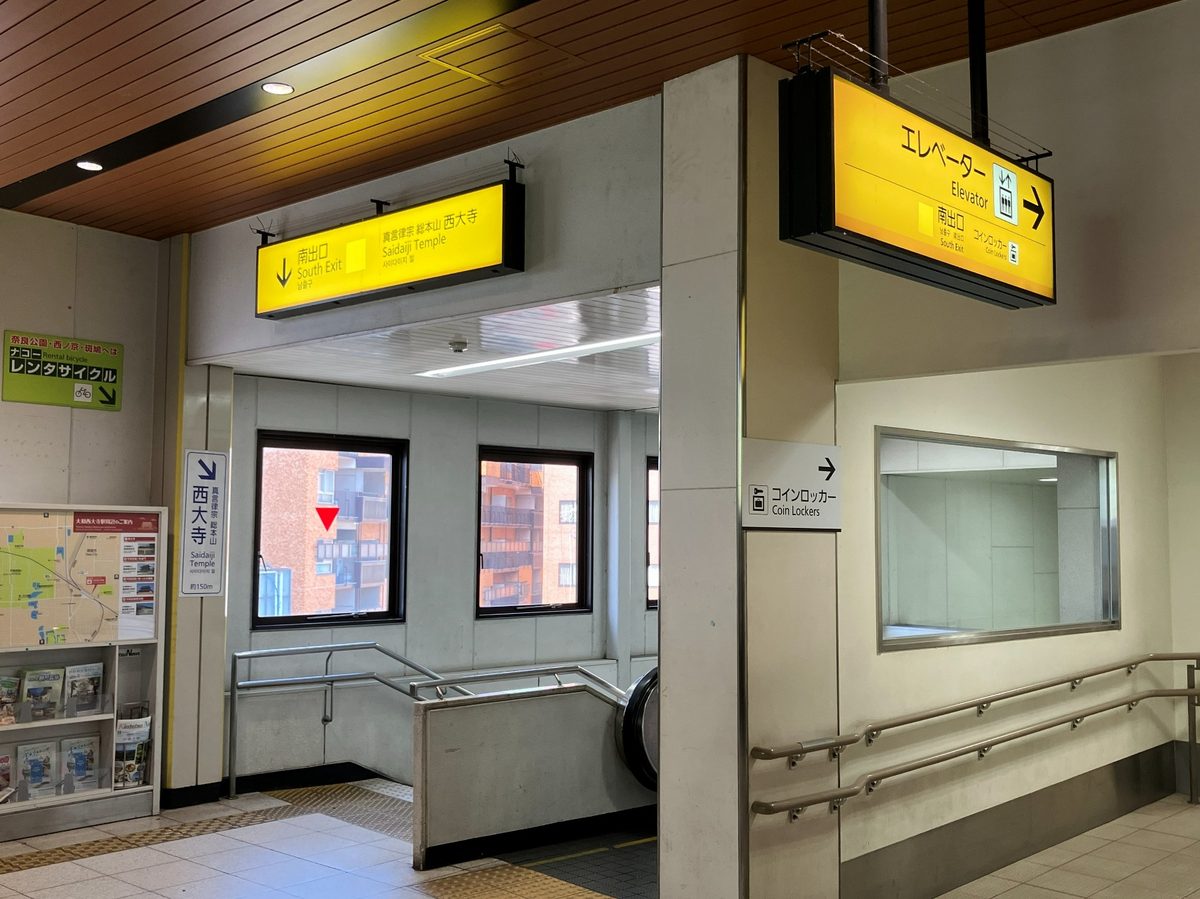
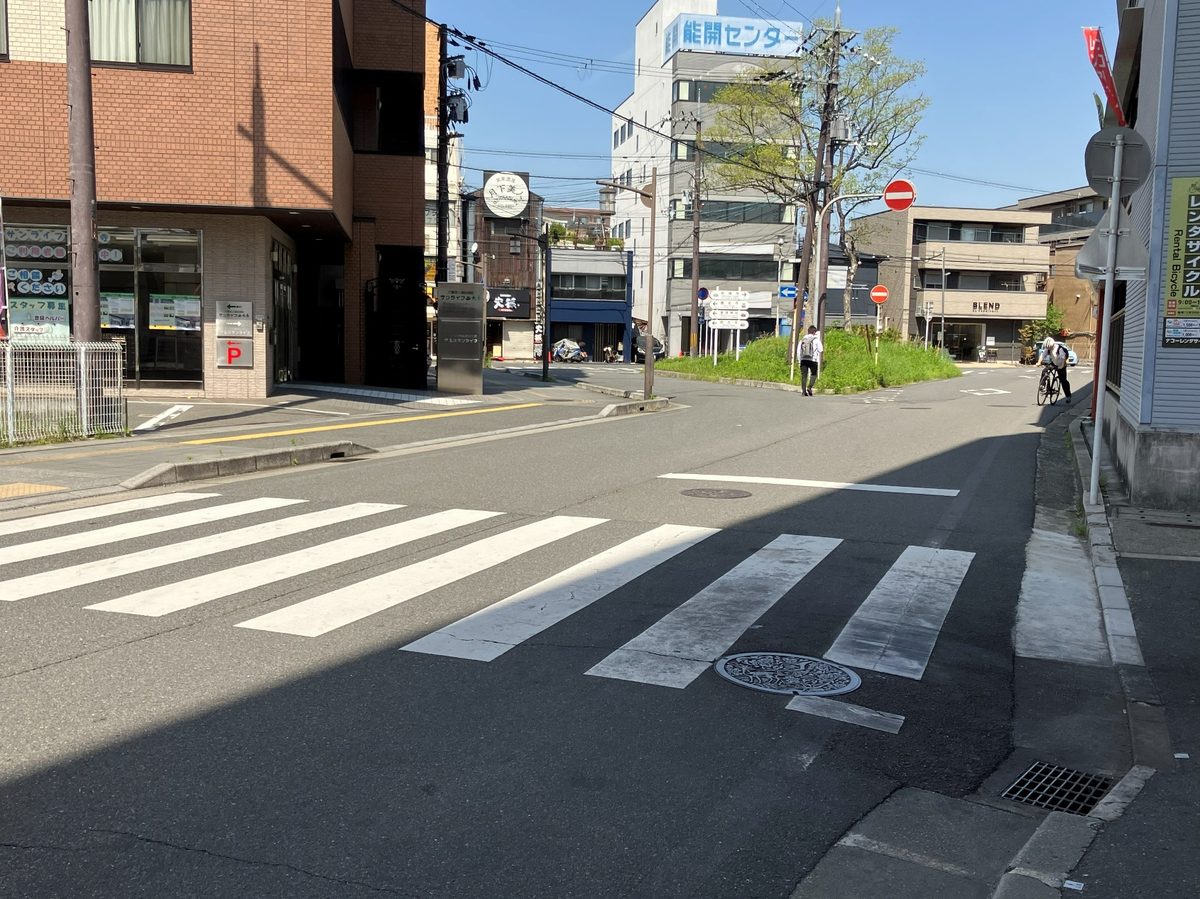
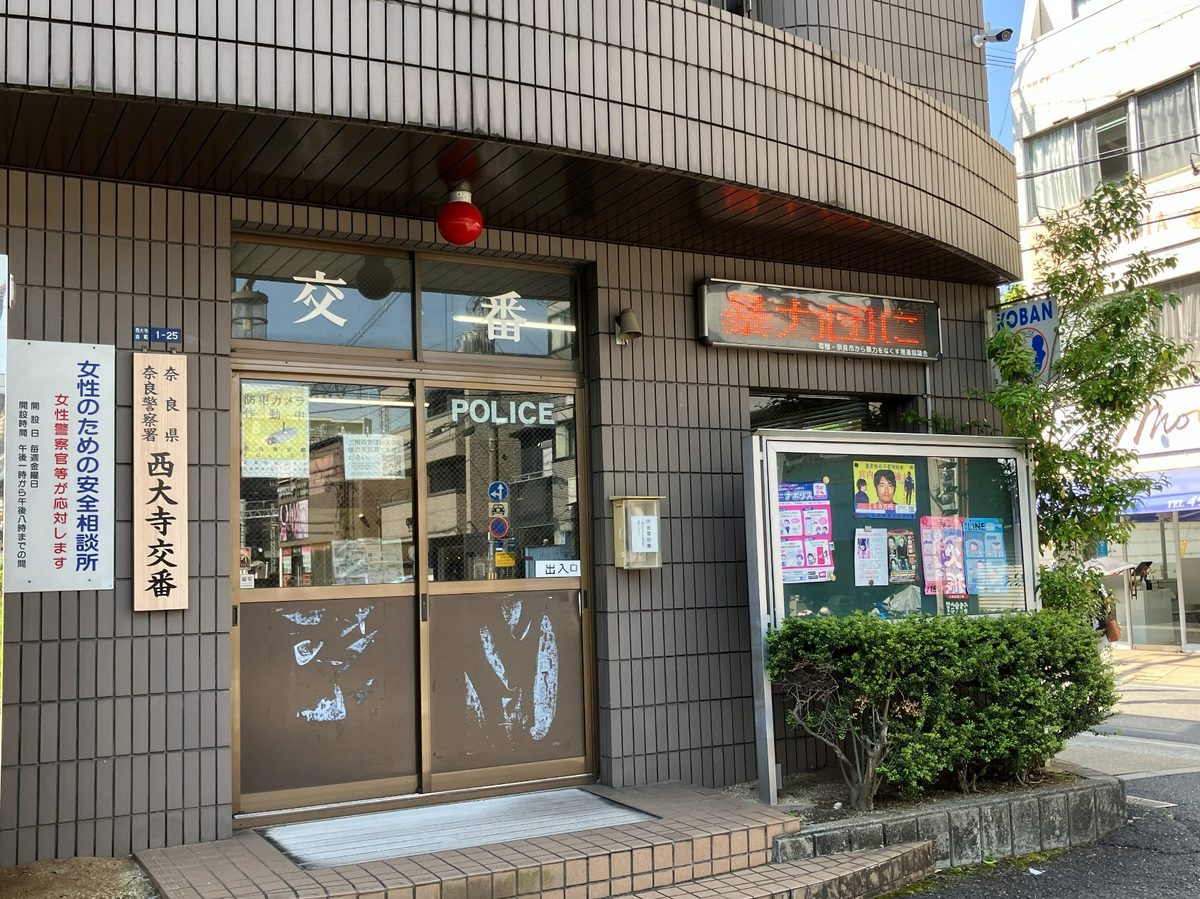
Via the Central Exit — Approx. 3–4 Minutes on Foot
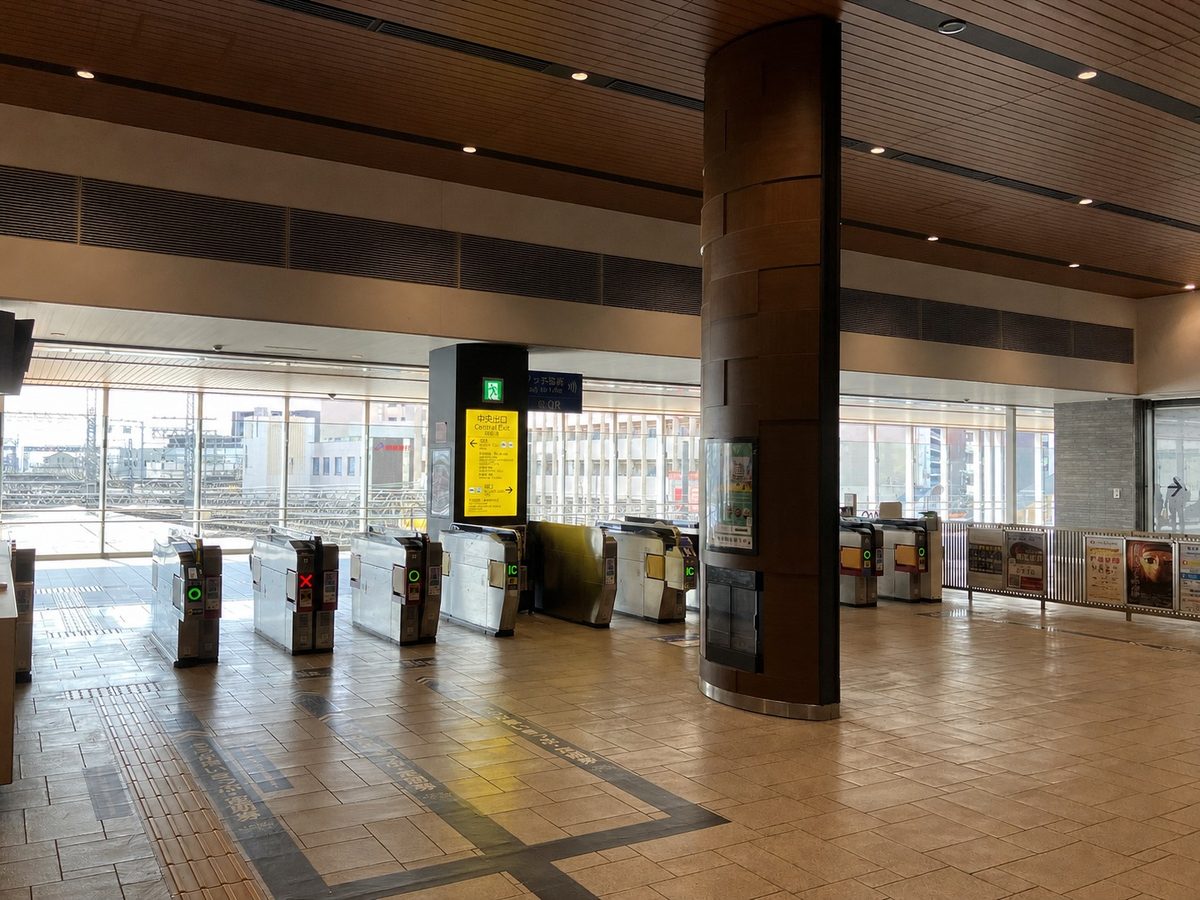
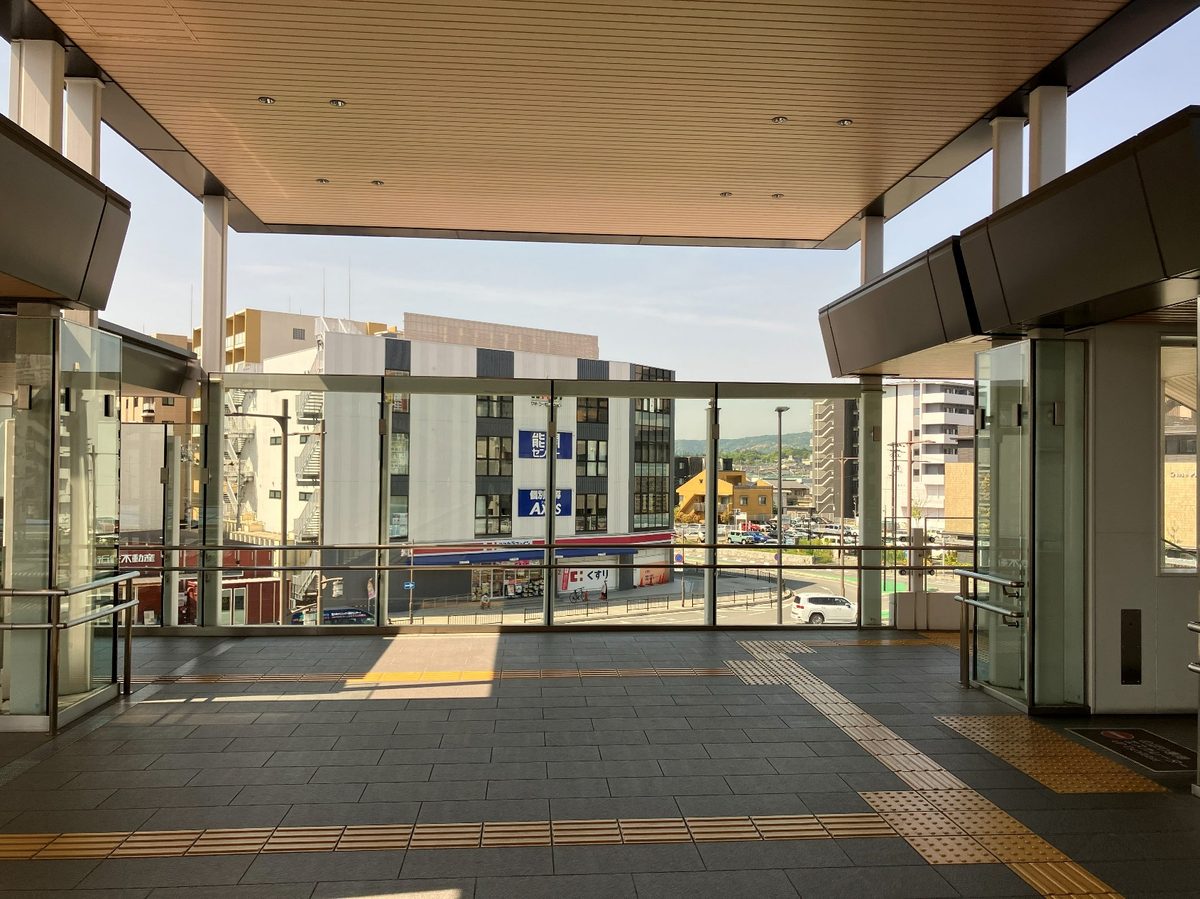
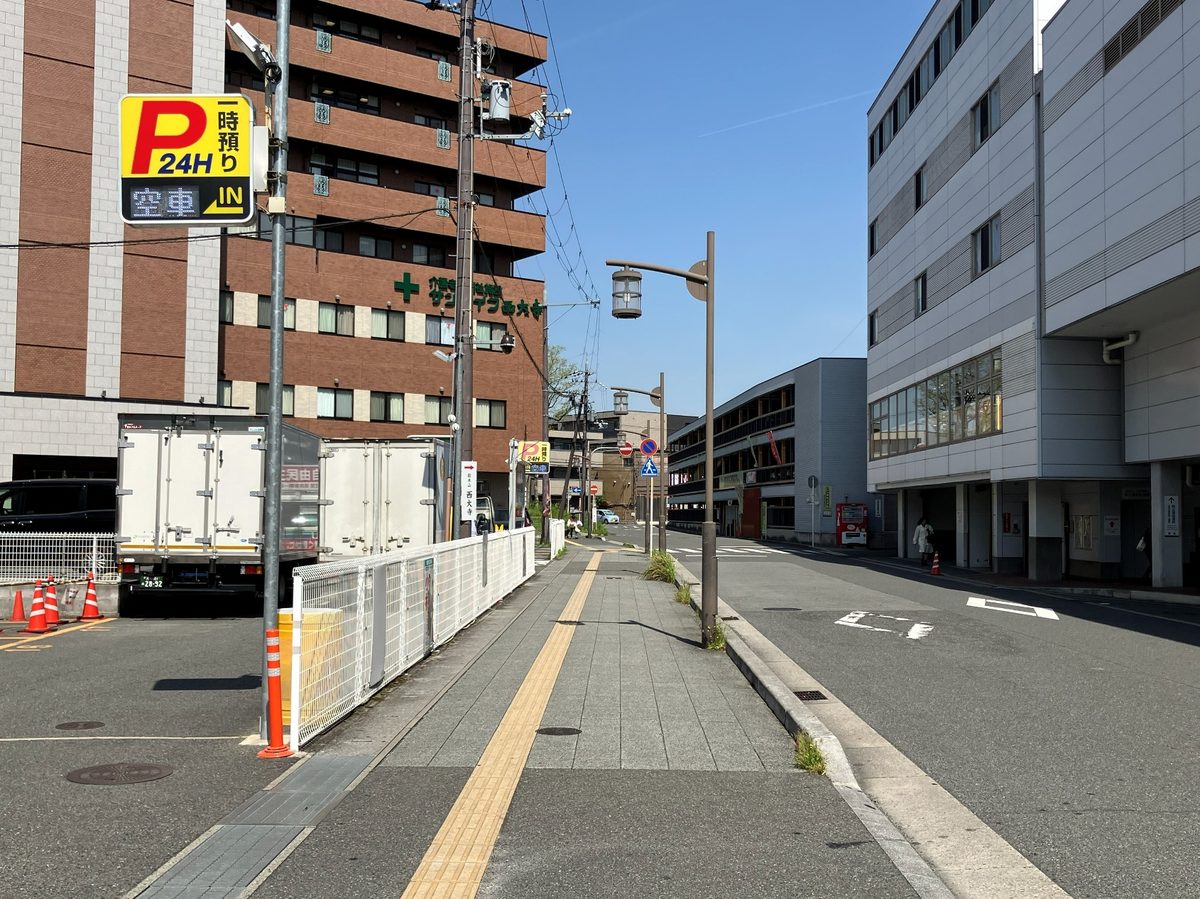
From Step 5 onward, follow the same route as the South Exit directions above: walk until you see the police box (交番) on your left → turn left → find the Jizo statue at the temple corner → the entrance is on your right. From the Central Exit, it's about 3–4 minutes on foot — still very close!
Highlights Inside the Temple — In Order from the East Gate
Step through the temple's main gate — the East Gate (東門) — and you'll find a map of the grounds right inside. It's a good place to get your bearings before you start walking.
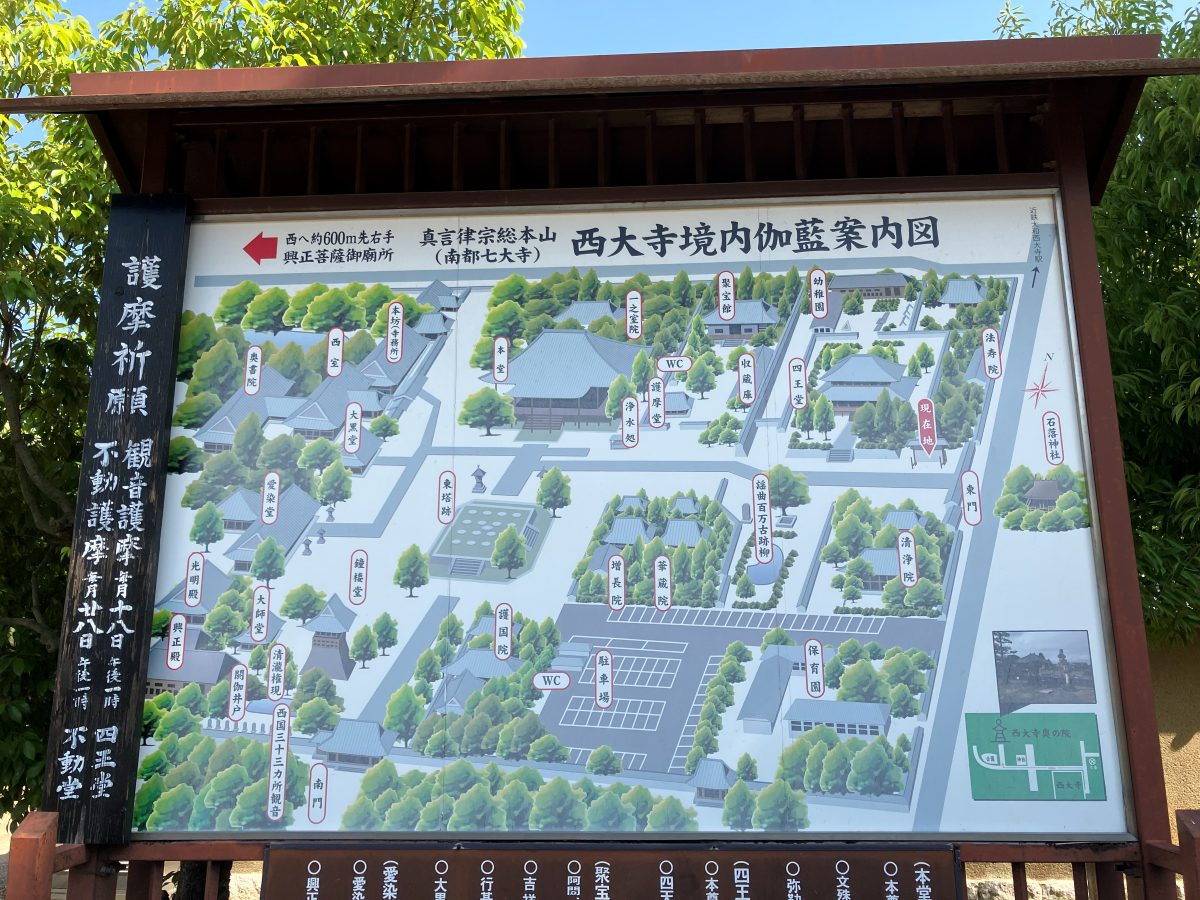
Shiodo Hall (四王堂) — Where Saidaiji Began
The first hall you'll see is the Shiodo, which enshrines the Four Heavenly Kings — the very statues whose vow by Empress Shotoku gave birth to Saidaiji. The present building dates from 1674, but the earthen platform beneath it preserves the scale of the original Nara-period hall.
The Four Heavenly Kings themselves were remade in later centuries, but the demons (jaki) crushed beneath their feet still preserve their original Nara-period form. The hall also houses a standing Eleven-Faced Kannon (Important Cultural Property), brought here from Kyoto in the Kamakura period.
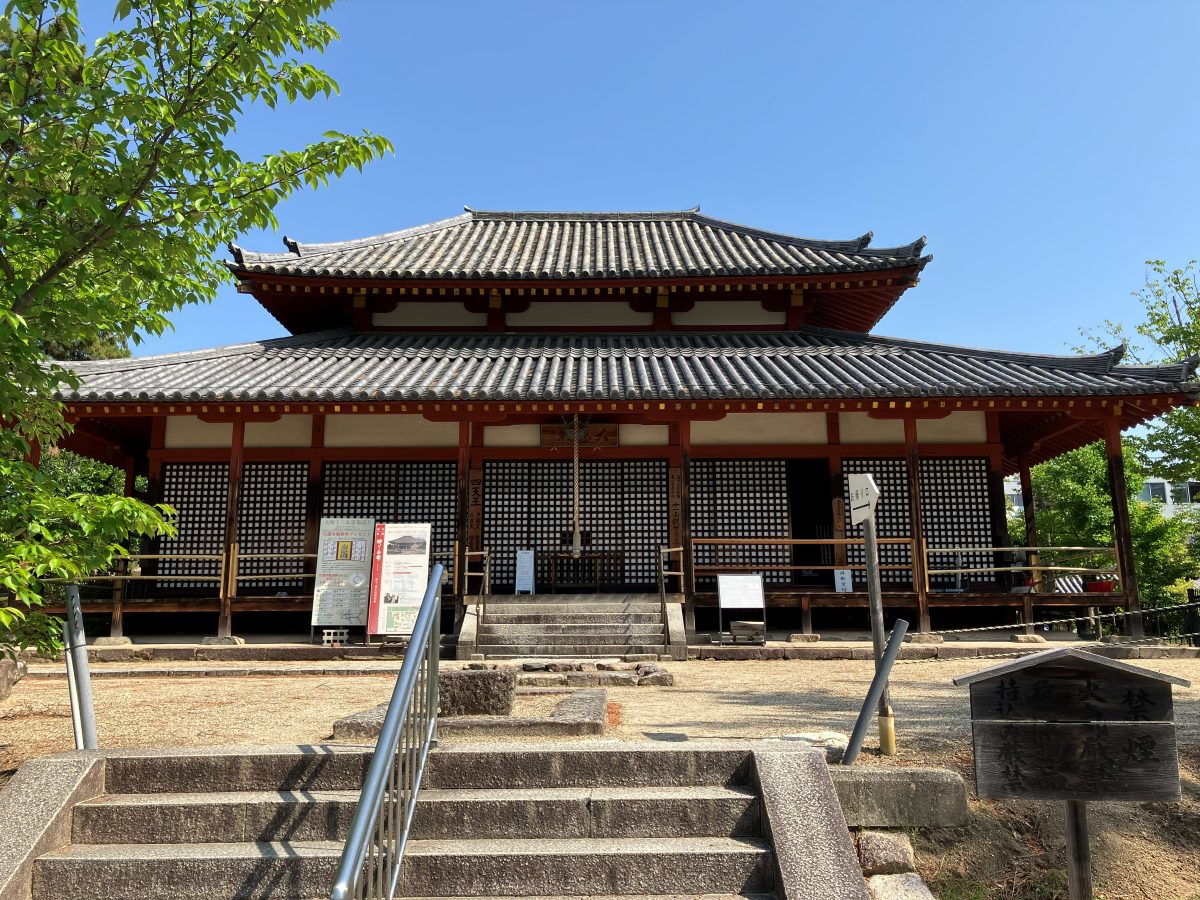
Main Hall (本堂) — The Heart of Today's Saidaiji
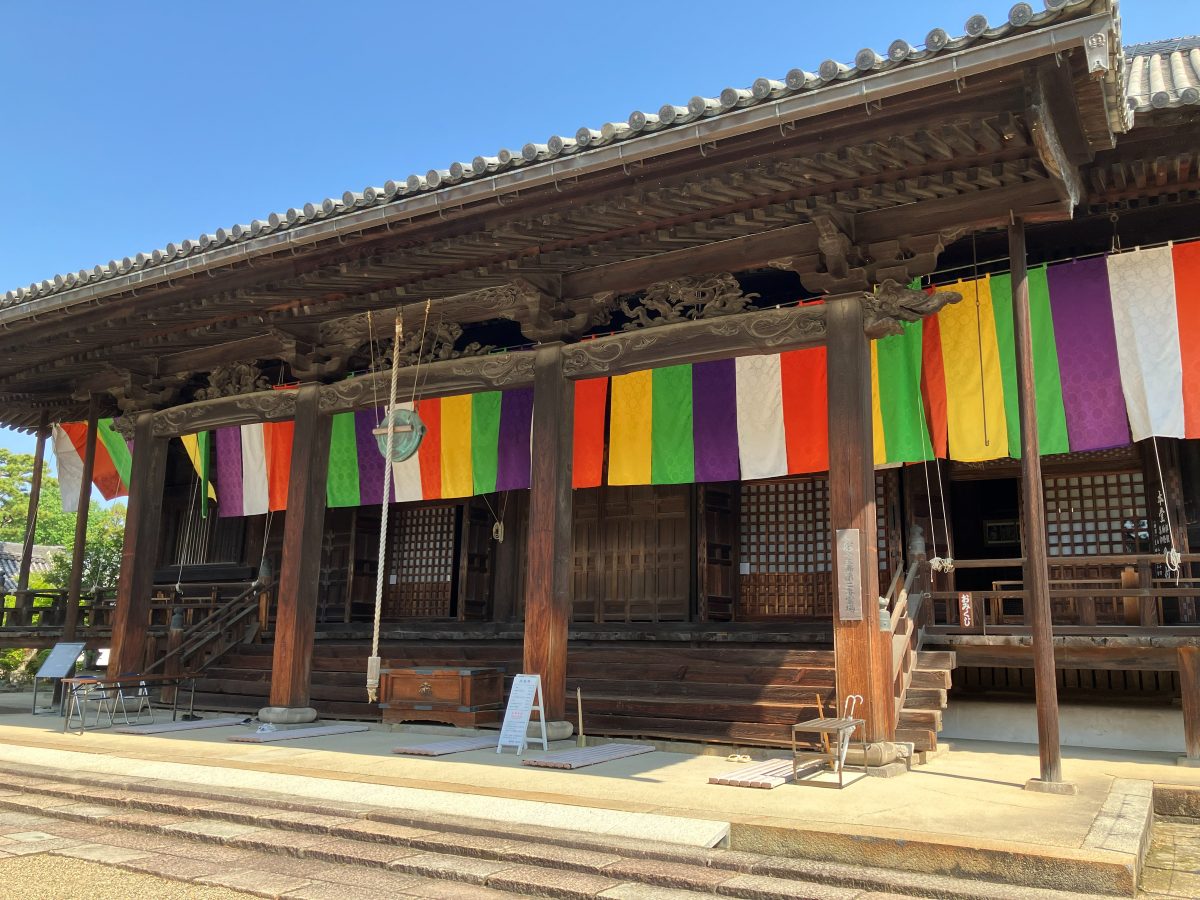
Next comes the Main Hall (Important Cultural Property), the heart of today's Saidaiji. Completed in the Kansei era of the mid-Edo period, it is one of the largest Edo-period temple halls in Nara City. Its principal image is a Kamakura-period standing Shakyamuni Buddha (Important Cultural Property).
East Pagoda Site (東塔跡) — Look Down at the Octagon
The large stone platform in front of the Main Hall is the site of the East Pagoda, where a five-story pagoda once stood (you'll find its photo in the "About Saidaiji Temple" section above).
Take a moment to look down at your feet. Saidaiji's twin pagodas were originally designed as octagonal, seven-story towers. But as the state's finances tightened at the end of the Nara period, the plan was scaled back, and square five-story pagodas were built instead. In 1956, an excavation uncovered octagonal foundation work around the pagoda site, confirming the old tradition. That's why the stones surrounding the site today are laid out in an octagon.
Aizen-do Hall (愛染堂) — A Kyoto Palace Hall Turned Temple
Farthest from the gate stands the Aizen-do. In 1767, a residence hall of the noble Konoe family in Kyoto was donated and moved here — a rare example of an aristocrat's mansion turned into a temple hall.
At its center is the hidden Buddha, the seated Aizen Myo-o (Important Cultural Property), shown to the public only during two special openings a year: currently January 15–February 4 and October 25–November 15. From April 2027, the periods change to April 15–May 15 and October 15–November 15 (the January 15–February 4, 2027 opening will still take place). The hall also enshrines a statue of Eison, the monk who revived Saidaiji (a National Treasure).
Shuhokan Treasure House (聚宝館) — Open Only in Season
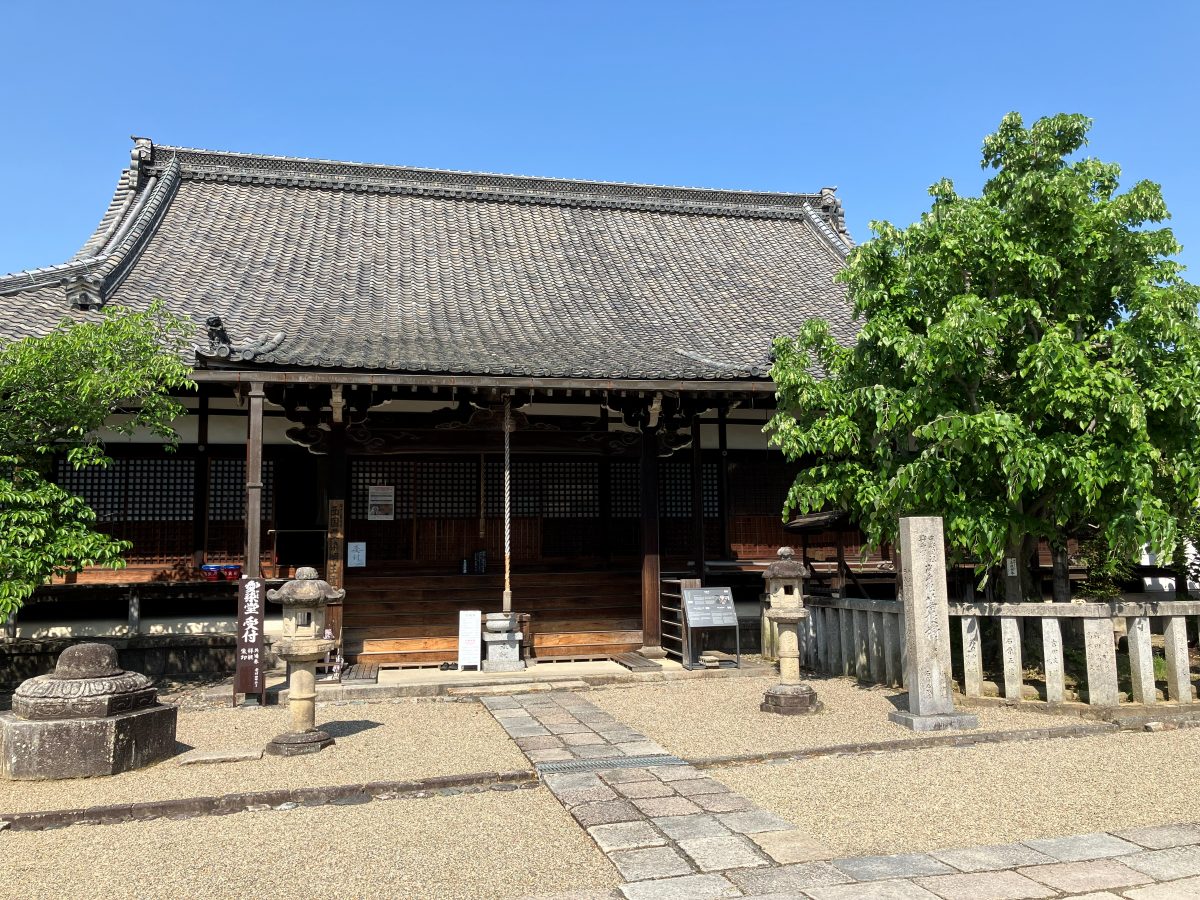
The Shuhokan, which houses the temple's treasures, opens only during limited periods: currently January 15–February 4, April 20–May 10 and October 25–November 15 (separate admission ¥300; ¥500 from January 2027). From April 2027, it will open twice a year, April 15–May 15 and October 15–November 15. National Treasures are among the many pieces on display.
Visitor Information — Hours & Fees
| Hours | 8:30–16:30 (last entry 16:00) |
|---|---|
| Admission | Combined ticket for the three halls (Main Hall, Shiodo, Aizen-do) Adults ¥800 / Junior & senior high school ¥600 / Elementary ¥400 Buy it at the first hall you enter (single-hall tickets are no longer sold) |
| Shuhokan | Open seasonally; ¥300 extra |
| Temple grounds | Free to enter (you can walk around the East Pagoda site freely) |
| Entrance | East Gate only (the South Gate is closed) |
| Closed | The three halls are open every day of the year |
| Time needed | About 1 hour with the three halls / about 30 minutes for the grounds only (pagoda sites, etc.) |
| Address / Tel | 1-1-5 Saidaiji Shibamachi, Nara / +81-742-45-4700 |
Confirmed on Saidaiji's official website in September 2026. The time estimates are my own, as a Nara local. Please check the latest information before you go.
Admission fees change on January 1, 2027. The combined ticket becomes ¥1,000 for adults, ¥800 for junior and senior high school students, and ¥500 for elementary school students — plus ¥200 extra from April 15–May 15 and October 15–November 15. The Shuhokan becomes ¥500.
When to Visit — After Todaiji, in the Late Afternoon
The usual plan might be to visit Saidaiji first, in the quiet of the morning, and then move on to the bustling Todaiji area. But I think that if you do it that way, your memory of Saidaiji's quiet beauty is likely to be drowned out by the bustle of Todaiji that follows.
If you can, head to Todaiji first from Kyoto — and then, in the late afternoon, stop at Saidaiji before returning to Kyoto. The stillness of Saidaiji, in contrast to the lively atmosphere of Todaiji, will stay with you. The late-afternoon hour itself deepens Saidaiji's wabi-sabi.
What Time Should You Arrive?
- To see the three halls (about 1 hour): Last entry to the halls is 16:00, and they close at 16:30. Aim to arrive at Saidaiji by around 15:30.
- For the grounds only — pagoda sites, etc. (about 30 minutes): The temple doesn't publish a gate-closing time, so to be safe, aim to arrive by around 16:00.
- Kintetsu Nara to Yamato-Saidaiji takes just 5–6 minutes by Express or Local train, with trains every few minutes during the day. From the station, the temple is a 1–2 minute walk from the South Exit.
- Afterwards, an Express bound for Kyoto from Yamato-Saidaiji takes you back to Kyoto in about 40 minutes, with no transfer.
Stopping over costs a little extra. Kintetsu's regular tickets don't allow stopovers. The through fare from Kintetsu Nara to Kyoto is ¥760, but if you get off at Yamato-Saidaiji, you pay Kintetsu Nara–Yamato-Saidaiji (¥240) + Yamato-Saidaiji–Kyoto (¥680) = ¥920 (¥160 more).
With an IC card (ICOCA, etc.), the fare for each section is charged automatically as you pass through the gates, so there's no need to buy another ticket. If you have a Kintetsu Rail Pass, you can hop on and off freely while it's valid, so there's no extra cost.
One exception: in lotus season (around June–August), go in the morning. Lotus flowers open in the early morning and close by the afternoon.
Seasonal Highlight — The "Lotus Road" Temples
From early summer into midsummer, Saidaiji's grounds are decorated with lotus flowers. Behind the Aizen-do, a lotus garden of about 100 pots is set up (free to enter; temple admission required).
Saidaiji is one of four temples in western Nara City famous for their lotuses — Saidaiji, Kiko-ji, Toshodai-ji and Yakushi-ji. The road linking them is known as the "Lotus Road," and every lotus season the Nara City Tourism Association holds the "Nara Nishinokyo Lotus Road" event, inviting visitors to tour all four.
- When: Around June–August each year (June 18–August 2 in 2026)
- Four-temple pass: ¥4,000 (admission to all four temples plus original goods; limited number)
- Getting around: You can walk to all four temples from Yamato-Saidaiji Station. Saidaiji to Kiko-ji is about a 17-minute walk.
For the latest dates, see the Nara City Tourism Association's feature page (in Japanese).
Frequently Asked Questions
How much does it cost to visit Saidaiji Temple?
The combined ticket for the three halls (Main Hall, Shiodo and Aizen-do) is ¥800 for adults (¥1,000 from January 2027). Entering the temple grounds is free.
How far is Saidaiji Temple from Yamato-Saidaiji Station?
It's a 1–2 minute walk from the South Exit, or 3–4 minutes from the Central Exit. See the step-by-step photo directions.
How much time do I need?
About 1 hour if you visit the three halls, or about 30 minutes for the grounds only (pagoda sites, etc.).
What happens to my fare if I stop over at Yamato-Saidaiji?
Kintetsu's regular tickets don't allow stopovers, so you pay the fare for each section separately. Between Kyoto and Kintetsu Nara, the ¥760 through fare becomes ¥920 (¥160 more). With a Kintetsu Rail Pass, there's no extra cost.
Can anyone join the Ōchamori tea ceremony?
Yes — the ceremonies on January 16, the second Sunday of April (and the day before) and the first Sunday of November are open to the public. Places are limited, so booking in advance via the official website is recommended (same-day tickets are also available).
The Charm of Saidaiji Temple
What this blog aims to do is simple: to point you toward corners of Japan that most people walk right past, and say — "This place is worth your time. Come and see for yourself."
Step through the gates of Saidaiji Temple, and you step into a different world. The noise and pace of modern life fade away. Time slows. You're standing on ground that was sacred over 1,200 years ago — and you may well have it almost entirely to yourself.
That is the real treasure of Yamato-Saidaiji.
Make Your Next Stop: Yamato-Saidaiji 🌸
On your next trip to Nara, why not step off the train at Yamato-Saidaiji — just this once? A quiet, unhurried Nara that belongs entirely to you is waiting there. We promise, you won't regret it.